Chip boom powers Hong Kong stock exchange at 40. Innovation, resilience set next stage
HKEX marked 40 years with a nostalgic ceremony as AI-driven chip demand helped lift Hong Kong listings.
Intelligence analysis by GPT-5.4 Mini
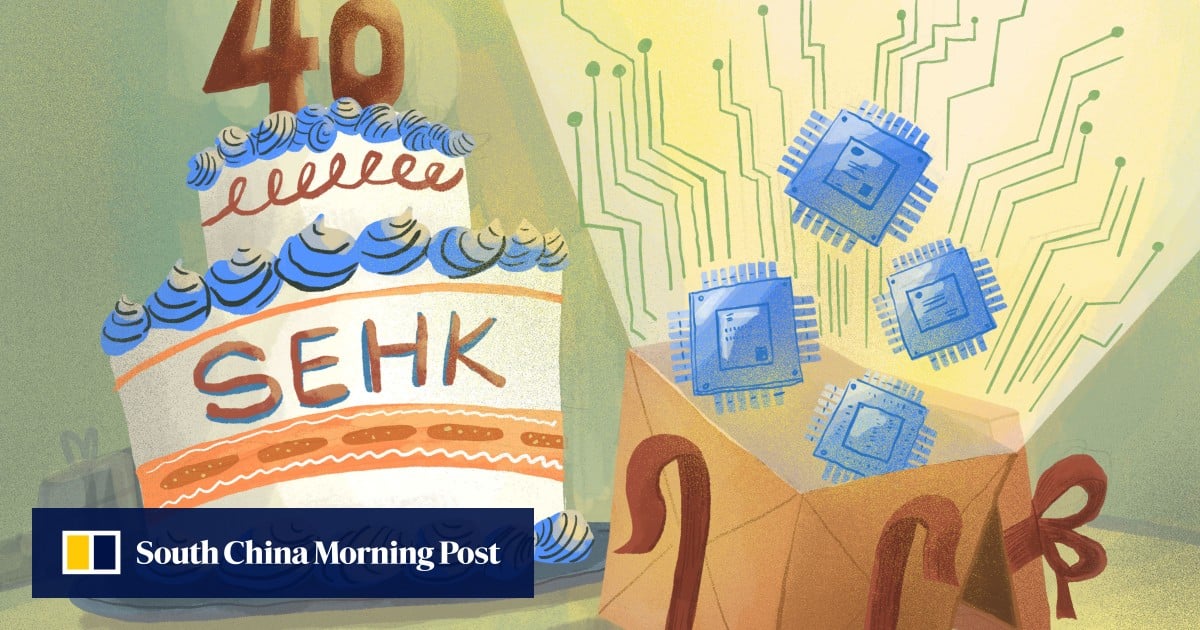
Hong Kong Exchanges and Clearing used its 40th anniversary to frame the market’s evolution from chalkboards to AI-era fundraising. The exchange says the chip boom is helping drive IPO activity even as it faces tougher competition from US and mainland markets.
Hong Kong’s stock exchange just turned 40. The story says it used to feel like an old classroom with blackboards, and now it feels tied to modern machines that help run AI.
A big reason for the excitement is computer chips. When lots of companies need chips for AI, some businesses do better and more of them may want to sell shares in Hong Kong.
The exchange is like a busy train station for money. It wants to keep sending companies and investors to the right places, even while other big stations in the US and mainland China try to do the same job.
Analysis
Forty years on
HKEX marked the 40th anniversary of the merger of Hong Kong’s four stock exchanges with a gong-striking ceremony in Central. The event leaned into nostalgia: former trading-hall imagery, red jackets, and Cathay Pacific flight attendants in retro uniforms recalled the market’s 1980s era, when Cathay became the first company to list on the unified exchange in May 1986.
Chairman Carlson Tong used the occasion to argue that the exchange’s core mission has stayed constant even as its tools and markets have changed. He said Hong Kong should be seen not only through its history but as an exchange built on “integrity, innovation” and openness. He also described HKEX as a “global superconnector” linking Asia’s growth opportunities with international capital.
AI hardware is feeding the pipeline
The article says the exchange has moved from chalk sticks and blackboards to artificial intelligence servers and semiconductors. One of the main forces shaping the current market is the memory chip supercycle, driven by AI demand. That upswing is helping Chinese tech companies and has contributed to a surge in IPOs in Hong Kong.
The backdrop is still competitive. HKEX faces pressure from both US and mainland exchanges as companies shop around for the best listing venue. The piece frames that tension as both a challenge and an opportunity: stronger competition can push the exchange to keep adapting its rules, products and positioning.
At 40, the exchange is presenting itself as resilient rather than static. The message is that Hong Kong’s next stage will depend on whether it can keep attracting capital in a market shaped by AI infrastructure spending, semiconductor demand and global IPO competition.
Key points
- HKEX marked the 40th anniversary of the merger that created the unified Hong Kong stock exchange in 1986.
- The celebration featured a gong-striking ceremony and retro nods to the exchange’s early trading days.
- HKEX chairman Carlson Tong said the exchange has grown into a global connector for Asian capital and international investors.
- The memory chip supercycle, driven by AI demand, is helping lift Chinese tech firms and Hong Kong IPO activity.
- Hong Kong still faces heavy competition from US and mainland markets for listings.