Chip, chip ... boom? South Korea tech makers join the trillion-dollar club but some fear a short-circuit looms
South Korea's market is surging on AI-chip demand, but analysts warn its gains are unusually concentrated in two chipmakers.
Intelligence analysis by GPT-5.4 Mini
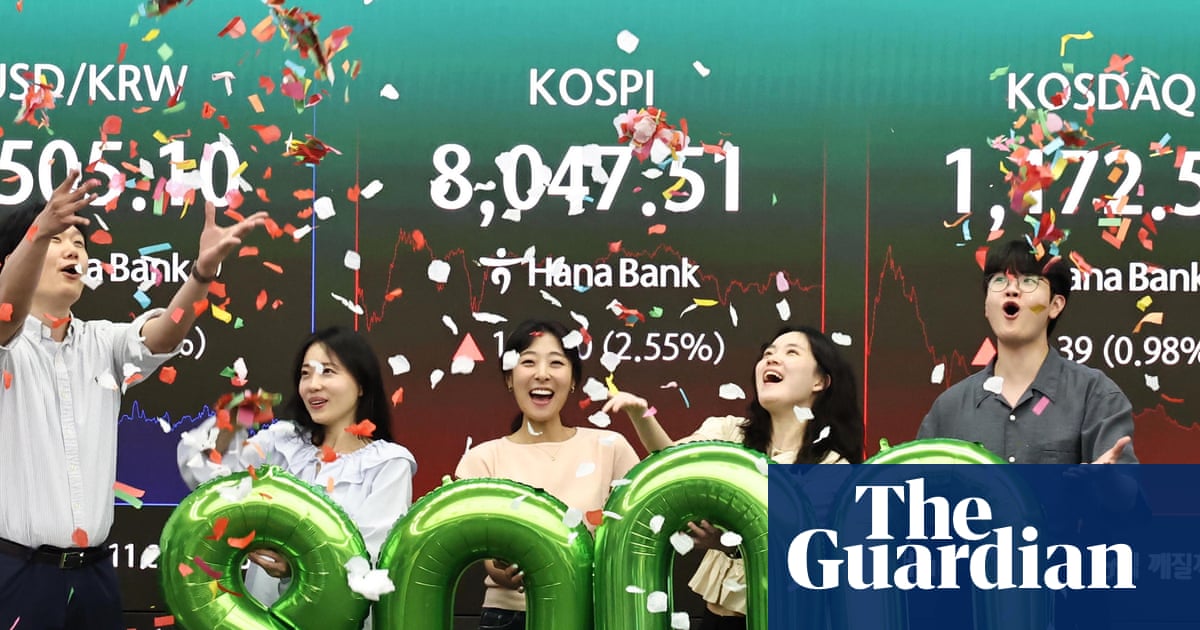
South Korea’s Kospi has hit record highs as SK Hynix and Samsung ride a global rush into AI chips, making the country’s market one of the world’s hottest. The article also warns that the rally is heavily dependent on a narrow slice of the tech sector.
South Korea’s stock market is soaring because computers for AI need lots of chips, and two big chip companies are selling a lot of them. It is like two giant engines pulling a train uphill, which is great until one engine slows down.
Analysis
A market lifted by chips
South Korea’s stock market has surged on the back of AI-related demand for semiconductors, especially memory chips. The article says SK Hynix has joined Samsung Electronics and Taiwan’s TSMC in the $1tn club, while SK Hynix’s share price has risen about 1,000% over the past year and Samsung’s about 500%.
Record highs, but narrow leadership
The Kospi has climbed to a record 8,880, up 220% in 12 months. Goldman Sachs is cited as lifting its 12-month target to 9,000, calling the current earnings surge in semiconductors a once-in-a-generation event. But the article stresses that the rally is unusually concentrated: one strategist says Samsung and SK Hynix may have contributed up to 70% of the index’s growth in 2026.
Why some are uneasy
That concentration is the core risk. The article notes that South Korea’s market is now highly exposed to the global AI spending cycle and to supply-chain problems. Analysts quoted in the piece also point to signs of market stress: one says the Kospi’s volatility index jumped to an unusually high level even as shares rose, suggesting investors are buying aggressively for fear of missing out.
Bigger picture
The story places South Korea in a broader shift in global markets. Money that once chased software and internet platforms is now moving toward the hardware underpinning AI, with Nvidia, TSMC, Samsung, SK Hynix and Micron at the center of that trade. Japan is also benefiting, with AI-linked shares helping push its market higher too.
Key points
- South Korea’s Kospi has reached a record high after a huge rally powered by AI-chip demand.
- SK Hynix and Samsung Electronics now sit among the world’s most valuable companies, above the $1tn mark.
- The article says the market’s rise is unusually concentrated in those two chipmakers.
- Analysts warn that the Kospi is exposed to AI spending trends and supply-chain risks.
- Some market watchers see signs of froth, including unusually high volatility during the rally.
If AI chip demand keeps rising, the companies at the center of the boom could continue posting strong earnings and support further gains in the Kospi. The article also says major investors still see room for more upside if semiconductor demand stays tied to the spending of large AI companies.
The rally could falter if the global AI spending cycle slows or if chip supply chains run into trouble. Because so much of the Kospi’s rise has come from just two companies, a setback in either one could hit the broader market hard.