Churches urged to help build resilient communities
South Africa's Social Development Minister Dina Pule has called on churches and faith-based organizations to continue their vital role in fostering resilient communities and supporting vulnerable populations.
Intelligence analysis by Gemini 2.5 Flash
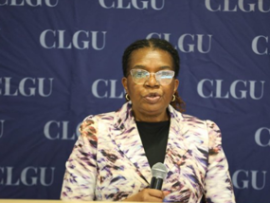
Minister Pule, speaking on behalf of Deputy President Paul Mashatile, emphasized the historical and ongoing importance of faith communities in South Africa, urging them to collaborate with government to address persistent social challenges like poverty, unemployment, inequality, and violence, while promoting ethical leadership and active citizenship.
Imagine your community is like a big puzzle, and sometimes pieces go missing or get broken, making it hard for everyone to live happily. The government is asking churches, which are like big friendly clubs in many neighborhoods, to help fix these puzzle pieces. They want churches to keep doing good things like giving food to hungry people, helping those who are sad or sick, and teaching everyone to be kind and respectful, just like they did when South Africa was changing a long time ago. It's like asking all the grown-ups to work together to make sure everyone feels safe and has a chance to do well.
Analysis
The call by Social Development Minister Dina Pule for churches to deepen their engagement in community building reflects a broader recognition within the South African government of the indispensable role non-state actors play in national development and social cohesion. Historically, faith-based organizations have been pillars of support, particularly during the transition to democracy, where they facilitated dialogue and peace-building. This legacy is now being invoked to address contemporary challenges that continue to plague the nation, such as pervasive poverty, high unemployment rates, and escalating social ills.
The government's appeal is not merely symbolic; it acknowledges the practical infrastructure and reach that churches possess, especially in hard-to-reach populations. These organizations often operate at the grassroots level, providing essential services like feeding schemes, shelters, substance abuse interventions, and support for vulnerable groups including children, the elderly, and people with disabilities. This collaborative model, where government institutions partner with faith communities, is presented as a pragmatic approach to extend social safety nets and implement prevention and treatment efforts more effectively across diverse communities.
Dina Pule
Minister Dina Pule's address underscores a strategic governmental approach to social challenges, recognizing that state intervention alone is insufficient to navigate South Africa's complex socio-economic landscape. By explicitly calling upon churches, Pule highlights a desire to harness the moral authority and community trust that these institutions command. Her remarks serve as a reminder of the historical precedent set by faith leaders during the nation's democratic transition, where their efforts were crucial in fostering reconciliation and nation-building.
Pule's emphasis on ethical leadership and active citizenship, alongside compassion, suggests a holistic vision for societal improvement that extends beyond mere service delivery. She implicitly tasks religious leaders with not only providing material aid but also with instilling values that can counteract societal decay, such as violence and disrespect. This dual role—both practical and moral—is central to the government's expectation of faith-based organizations.
Future Africa Campus
The choice of the Future Africa Campus of the University of Pretoria as the venue for the Church Leaders Gathering in Unity (CLGU) is significant. It positions the dialogue between government and faith leaders within an academic and forward-looking context, suggesting an emphasis on innovative solutions and intellectual engagement with societal problems. The campus, dedicated to interdisciplinary research and collaboration, provides a symbolic backdrop for discussions aimed at building a more resilient and equitable future for South Africa.
This setting implies a desire to move beyond traditional charity models towards more structured, evidence-based, and sustainable interventions. By convening at such a venue, the government signals its intent to integrate the efforts of faith communities into a broader national strategy for social development, potentially leveraging research and academic insights to enhance the effectiveness of community programs. It also highlights the importance of unity among diverse church leaders in presenting a cohesive front against national challenges.
30 Years of the Constitution
The timing of this gathering, coinciding with South Africa's commemoration of 30 Years of the Constitution, adds a layer of profound significance to Minister Pule's message. This milestone serves as a powerful reminder of the nation's foundational values, including human dignity, equality, and respect, which are enshrined in its supreme law. Pule's call for churches to reinforce messages against violence and to uphold the inherent dignity of every person directly aligns with these constitutional principles.
The commemoration provides a reflective moment to assess progress and persistent challenges since the dawn of democracy. By linking the role of churches to the Constitution's ideals, Pule frames their ongoing work as essential to realizing the full promise of a democratic and just society. It underscores that while the Constitution provides the legal framework, the active participation of civil society, particularly faith communities, is crucial for embedding these values into the daily lives and interactions of South Africans.
Key points
- Social Development Minister Dina Pule urged churches and faith-based organizations to help build resilient communities in South Africa.
- Churches played a critical role in South Africa's transition to democracy, fostering reconciliation and nation-building.
- Faith communities are vital partners in tackling poverty, supporting vulnerable households, and providing social services.
- Persistent challenges like poverty, unemployment, inequality, and gender-based violence require a united societal effort beyond government intervention.
- The Minister called for collective action against violence and substance abuse, emphasizing accountability and respect for human dignity.
If churches and faith-based organizations effectively heed the call for increased collaboration, South Africa could see significant strides in addressing social challenges. Their deep community roots and moral authority could enhance the reach and impact of social development programs, fostering greater social cohesion and providing much-needed support to vulnerable populations.
Should the collaboration between government and faith communities fail to materialize effectively, or if the challenges prove too overwhelming, South Africa risks continued struggles with poverty, unemployment, and social decay. A lack of unified effort could leave vulnerable populations underserved and exacerbate existing societal tensions, hindering national progress.