Coded for glamour and glory, AI make-up arm steals the show in Hong Kong hackathon
An AI-powered robotic make-up arm named Iron Bestie won top honors at Hong Kong's first physical AI hackathon, demonstrating its ability to apply make-up based on a user's schedule.
Intelligence analysis by Gemini 2.5 Flash
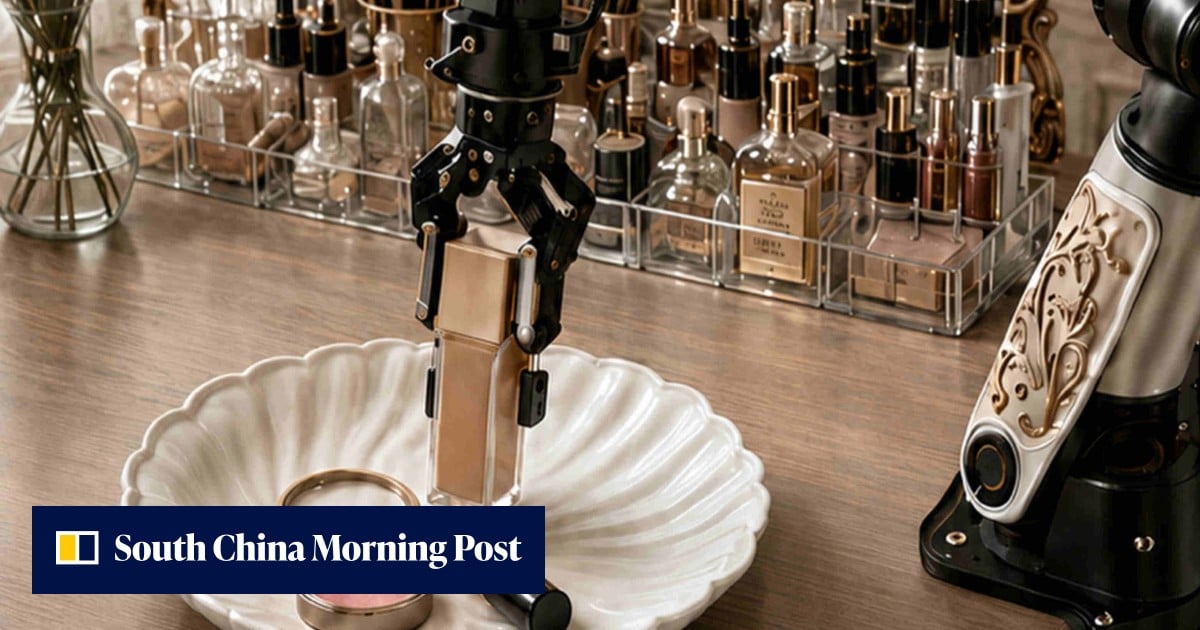
Iron Bestie, a personalized make-up assistant, secured the Grand MVP award at a 48-hour hackathon in Hong Kong, outperforming over 160 global competitors. The AI arm uses vision-language models and voice recognition to identify products, select them based on a user's calendar, and apply make-up directly, with built-in privacy measures.
Imagine a smart robot arm that can pick up your lipstick and put it on your lips, all while knowing what you need to do that day! A team in Hong Kong made this robot, called Iron Bestie, and it won a big competition because it's super clever and helps people get ready.
Analysis
Iron Bestie
The winning project, dubbed Iron Bestie, is an AI-powered robotic arm designed to function as a personalized make-up assistant. Its core functionality involves identifying various make-up products on a surface, selecting the appropriate item based on a user's daily schedule, and then precisely applying it to their face. This sophisticated capability is driven by a combination of vision-language models and voice recognition technology, allowing for intuitive interaction and precise execution.
The system also incorporates local redaction middleware, a crucial feature highlighted by its investors, to ensure that sensitive user data remains private and secure. This addresses potential privacy concerns associated with personal AI assistants that interact closely with users' routines and biometric data. The demonstration of the arm applying lipstick was a key moment that captivated judges and secured its victory.
Luo Yuqing
A significant aspect of Iron Bestie's success lies in its development team, particularly Luo Yuqing, a business information systems graduate from the City University of Hong Kong. Despite stating she had no formal coding background, Luo played a pivotal role in the project, demonstrating that interdisciplinary skills and curiosity can lead to significant innovation in the AI field. Her journey into AI began only a year prior to the hackathon, driven by personal interest.
Luo's personal connection to the project was evident, as she described an unexpected moment during the initial setup where the robotic hand wrapped around her wrist, likening it to "holding hands with someone I like." This anecdote underscores the human-machine interaction aspect and the emotional connection developers can form with their creations, even in a competitive environment. Her Grand MVP award at her debut hackathon marks a transformative experience in her perception of robotics.
Hong Kong
The hackathon itself was billed as Hong Kong’s first physical artificial intelligence hackathon, marking a significant milestone for the city's tech ecosystem. Hosting such an event underscores Hong Kong's commitment to fostering innovation in AI and robotics, attracting over 160 global competitors. The 48-hour sprint format emphasized rapid prototyping and problem-solving, blending hardware and software development.
The event provided a platform for emerging talent and showcased the potential for practical AI applications to address everyday needs. By bringing together diverse participants, including those with non-traditional tech backgrounds like Luo Yuqing, the hackathon contributed to a vibrant and inclusive innovation culture within Hong Kong's burgeoning technology sector. This initiative positions Hong Kong as a hub for future AI development and talent.
Key points
- Iron Bestie, an AI-powered make-up arm, won Hong Kong's first physical AI hackathon.
- The robot uses vision-language models and voice recognition to identify and apply make-up.
- It can select products based on a user's calendar and ensures data privacy with local redaction middleware.
- The winning team included Luo Yuqing, a graduate with no formal coding background, and Zeng Yitao, an algorithm developer.
- The hackathon involved over 160 global competitors in a 48-hour hardware-meets-software sprint.
This development suggests a future where personalized AI assistants can seamlessly integrate into daily routines, offering convenience and efficiency in personal care. The success of a team with diverse backgrounds also highlights the potential for broader participation and innovation in AI development.