Coldcard fallout shows up onchain as 210,000 bitcoin leaves old wallets
Approximately 210,000 bitcoin (BTC) have moved from long-term holder wallets in the past week, a significant on-chain event linked to the Coldcard security breach. This movement is interpreted as a shift in custody rather than traditional selling, occurring while bitcoin …
Intelligence analysis by Gemini 2.5 Flash
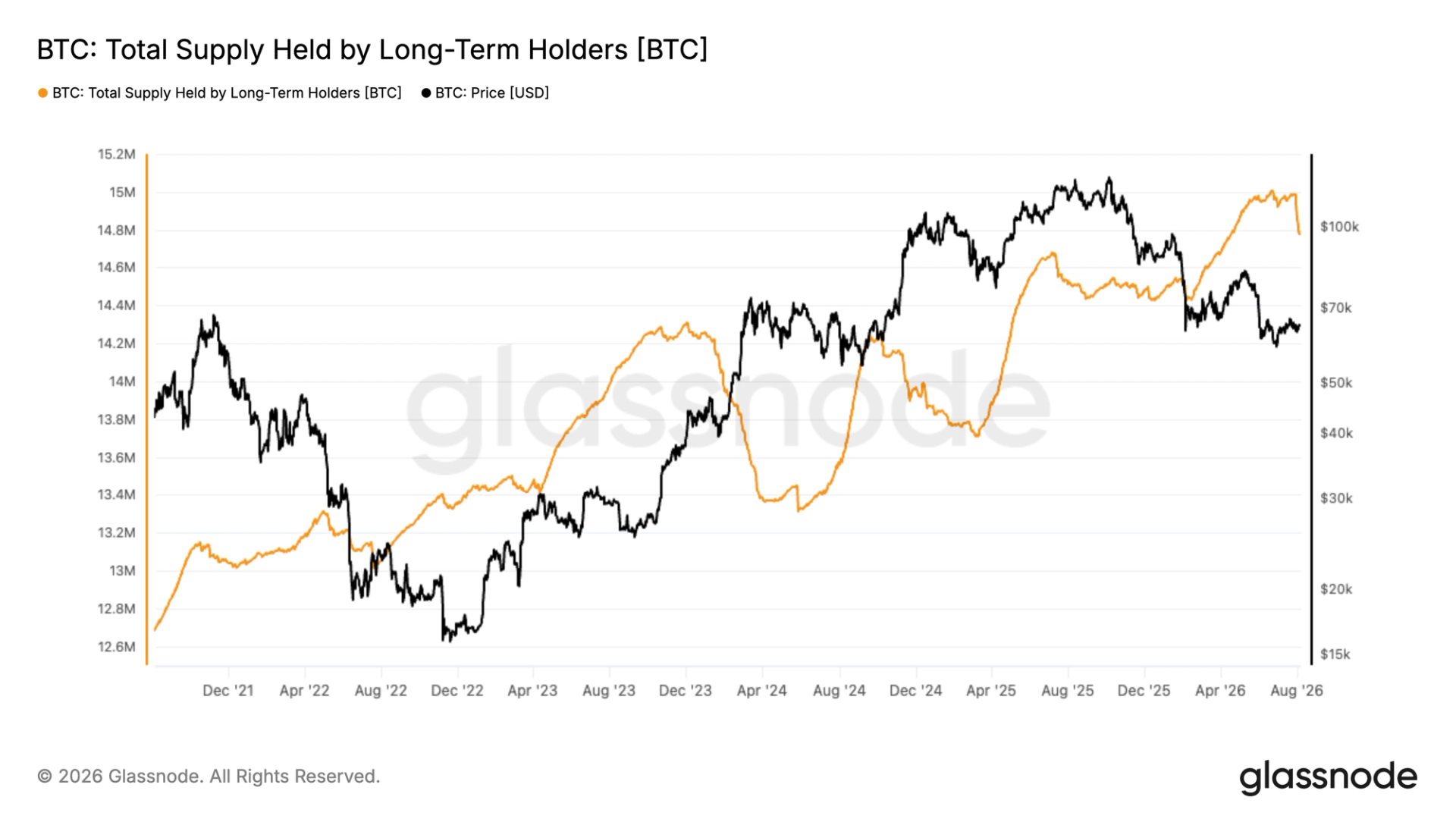
The recent Coldcard security breach has triggered a substantial on-chain migration of bitcoin, with 210,000 BTC moving out of long-term holder wallets. Unlike previous large movements that coincided with market peaks and profit-taking, this shift is happening near market lows, suggesting users are re-evaluating their self-custody arrangements and moving funds to new wallets or regulat…
Imagine you have your favorite toys in a special box, but then you hear that some of those boxes might not be super safe anymore. So, you decide to move your toys to a brand new, stronger box, or maybe even ask a trusted grown-up to keep them safe for you. That's what's happening with a lot of digital money called bitcoin. People who kept their bitcoin in a certain kind of digital 'safe' called Coldcard are now moving a huge amount of it, about 210,000 bitcoins, to new, safer digital safes or to big companies that can look after it for them, because their old 'safe' had a tiny problem.
Analysis
The recent on-chain activity, marked by the movement of roughly 210,000 bitcoin from long-term holder (LTH) wallets, represents a notable shift in the cryptocurrency landscape. This substantial transfer, the largest decline in LTH supply since December 2024, is directly attributed to the fallout from a security breach affecting Coldcard hardware wallets. Unlike historical patterns where large LTH movements typically signaled profit-taking near market peaks, this current migration is occurring with bitcoin trading significantly below its all-time high, suggesting a different underlying motivation.
Coldcard Incident
The Coldcard security breach stemmed from a vulnerability in its firmware, specifically related to weak randomness, which allowed malicious actors to potentially reconstruct users' wallet recovery phrases. This flaw led to an estimated $114 million in losses across thousands of affected addresses, prompting Coldcard to advise users to generate entirely new wallets and transfer their funds. The incident underscores the critical importance of robust security protocols in hardware wallets, which are designed to be the most secure method for storing cryptocurrency.
This event has forced many long-term holders, often considered the 'smart money' for their resilience through market volatility, to re-evaluate their self-custody strategies. The movement of 210,000 BTC is not merely a reaction to price fluctuations but a direct consequence of a perceived security compromise, compelling users to take proactive measures to protect their assets. The scale of the movement highlights the widespread impact of such breaches on the broader bitcoin ecosystem and the trust placed in hardware security solutions.
210,000 Bitcoin
The movement of approximately 210,000 bitcoin out of long-term holder wallets is a significant on-chain event, representing a substantial portion of the total circulating supply. This volume of movement, particularly from a cohort known for its HODLing tendencies, typically signals a major market event. However, the context of this particular movement — occurring near market lows rather than highs — distinguishes it from previous distribution waves observed during periods of market strength or tops, such as those in March 2021, March 2024, and December 2024.
Instead of profit-taking, this migration of 210,000 BTC is primarily a shift in custody. Users are transferring their bitcoin to newly generated wallets with enhanced security, or increasingly, to regulated custody services and spot bitcoin ETFs. This indicates a growing preference for perceived safer storage solutions following the Coldcard incident. The fact that bitcoin did not make new lows after the hack, coupled with significant inflows into U.S. spot bitcoin ETFs, suggests that while the security breach caused a custody shift, it did not trigger a widespread loss of conviction in bitcoin itself.
BlackRock's iShares Bitcoin Trust (IBIT)
The article notes that U.S. spot bitcoin ETFs attracted approximately $754 million in inflows over the past week, with BlackRock's iShares Bitcoin Trust (IBIT) accounting for the majority of these inflows. This trend provides a crucial counter-narrative to the security concerns raised by the Coldcard incident. While some users are moving to new self-custody wallets, others are clearly opting for regulated financial products as an alternative to managing their own private keys.
The strong performance of IBIT and other spot bitcoin ETFs in attracting capital suggests that a portion of the bitcoin moving out of compromised or re-evaluated self-custody wallets is finding its way into these regulated vehicles. This indicates a maturing market where institutional-grade custody solutions are becoming increasingly attractive, especially in the wake of security incidents. The inflows into ETFs offer a degree of market support, demonstrating that despite the challenges of self-custody, investor interest in bitcoin remains robust, albeit with a potential shift in preferred storage methods.
Key points
- Approximately 210,000 bitcoin (BTC) have moved from long-term holder wallets in the past week.
- This movement is linked to the Coldcard hardware wallet security breach, not typical profit-taking.
- The breach stemmed from weak randomness in Coldcard firmware, allowing potential reconstruction of wallet recovery phrases.
- Users are transferring funds to newly generated wallets or regulated custody services, including spot bitcoin ETFs.
- U.S. spot bitcoin ETFs, led by BlackRock's IBIT, attracted $754 million in inflows during the same period.
The significant movement of bitcoin, while triggered by a security breach, is primarily a custody shift rather than a sell-off, indicating resilience in investor conviction. The strong inflows into U.S. spot bitcoin ETFs, particularly BlackRock's IBIT, suggest that some users are moving towards more regulated and potentially secure custody solutions, which could enhance overall market stability and trust.
The Coldcard security breach highlights the inherent risks associated with self-custody of cryptocurrencies, even with specialized hardware. The need for 210,000 BTC to be moved due to compromised firmware underscores the potential for significant financial losses and the ongoing challenge of ensuring robust security in the crypto ecosystem.