Colorado River reservoirs hit record lows as Trump administration threatens major cuts
Lake Mead and Lake Powell have fallen to record lows as the Trump administration moves to impose sweeping cuts on water use among seven Western states. Federal officials are weighing reductions nearly twice what California, Arizona, and Nevada have already offered.
Intelligence analysis by Llama
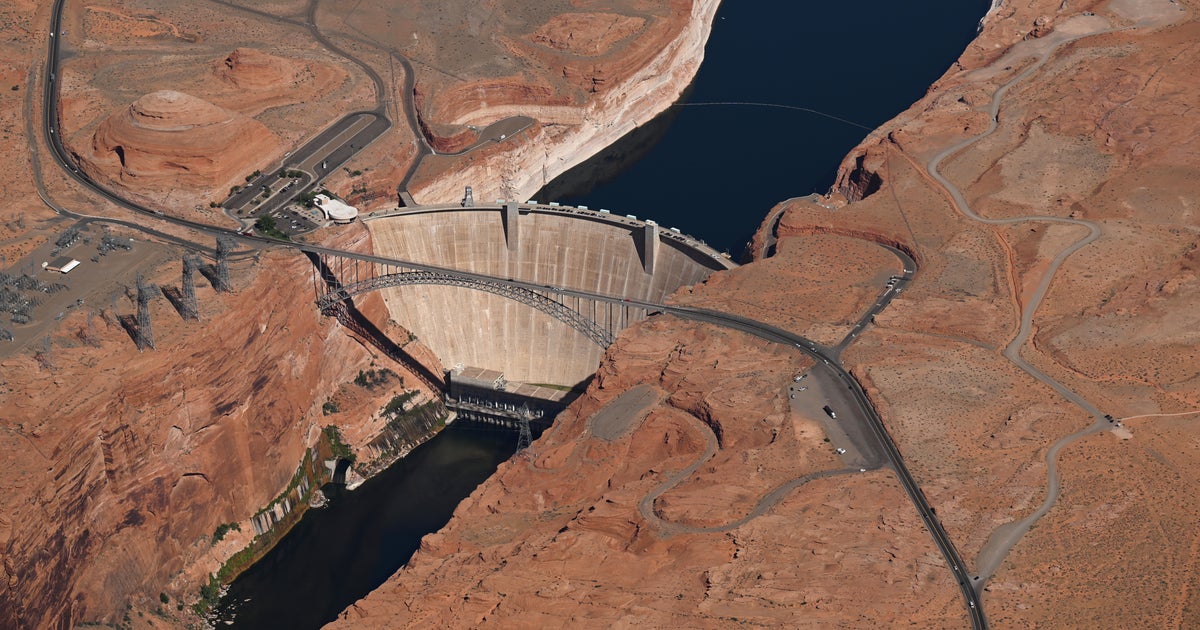
The nation's two largest reservoirs are at all-time lows, and seven states cannot agree on how to share a shrinking Colorado River. The Trump administration is poised to impose cuts roughly twice the size of what the lower basin states have volunteered.
Imagine a giant bathtub shared by seven kids, and the water keeps evaporating because the weather is hotter than usual. Three of the kids have already agreed to use less water, but the other four keep using more. Now a grown-up is about to come in and decide how much water each kid gets, because the tub is almost empty. If it runs out completely, the lights that run on water power will go out too.
Analysis
A Reservoir Crisis Reaches Its Tipping Point
Lake Mead and Lake Powell, the two largest reservoirs in the United States, are now sitting at less than 30% of capacity, the lowest levels ever recorded. The math is unforgiving: if Lake Powell drops another 33 feet, the reservoir will fall below the threshold needed to generate hydroelectric power at the dam, cutting off the mechanism that pushes water downstream into the Colorado River. With the river fed by Rocky Mountain snowmelt that has been shrinking for years, the crisis is no longer a forecast but a present reality for cities, farms, and tribal nations across the Southwest. The current shortage is the product of a warming climate that has steadily reduced snowpack layered on top of decades of overuse by a growing regional population.
The Upper–Lower Schism
The seven states that draw from the Colorado River are split into two camps, and the split is now the central obstacle to any deal. The lower basin states — California, Arizona, and Nevada — have cut their consumption by nearly 20% since 2015, according to Kelly Shannon McNeill, managing director of LA Waterkeeper. The upper basin states — Colorado, Wyoming, Utah, and New Mexico — have moved in the opposite direction, increasing their use in the last year while saying they cannot afford cuts. The asymmetry has hardened the political standoff. California, Arizona, and Nevada have offered to reduce their draw by roughly 1.6 million acre-feet, about 500 billion gallons, annually for two years, but federal officials are considering reductions nearly twice that size, which would force the upper basin to the table regardless of its objections.
What Federal Cuts Would Mean on the Ground
If the Trump administration imposes the larger cuts, the consequences will land unevenly but firmly. Cities will face higher costs to secure water for residents, outdoor watering will face tighter restrictions, and farmers — who use the majority of the river's flow — will confront significant operational changes. The risk extends beyond water: loss of hydroelectric generation at Lake Powell could raise energy costs and force utilities to find alternative sources. McNeill urged residents in the affected states to push their negotiators to reach an agreement, framing the moment as one of political will rather than physical scarcity. Until the states resolve their differences, the federal lever is the only tool left, and the administration has shown it is prepared to use it.
Key points
- Lake Mead and Lake Powell are at the lowest levels ever recorded, both under 30% full.
- Lower basin states have cut Colorado River use by roughly 20% since 2015 while upper basin states have increased theirs.
- California, Arizona, and Nevada have offered 1.6 million acre-feet in annual cuts; federal officials are weighing reductions nearly twice that.
- A further 33-foot drop at Lake Powell would end hydroelectric generation at the dam.
- The Trump administration is preparing to impose sweeping cuts after years of failed state-level negotiations.
Federal pressure could break the political stalemate and force upper basin states to the negotiating table, producing a basin-wide agreement before either reservoir hits dead-pool levels. The lower basin states' voluntary 20% cuts since 2015 show that coordinated reductions are achievable when political will aligns.
If Lake Powell drops the additional 33 feet needed to breach hydroelectric generation, the region loses a critical power source and faces cascading costs across municipal water supplies and agriculture. Continuing political gridlock could force deeper, more disruptive cuts later, hitting farmers and cities that have not yet prepared.