Contact Between Al-Shaibani and His Emirati Counterpart... Discussion of Regional Developments and Bilateral Relations
Syrian Foreign Minister Asaad Al-Shaibani and UAE Foreign Minister Abdullah bin Zayed Al Nahyan discussed developing bilateral relations and regional developments, emphasizing continued coordination for mutual interests.
Intelligence analysis by Gemini 2.5 Flash
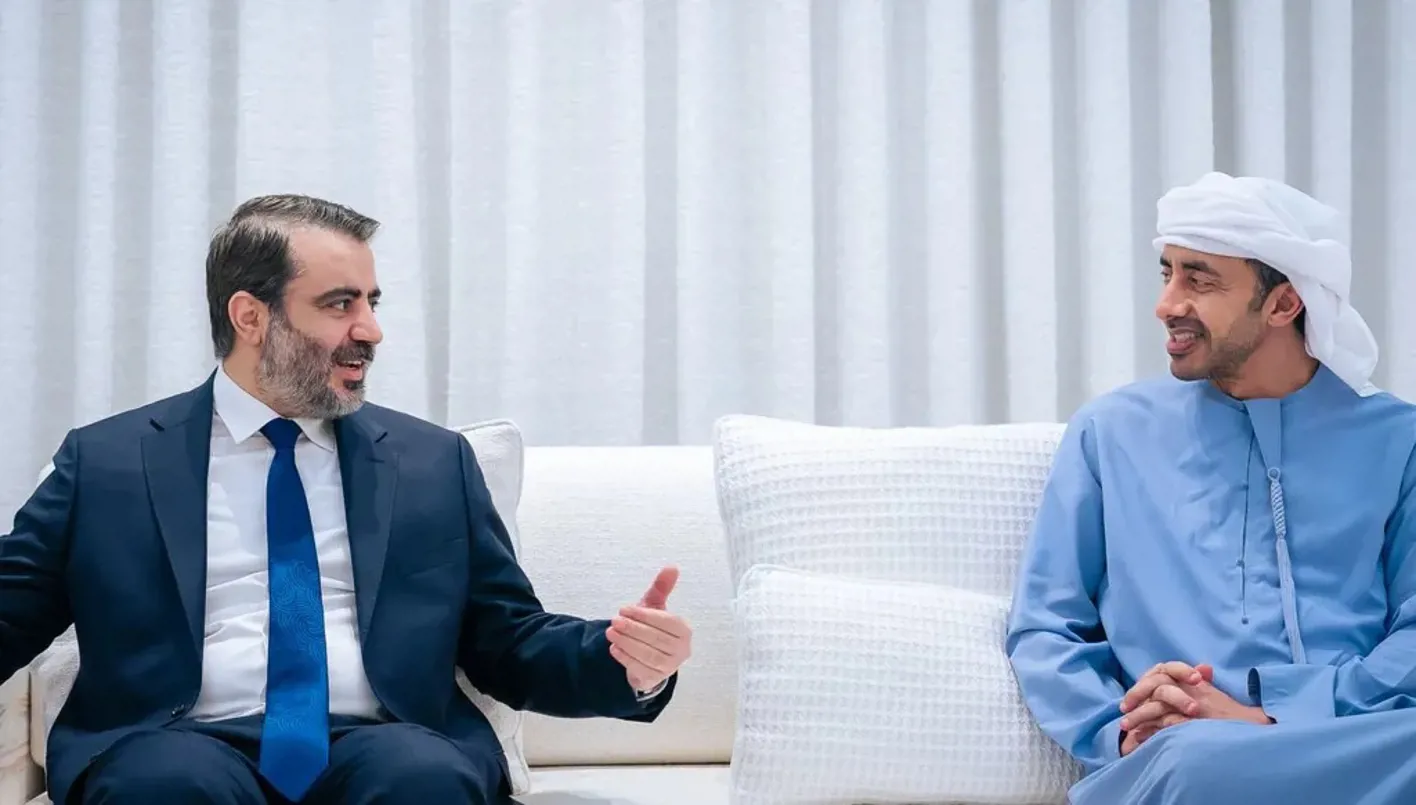
The article reports on a phone call between the foreign ministers of Syria and the UAE, focusing on strengthening bilateral ties and addressing current regional issues. This diplomatic exchange follows a similar high-level discussion between the Syrian and Emirati presidents earlier in the month, indicating sustained efforts to foster closer relations.
Two important people, the foreign ministers from Syria and the UAE, talked on the phone about how their countries can be better friends and work together. They also discussed what's happening in their neighborhood. It's like when two classmates who haven't played together in a while decide to team up for a school project, hoping to make things better for everyone.
Analysis
The recent phone call between Syrian Foreign Minister Asaad Al-Shaibani and his Emirati counterpart, Abdullah bin Zayed Al Nahyan, underscores a continued diplomatic push to strengthen ties between Damascus and Abu Dhabi. This interaction is not an isolated event but rather a follow-up to a similar high-level discussion that took place earlier in the month between the two nations' presidents. The consistent engagement at both presidential and ministerial levels signals a deliberate strategy to foster closer relations, moving beyond the period of strained ties that characterized much of the past decade. The discussions centered on enhancing bilateral cooperation across various sectors and addressing the latest regional developments, indicating a shared interest in stability and mutual benefit.
Asaad Al-Shaibani
Syrian Foreign Minister Asaad Al-Shaibani's participation in this dialogue highlights Syria's ongoing efforts to re-engage with Arab states. His discussions with the UAE Foreign Minister focused on practical steps to develop bilateral relations and explore avenues for cooperation in areas of mutual interest. This engagement is crucial for Syria as it seeks to rebuild and reintegrate into the regional political and economic landscape after years of isolation. The emphasis on continued coordination suggests a desire to establish a more structured and sustained diplomatic channel between the two countries.
The Syrian government, represented by Al-Shaibani, appears keen to leverage these diplomatic overtures to secure support for its post-conflict recovery. By engaging with a significant regional player like the UAE, Syria aims to gradually normalize its standing and potentially attract much-needed investment and economic partnerships. These discussions are a testament to the evolving dynamics in the Middle East, where pragmatic engagement is increasingly prioritized over past ideological divisions.
Abdullah bin Zayed
The involvement of UAE Foreign Minister Abdullah bin Zayed Al Nahyan in these high-level talks reflects the United Arab Emirates' strategic approach to regional diplomacy. The UAE has been at the forefront of efforts to re-engage with Syria, advocating for its return to the Arab League and fostering channels of communication. His conversation with Al-Shaibani reiterates the UAE's commitment to supporting regional stability through dialogue and cooperation. The focus on shared interests underscores a pragmatic foreign policy aimed at de-escalation and economic integration.
The UAE's proactive stance in engaging with Syria can be seen as part of a broader strategy to reshape regional alliances and promote a more inclusive Arab order. By facilitating dialogue and exploring cooperation, Abu Dhabi aims to mitigate external influences and foster a more self-reliant regional security architecture. The discussions on regional developments indicate a shared concern for stability and a willingness to coordinate responses to common challenges, further solidifying the UAE's role as a key diplomatic facilitator in the Middle East.
October 7th
The article explicitly references a prior phone call on October 7th between Syrian President Ahmed Al-Shara and UAE President Sheikh Mohammed bin Zayed Al Nahyan. This earlier presidential-level engagement provides critical context for the subsequent ministerial discussions, indicating a top-down directive to deepen bilateral ties. The continuity of these high-level exchanges within a short period signifies a concerted and deliberate effort by both nations to advance their relationship. The presidential call specifically addressed economic and investment cooperation, laying the groundwork for the broader discussions on bilateral relations and partnerships.
The mention of the October 7th call underscores the strategic importance both countries place on this renewed relationship. It suggests that the current diplomatic momentum is not merely reactive but part of a planned trajectory to enhance cooperation across various domains, including economic and investment sectors. This sustained engagement at the highest levels indicates a long-term vision for strengthening the Syria-UAE axis, potentially influencing broader regional dynamics and setting a precedent for other Arab states considering similar rapprochements with Damascus.
Key points
- Syrian Foreign Minister Asaad Al-Shaibani spoke with UAE Foreign Minister Abdullah bin Zayed Al Nahyan.
- They discussed developing bilateral relations and enhancing cooperation in various fields.
- The call also covered the latest regional developments and issues of mutual interest.
- Both sides emphasized the importance of continuing coordination and communication.
- This ministerial discussion follows a prior phone call between the Syrian and UAE presidents on October 7th.
The continued high-level dialogue between Syria and the UAE suggests a path towards stronger bilateral relations, potentially leading to increased economic cooperation, investment, and a more stable regional environment. This could aid Syria's recovery and reintegration into the Arab world.
While diplomatic engagement is positive, the article does not detail concrete outcomes or solutions to regional challenges. The discussions might remain largely symbolic without tangible progress on deeper political or economic issues, leaving underlying complexities unresolved.