Costly fuel pushes more Indians to buy electric cars but challenges remain
India's EV market is growing as high fuel prices and tighter rules push more buyers toward electric cars, bikes and three-wheelers. Charging gaps and supply limits still slow the shift.
Intelligence analysis by GPT-5.4 Mini
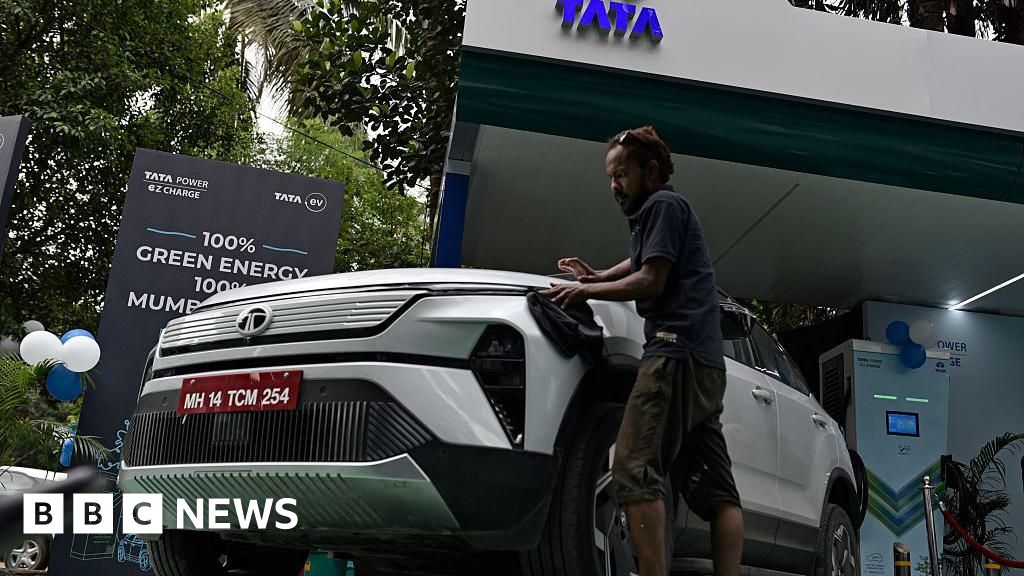
India's electric-vehicle market is finally moving beyond the early-adopter stage: EVs have crossed 5% of passenger-vehicle sales, and cheaper-to-run three-wheelers and bikes are already seeing strong adoption. But the shift still depends on better chargers, stronger supply chains and firmer regulation.
India is starting to swap gas-guzzling vehicles for electric ones, like trading a leaky bucket for a reusable bottle. High fuel prices and new rules are helping, but many places still do not have enough charging plugs, so some people worry a battery may run out far from home.
Analysis
Momentum is building
India's EV transition is no longer just a future possibility. The article says electric-car sales grew 25% in the year ending March 2026, and EVs moved past the 5% share of passenger-vehicle sales that is often seen as an important threshold. Larger vehicles priced above one million rupees are adopting faster, with about one in ten sales now electric, while electric three-wheelers and motorbikes already have sizeable shares in their segments.
What is pushing buyers
The near-term boost is higher fuel costs. India imports almost 90% of its oil, and state-run fuel retailers have raised pump prices after crude climbed sharply. Prime Minister Narendra Modi has also urged people to conserve fuel by car-pooling, taking public transport and working from home. Analysts quoted in the story say this makes EVs look more attractive.
Regulation may matter even more
The article also highlights upcoming CAFE-3 rules, due from April next year through March 2032. These would tighten emissions standards for cars and, unlike the current system, make penalties more binding. Bernstein analysts argue that this could create a stronger push toward EV adoption. Local policies may add pressure too, including draft plans in Delhi to phase out conventional engines and stop new ICE two- and three-wheeler registrations by 2027.
The limits are still real
The transition is uneven. India has grown its public charging network from about 2,000 stations to more than 10,000 in three years, but coverage is still concentrated in a few states. Nomura notes that China has reached 20 million public charging points, while India is far behind. Range anxiety remains a major barrier, and analysts also point to dependence on global rare-earth supply for batteries. The story's overall message is that the EV market is gaining real traction, but broad mass adoption still depends on affordability, infrastructure and policy enforcement.
Key points
- India's electric-car market grew 25% in the year ending March 2026, and EVs have passed 5% of passenger-vehicle sales.
- Demand is strongest in high-use, cost-sensitive categories such as three-wheelers and motorbikes.
- Higher fuel prices, India's reliance on imported oil and upcoming CAFE-3 rules are strengthening the case for EVs.
- Charging infrastructure is improving but remains uneven, and India still trails China, the EU and the US by a wide margin.
- Supply-chain gaps, including dependence on global rare-earth supplies, remain a major concern.
If fuel stays expensive and the new rules are enforced, EVs could keep gaining share in cars, three-wheelers and two-wheelers. More affordable models and a larger charging network would make the switch easier for everyday buyers, which the article says analysts already expect over time.
If charging growth stays uneven, range anxiety and practical inconvenience could slow adoption outside the biggest cities. The article also points to supply-chain dependence on rare earths, which could keep battery production and pricing under pressure.