Could humanoid robots be heading for the battlefield?
BBC visits a San Francisco startup building humanoid robots for defence, including possible battlefield use. The company says the machines could take dangerous jobs from soldiers.
Intelligence analysis by GPT-5.4 Mini
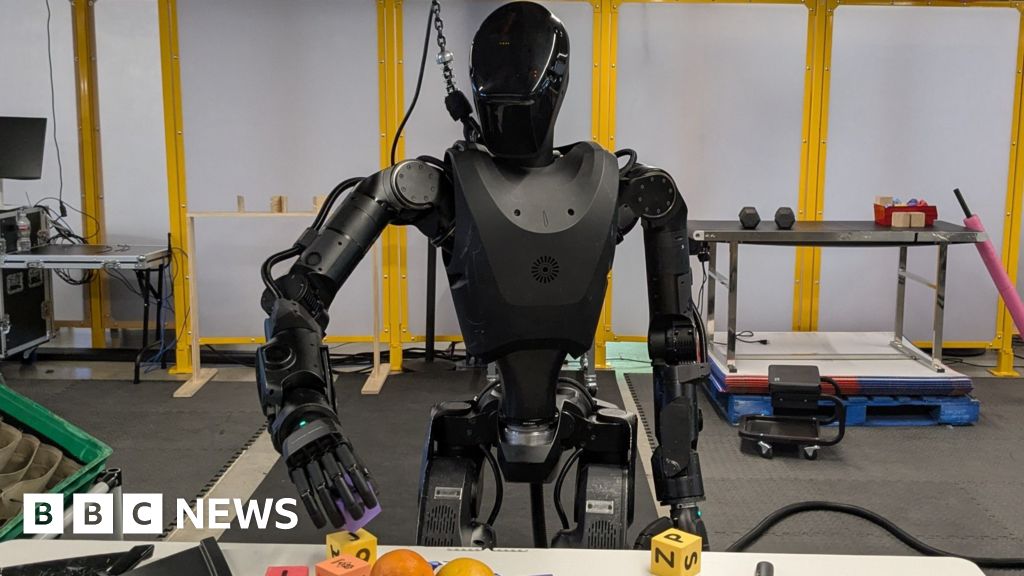
Foundation Robotics says its humanoid Phantom robots are being built for both civilian and military use, from supply pickup and reconnaissance to, controversially, frontline weaponisation. The piece weighs that pitch against technical limits and ethical concerns.
A robot that looks a bit like a person is being tested for army jobs like carrying things, looking around dangerous places, and fixing problems. The company even wants it to help in fighting, like a metal helper sent where people might get hurt.
Analysis
What Foundation is building
The BBC profiles Foundation Robotics, a two-year-old San Francisco startup developing Phantom, a humanoid robot intended for both civilian and military use. Founder Sankaet Pathak says the company is focused on defence applications ranging from supply pickup, reconnaissance, recovery of equipment or casualties, and hazard inspection.
The more controversial part is what Pathak calls frontline weaponisation. He argues that humanoid robots could keep soldiers out of danger, especially in buildings and other close-quarters settings where chokepoints can be lethal. He also says land-based autonomy may be more precise than striking from the air and could reduce collateral damage.
How mature the tech is
The robot shown to the reporter is still clearly early. The first-generation Phantom does not have a battery, is not dustproof or waterproof, cannot get up after a fall, and still lacks strong, dexterous hands and proper wrists. A second-generation version is being built separately, and Pathak says it should be more rugged, run for about six hours, and recover if it falls.
Foundation’s longer-term target is ambitious: at least 40,000 units a year by the end of 2027, with a cost below $20,000 each over time.
Why the debate is heating up
Pathak says China is pushing the technology and the West needs to keep pace. He imagines large AI-driven humanoid forces alongside autonomous drones. The company says it has $24m in research contracts, including a US military pilot limited to handling rather than firing weapons, plus two units being tested by the Ukrainian military, where weaponisation is part of the testing.
The article also notes that the military is already interested in humanoids, and that simpler systems such as drones and some ground robots are already used to carry payloads. But some robot companies oppose weaponisation on ethical grounds. That tension is the core of the story: humanoid robots may fit human-built spaces, but whether they should be turned into weapons is still deeply contested.
Key points
- Foundation Robotics is building Phantom humanoids for both civilian and defence uses.
- The company says possible military roles include supply pickup, reconnaissance, recovery, and hazard inspection.
- Pathak openly argues for frontline weaponisation, saying humanoids could reduce risk to soldiers.
- The first Phantom model is still technically limited, while a more capable second generation is in development.
- The article highlights a wider debate over whether humanoid robots should ever be armed.
If the technology matures, humanoid robots could handle supply pickup, reconnaissance, recovery, and hazard checks in places that are too dangerous for people. The company argues that keeping soldiers out of buildings and chokepoints could reduce casualties and collateral damage.
The article also shows how immature the hardware is: the first model lacks a battery, dustproofing, waterproofing, and the ability to recover after a fall. If weaponisation advances before the safety and ethics questions are settled, the result could be a new arms race and more harm in combat.