CPJ condemns Israeli abduction of Press TV journalist
The Committee to Protect Journalists (CPJ) has condemned Israel's abduction of Press TV journalist Naqaa Hamed, demanding her immediate release. Hamed was detained at a checkpoint near Bethlehem while returning from an assignment.
Intelligence analysis by Gemini 2.5 Flash Lite
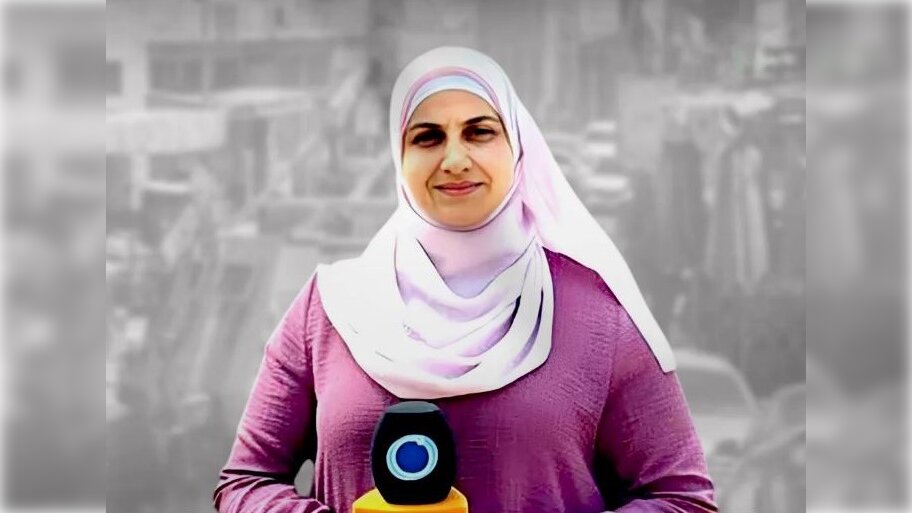
The CPJ is calling for the immediate release of Press TV journalist Naqaa Hamed, who was abducted by Israeli soldiers at a checkpoint in the occupied West Bank. Hamed, a Palestinian-American mother of three with over 15 years of experience, was questioned about her reporting before being taken into custody.
Imagine a reporter who tells stories about what's happening in a difficult place. Some soldiers stopped her car, took her away, and are keeping her in jail even though she was just doing her job. A group that protects reporters is asking the soldiers to let her go and explain why they took her.
Analysis
Naqaa Hamed
Naqaa Hamed, a 38-year-old Palestinian-American journalist and mother of three, has been working as a journalist for over 15 years, joining Press TV in 2024. Her reporting has often focused on the occupied West Bank, including Israeli military actions against Palestinians. Her abduction occurred on a Tuesday as she was returning from a work assignment in Masafer Yatta, near Hebron. She was traveling with two cameramen, Wissam Hajouj and Hamada Mansour, who were later released after being photographed by the soldiers.
Hamed was stopped at a temporary Israeli army checkpoint in the village of Tuqu, near Bethlehem. According to Hajouj, the soldiers questioned Hamed specifically about her reporting and journalistic work before taking her into custody at the checkpoint. She was subsequently transferred to an Israeli police station near Salfit, where she remained in Israeli detention. An Israeli military court extended her custody until September 23, prolonging her ordeal.
Committee to Protect Journalists (CPJ)
The Committee to Protect Journalists (CPJ) has strongly condemned the abduction of Naqaa Hamed and is demanding her immediate release. Sara Qudah, CPJ's regional director, has called for an end to the systematic harassment and intimidation targeting journalists in the occupied West Bank. Qudah stated that Israeli authorities should free Hamed and publicly clarify the legal basis for her detention.
The CPJ's intervention underscores the international concern for journalists working in conflict zones and areas with restricted press freedom. The organization frequently monitors and reports on cases of journalists being detained, harassed, or harmed in the course of their work, advocating for their rights and safety.
Israeli Military Court
Following her abduction, Naqaa Hamed was brought before an Israeli military court. The court decided to extend her custody until September 23, a decision that prolongs her detention and the uncertainty surrounding her situation. This extension indicates that the Israeli authorities intend to hold her for further investigation or legal proceedings.
Her husband, Bashar Abed, informed the CPJ that an online campaign had been targeting Hamed, calling for her abduction due to her journalistic activities. This detail suggests a potential motive beyond immediate operational concerns, pointing towards a targeted action possibly fueled by online sentiment or propaganda against her work.
Key points
- Press TV journalist Naqaa Hamed was abducted by Israeli soldiers at a checkpoint near Bethlehem.
- The Committee to Protect Journalists (CPJ) has condemned the abduction and demanded Hamed's immediate release.
- Hamed, a Palestinian-American journalist, was questioned about her reporting before being taken into custody.
- An Israeli military court extended Hamed's detention until September 23.
- Hamed's husband reported an online campaign calling for her abduction due to her work.
The CPJ's strong condemnation and demand for immediate release could pressure Israeli authorities to provide a clear legal basis for Hamed's detention or to release her promptly. Increased international attention may also deter future arbitrary detentions of journalists in the region.
If Israeli authorities continue to hold Hamed without clear justification or extend her detention further, it could signal a worsening environment for journalists in the occupied West Bank, potentially leading to increased self-censorship and reduced reporting on critical issues.

