Crypto Clarity Act still at mercy of ethics section as Democrats balk at Trump deal
The U.S. Senate still has some work to do despite President Donald Trump's apparent concessions in the crypto Clarity Act. Democrats have signaled they’re still not content with the way the limits may be enforced.
Intelligence analysis by Llama
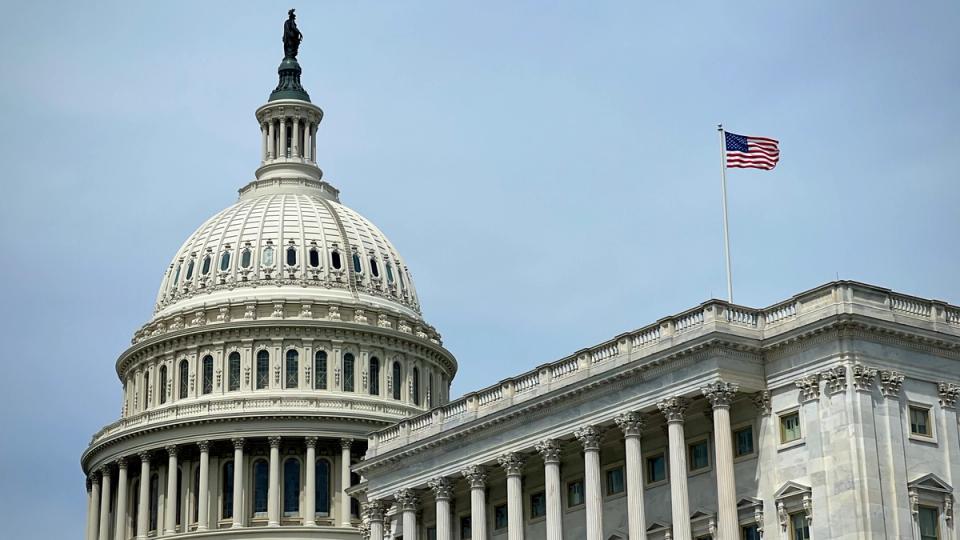
The debate may be narrowing over the biggest hanging question in the crypto Clarity Act — the crypto limits for U.S. government officials — but Democrats have signaled they’re still not content with the way the limits may be enforced.
The U.S. Senate is still working on a bill called the Clarity Act, which is about making rules for government officials and their involvement in the crypto market. Some Democrats are unhappy with the way the rules are being enforced, and they want to make sure that state attorneys general are in charge of enforcing the rules, not the U.S. attorney general.
Analysis
A $60B Vote of Confidence
The U.S. Senate still has some work to do despite President Donald Trump's apparent concessions in the crypto Clarity Act. The White House has circulated some details of the conflict-of-interest limits the president agreed to with Republican negotiators, but talks are still underway.
The debate may be narrowing over the biggest hanging question in the crypto Clarity Act — the crypto limits for U.S. government officials — but Democrats have signaled they’re still not content with the way the limits may be enforced. President Donald Trump has agreed to broad restrictions for government officials, including himself, the vice president and members of Congress, sources say, and his White House is making a case that any resistant Democrats should be blamed if Clarity still doesn’t move forward.
U.S. Senate Democrats are said to be unhappy with some of the details emerging about the crypto market structure bill's most contentious section: the language that will ban government officials from significant crypto ties. The deepest current point of disagreement is who will enforce the ban, according to people familiar with a crypto industry briefing delivered Tuesday from a White House official. The industry insiders were told that the Democrats have held tight to their preference that state attorneys general be able to enforce the ethics restrictions on federal officials, while the White House and Republicans behind the bill are insisting on the U.S. attorney general as the top authority.
The Digital Asset Market Clarity Act's advancement has come to depend on a compromise on this ethics restriction for government officials, which sources say would include the president, vice president and all members of Congress. If they can work out a compromise on that point, the rest of the bill is expected to move forward, despite a few loose ends in other areas, such as the treatment of developers in the bill's illicit-finance safeguards.
August 7 — the fast-approaching final day before the Senate's summer recess — is seen as a major deadline for finishing the Clarity Act this year. Crypto insiders are expecting the bill to get to the floor as soon as the beginning of next week, which would fit with what Senate Majority Leader John Thune had previously indicated. The legislation could require several days to get to a final vote.
Earlier on Tuesday, CoinDesk had reported that a White House official said Trump agreed to "the most comprehensive and wide-ranging ethics provision in history," though the actual language he's accepted hadn't yet been shared with Democrats. As of press time, it was still unclear if Democrats had seen the exact language. Still, the administration argued that it had "bent over backward" to satisfy Democrats, suggesting it would be their fault if the legislation doesn't advance.
Trump's agreement to a crypto constraint of his own business ties raises significant questions about how his involvement would be made sufficiently remote to comply with the limit. The president and his family are deeply connected to several crypto business initiatives, including their ownership stake in World Liberty Financial. While Trump has insisted he's not conflicted as his administration imposes crypto policies that affect his own businesses, Democratic lawmakers have openly accused him of corruption .
The disagreement over the Clarity Act's ethics enforcement boils down to which legal authority the sides believe will properly enforce the restriction. State attorneys general are beholden to their states and local constituents, and many of them have conducted legal battles with Trump's administration. But a federal enforcement role would traditionally be in the hands of the Department of Justice, which Senate Democrats suggest is too closely influenced by the president, whose former personal lawyer, Todd Blanche, is his current nominee to be attorney general.
If the Senate negotiators from both parties manage to find common ground in these final days, a Senate passage still isn't quite enough. The bill would then need another approval from the U.S. House of Representatives, probably when it returns to session in September. But the House has recently struggled with internal strife within the Republican majority that has tripped up progress on other matters. Also, chatter among Democrats has raised the potential of inserting prediction-market policy into the Clarity Act — a controversial new topic that would likely derail the effort.
Nikhilesh De contributed reporting.
Key points
- The U.S. Senate still has some work to do despite President Donald Trump's apparent concessions in the crypto Clarity Act.
- Democrats have signaled they’re still not content with the way the limits may be enforced.
- The Digital Asset Market Clarity Act's advancement has come to depend on a compromise on this ethics restriction for government officials.
- The disagreement over the Clarity Act's ethics enforcement boils down to which legal authority the sides believe will properly enforce the restriction.
If the Senate negotiators from both parties manage to find common ground in these final days, a Senate passage still isn't quite enough. The bill would then need another approval from the U.S. House of Representatives, probably when it returns to session in September.
The disagreement over the Clarity Act's ethics enforcement boils down to which legal authority the sides believe will properly enforce the restriction. State attorneys general are beholden to their states and local constituents, and many of them have conducted legal battles with Trump's administration.