Curiosity beats perfect statements, UK elite universities tell Hong Kong students
Elite British universities are advising Hong Kong students to prioritize authentic curiosity and academic resilience over rigid test preparation and 'perfect personal statements' for admissions.
Intelligence analysis by Gemini 2.5 Flash
Top UK universities, including Oxford and Cambridge, are emphasizing that genuine intellectual drive and a passion for chosen subjects, demonstrated through independent research and reading, are more crucial for admission than just high grades or consultant-polished applications.
Imagine you want to join a special club, and the grown-ups running it want to see if you really, really love what the club is about, not just if you're good at tests. UK universities are telling kids from Hong Kong to show how curious they are and how much they explore things on their own, like reading extra books or watching cool science videos, instead of just having perfect grades or a grown-up write a super fancy essay for them.
Analysis
University of Oxford
Samina Khan, director of undergraduate admissions and outreach at the University of Oxford, articulated the core philosophy guiding their selection process. She emphasized that a genuine "passion for the course that you want to study" is paramount. This goes beyond merely achieving high academic results, whether through A-levels or the Hong Kong diploma. Khan explicitly advised students to engage in independent learning, suggesting activities like researching topics of interest, extensive reading, and watching TED Talks to broaden their intellectual horizons and demonstrate a proactive approach to knowledge acquisition. This guidance underscores a shift from rote memorization to a more dynamic and self-directed learning style.
University of Cambridge
The University of Cambridge echoed a similar sentiment regarding admissions criteria. Sarah Hales, senior regional manager in admissions and access, highlighted that the institution seeks candidates who possess a "genuine intellectual drive." This implies a desire to explore subjects deeply and critically, rather than just mastering curriculum requirements. The university's focus is on identifying students who are intrinsically motivated to learn and question, suggesting that a well-rounded academic profile, coupled with demonstrable curiosity, is more valuable than a perfectly crafted, but potentially inauthentic, personal statement. This approach aims to identify future scholars who will contribute meaningfully to the academic community.
Global Education Summit
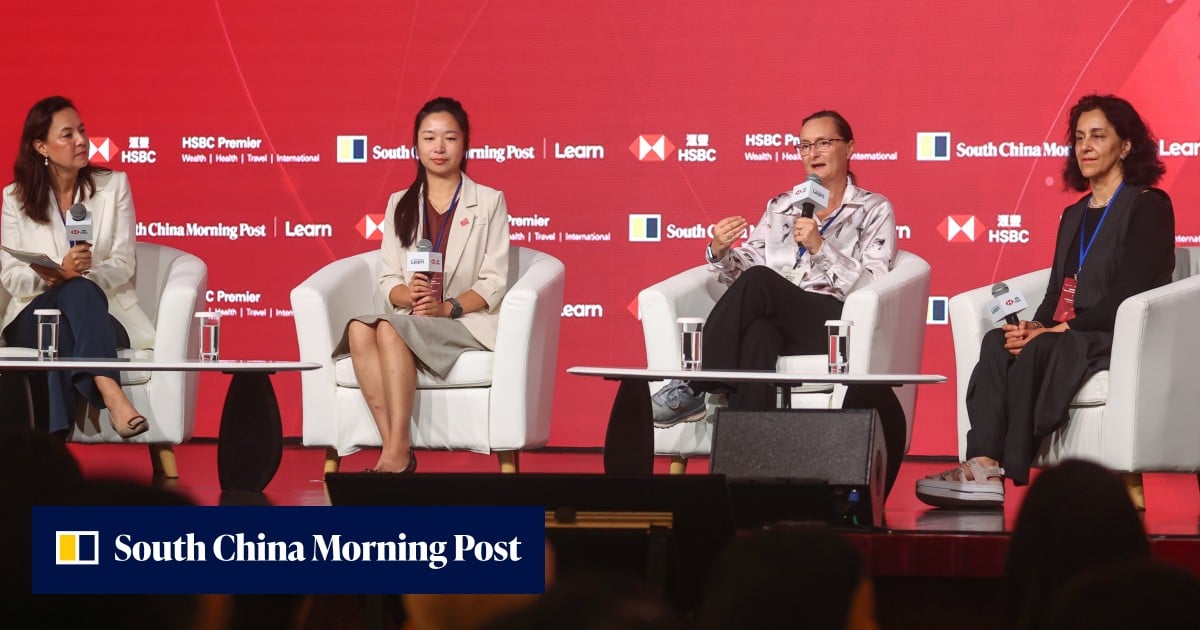
The insights from these elite universities were shared during the Global Education Summit in Hong Kong, an event co-organised by the South China Morning Post and HSBC Premier. This summit served as a crucial platform for direct communication between top UK institutions and aspiring Hong Kong students and their families. With a total attendance of nearly 11,000 over two days, the event highlighted the significant interest in overseas education within Hong Kong. The panel, curated by SCMP Learn, specifically addressed studying abroad, providing valuable guidance that could influence how Hong Kong students prepare their applications and approach their academic development moving forward. The summit's role in disseminating these messages is key to understanding their potential impact.
Key points
- UK elite universities prioritize authentic curiosity and academic resilience over rigid test prep.
- Top grades are considered a baseline, not the sole determinant for admission.
- Students are encouraged to research, read, and listen to TED Talks to expand knowledge beyond school curriculum.
- Admissions officials from Oxford, Cambridge, and King's College London shared these insights at a Hong Kong education summit.
- The advice aims to counter reliance on costly consultants and 'perfect personal statements'.
Hong Kong students might be encouraged to pursue deeper intellectual interests and independent learning, fostering a more holistic and engaging educational experience that better prepares them for higher education and future careers.
Students and parents accustomed to a highly structured, exam-focused system might struggle to adapt to this new emphasis, potentially leading to confusion or increased pressure to demonstrate "authentic" curiosity in ways that are still perceived as performative.