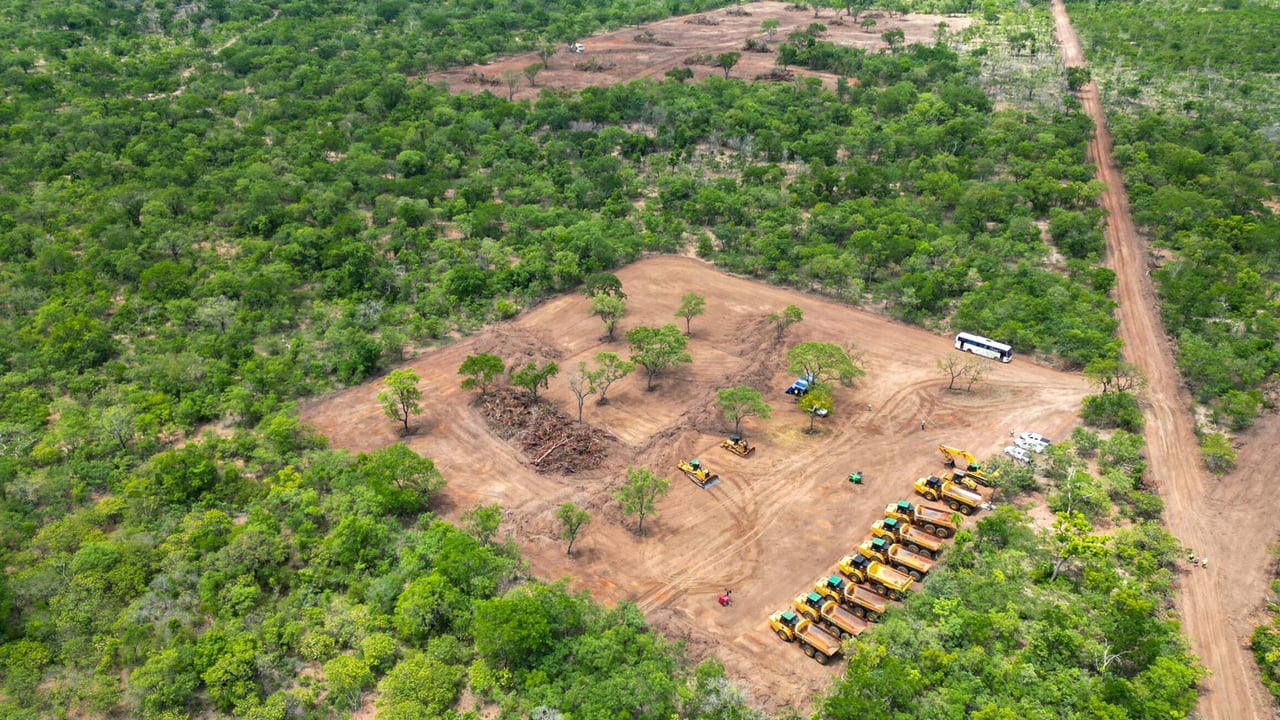
Dangote Raises $2.5 Billion and Aims for World's Top Spot
Nigeria's Dangote refinery secured a $2.5 billion private investment to fund expansion, aiming to become the world's largest refinery by 2028 and reduce Africa's reliance on imported refined products.
Intelligence analysis by Gemini 2.5 Flash
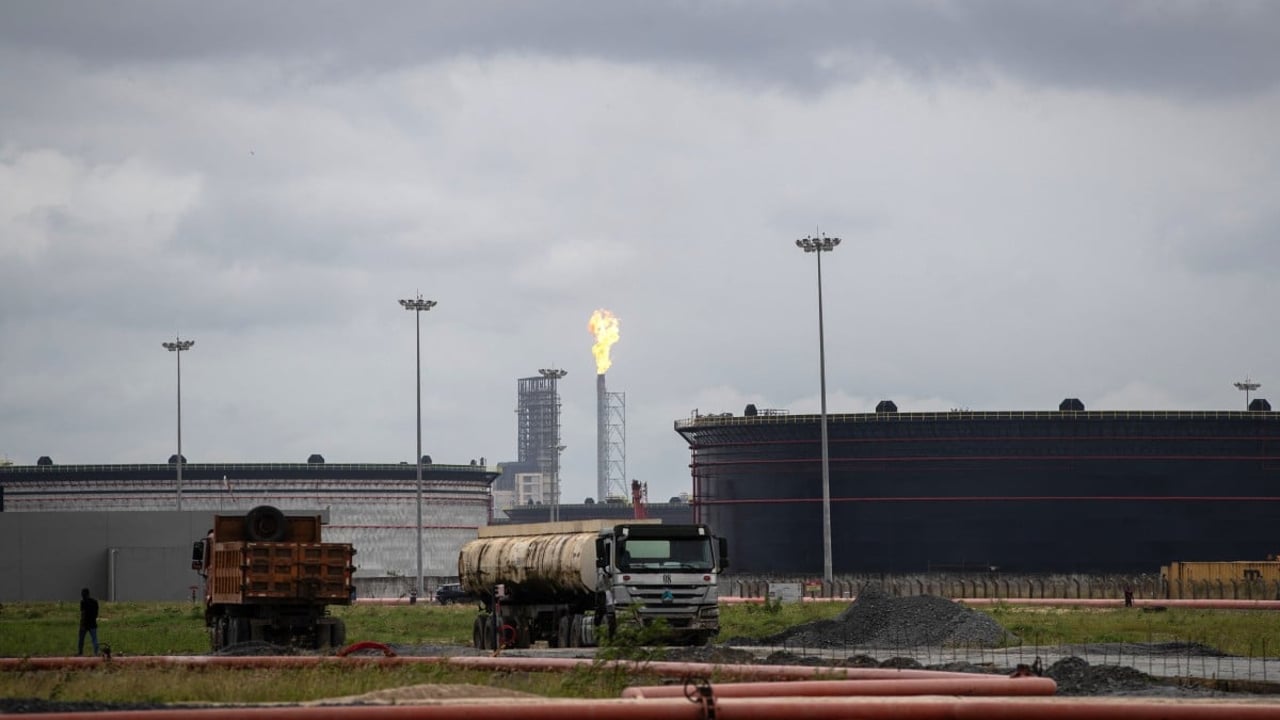
The Dangote Petroleum Refinery, already Africa's largest, has attracted a significant $2.5 billion private investment to fuel its ambitious expansion plans. This capital injection is a precursor to a planned stock market listing and is intended to boost its capacity to 1.4 million barrels per day, positioning it to become the world's largest refinery and enhance Africa's energy security.
Imagine a giant kitchen that makes all the fuel for cars and trucks. Right now, Africa buys most of its fuel from other countries. But a very rich man named Aliko Dangote is building an even bigger kitchen in Nigeria. He just got a huge amount of money, $2.5 billion, from other people who believe in his idea. He wants to make his kitchen so big that it will be the largest in the whole world by 2028, making enough fuel for all of Africa so it doesn't have to buy from far away anymore.
Analysis
A Landmark Investment for African Energy
The Dangote Petroleum Refinery, a colossal industrial undertaking in Nigeria, has recently secured a monumental $2.5 billion investment from private sources. This capital injection is not merely a financial transaction but a significant vote of confidence in Africa's industrial potential, notably highlighted as the "largest private investment made public in Africa." With an existing capacity of 650,000 barrels per day, the refinery already holds the distinction of being the continent's largest, playing a pivotal role in regional energy dynamics.
These substantial funds are earmarked for an ambitious expansion program, designed to supplement the company's internal cash flows and existing external financing. The primary objective is to dramatically scale up operations, directly addressing Africa's critical reliance on imported refined petroleum products. Currently, the continent imports over 70% of its refined fuels, a dependency that poses significant economic and strategic vulnerabilities.
Global Ambitions and Strategic Expansion
Looking ahead, the Dangote group harbors aspirations of global leadership, aiming to more than double its current production capacity to an astounding 1.4 million barrels per day by 2028. This expansion would position the Dangote refinery as the largest in the world, surpassing even India's massive Jamnagar refinery. Such a feat would not only be a triumph of engineering and finance but also a powerful symbol of African industrial prowess on the global stage.
This strategic expansion is intrinsically linked to the broader goal of enhancing Africa's energy security. The continent's substantial annual imports of essential goods, including fuels, plastics, steel, and fertilizers, totaling approximately $230 billion, underscore a pressing need for domestic production capabilities. By significantly boosting its refining capacity, Dangote aims to mitigate this import burden, fostering greater self-sufficiency and economic resilience across the continent. The planned stock market listing, anticipated within the year, will further democratize investment in this critical enterprise.
Catalyzing Industrial Growth and Regional Impact
The investment in the Dangote refinery is a testament to the vision of Aliko Dangote, Africa's richest man, for continental industrialization. Beyond Nigeria, the company is actively exploring and extending its refining activities to East Africa, signaling a broader regional strategy. This expansion is poised to create a more integrated and robust African energy market, potentially redefining traditional fuel supply chains that have historically favored non-African sources.
The refinery's emergence as a regional hub could catalyze further industrial growth, attracting ancillary investments and fostering a more diversified economic landscape. As the article suggests, the war in the Middle East has already begun to reshape global product flows, making a self-reliant African energy sector even more strategically vital. This project, therefore, represents a crucial step towards empowering Africa to forge its own industrial champions and secure its economic future.
Key points
- Dangote refinery secured $2.5 billion in private investment for expansion.
- The investment is considered the largest private investment made public in Africa.
- The refinery aims to more than double its capacity to 1.4 million barrels per day by 2028.
- This expansion would make it the world's largest refinery, surpassing India's Jamnagar.
- The project seeks to reduce Africa's dependence on imported refined fuels and enhance energy security.
- A stock market listing for the refinery is anticipated later this year.
This massive investment and expansion plan could significantly bolster Africa's energy independence, reducing its reliance on costly imported refined products. Achieving the goal of becoming the world's largest refinery would establish a major industrial hub, creating jobs and fostering economic growth across the continent by ensuring a stable and affordable fuel supply.
Despite the ambitious goals, the project faces potential challenges such as securing consistent crude oil supply, managing the complexities of such a large-scale operation, and navigating fluctuating global oil prices. Delays in expansion or market volatility could impact profitability and the timeline for achieving global leadership, potentially hindering the desired reduction in import dependence.