Defendant in Salman Rushdie stabbing declines to testify in federal terrorism trial
The man on trial in the stabbing of Salman Rushdie chose not to testify or call any witnesses in the federal terrorism case, which is expected to head to the jury as soon as Wednesday.
Intelligence analysis by Llama
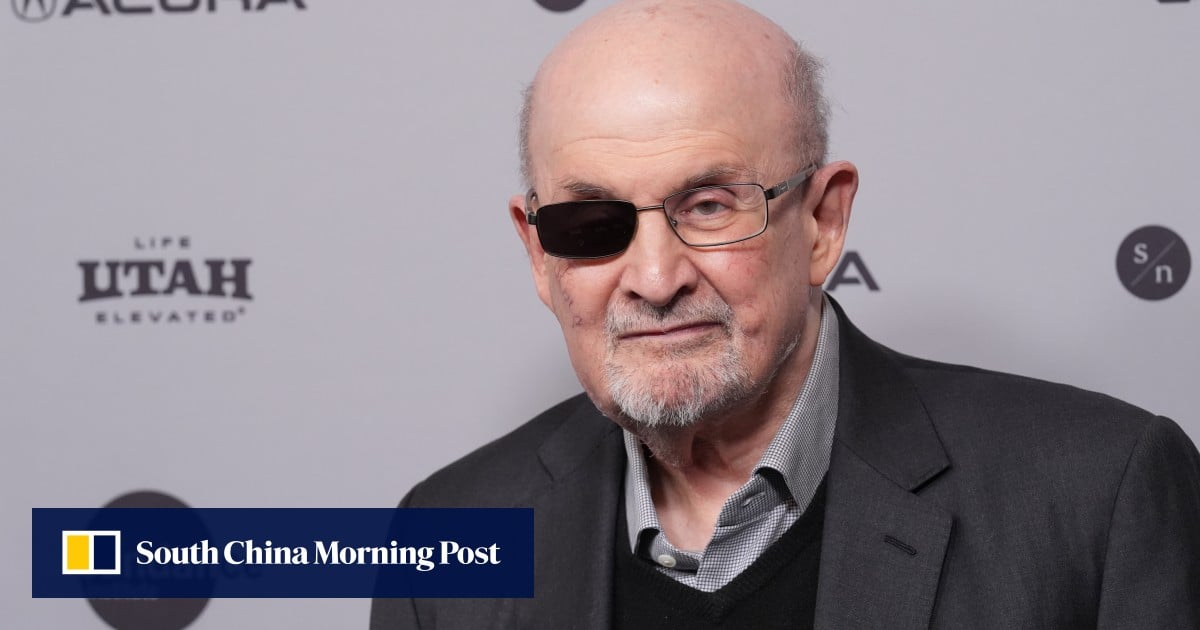
Hadi Matar, the defendant in the Salman Rushdie stabbing case, has declined to testify or call any witnesses in the federal terrorism trial, which is expected to head to the jury soon.
A man named Hadi Matar is on trial for stabbing author Salman Rushdie. Matar decided not to tell his side of the story or call any witnesses, which means the case will now go to a jury. This is a big deal because it involves a famous author and could affect how we think about freedom of expression and safety.
Analysis
A Federal Terrorism Trial with Global Implications
The case of Hadi Matar, the defendant in the Salman Rushdie stabbing trial, has taken a significant turn with his decision not to testify or call any witnesses in the federal terrorism case. This development is expected to head to the jury as soon as Wednesday, marking a crucial stage in the trial. The case has garnered international attention due to its high-profile nature and the potential implications for national security and freedom of expression.
Rushdie, the prize-winning author of novels including Midnight's Children and The Satanic Verses, testified last week about the 2022 attack that nearly killed him and left him blind in one eye. The attack occurred at the Chautauqua Institution, an arts and intellectual retreat, where Rushdie was about to give a talk on writers' safety. The assailant, Matar, climbed on stage behind him and stabbed him 15 times in front of a stunned audience.
Prosecutors contend that Matar was acting upon a former Iranian leader's 1989 call for Rushdie's death because of The Satanic Verses, which ignited protests across the Muslim world. Some believers considered it blasphemous because of a dream sequence featuring Islam's Prophet Mohammed. The case has sparked debates about freedom of expression, censorship, and the role of literature in society.
The trial's outcome will have significant implications for the global community, particularly in the context of terrorism and national security. The case highlights the complexities of balancing freedom of expression with the need to protect individuals from harm. As the trial progresses, it will be essential to monitor the developments and their potential impact on the global stage.
Key points
- Hadi Matar declined to testify or call any witnesses in the federal terrorism trial.
- The case involves a high-profile author, Salman Rushdie, and a potential act of terrorism.
- Prosecutors contend that Matar was acting upon a former Iranian leader's call for Rushdie's death.
- The trial's outcome will have significant implications for national security and freedom of expression.
If Matar is found guilty, it could set a precedent for holding individuals accountable for acts of terrorism, potentially leading to increased safety for authors and public figures.
On the other hand, if Matar is acquitted, it could raise concerns about the effectiveness of the justice system in addressing terrorism and potentially embolden extremist groups.