Delivery riders welcome guidelines for dedicated condo parking spots and collection lockers
New guidelines in Singapore recommend dedicated parking and collection points for delivery riders at condos and malls. While riders welcome these changes, experts foresee varied implementation due to space, cost, and resident concerns.
Intelligence analysis by Gemini 2.5 Flash
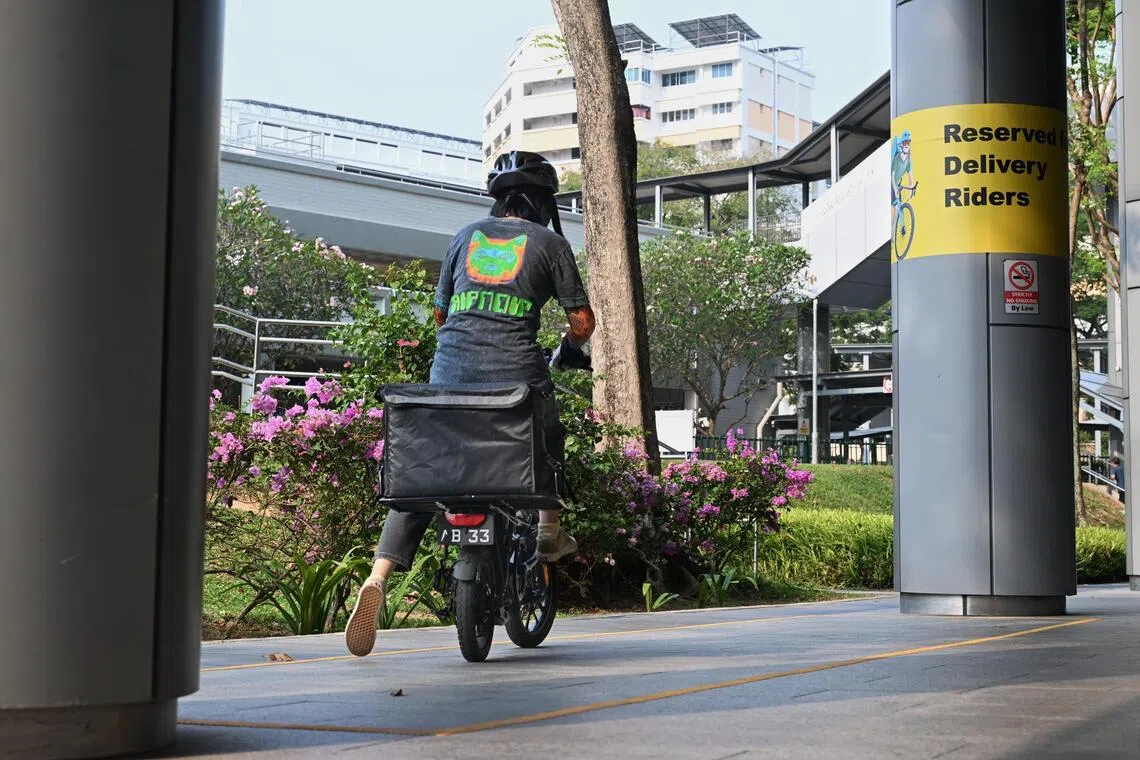
Singapore's LTA and URA have issued new guidelines for condos and malls, recommending dedicated parking and collection points for delivery riders. Riders welcome these changes, hoping to ease frustrations like illegal parking and long waits. Experts and condo management foresee varied implementation due to space constraints, costs, and resident concerns, especially in older developments.
Imagine your parents' car needs a special spot to drop off your pizza at your apartment building, but there's nowhere easy to park. Now, the grown-ups in charge are suggesting that big buildings should have special parking spots and lockers just for delivery people, like a dedicated mailbox for your food. This makes it easier and faster for them to drop off your goodies without getting into trouble or waiting a long time, but it might be tricky for older buildings to find the space.
Analysis
LTA and URA
The Land Transport Authority (LTA) and Urban Redevelopment Authority (URA) have jointly issued a fresh set of recommendations aimed at streamlining last-mile food and parcel deliveries across Singapore. These guidelines encourage building owners, managers, and developers to integrate facilities such as dedicated delivery waiting bays and collection points into their properties. The primary objective is to alleviate common logistical hurdles faced by delivery personnel, thereby enhancing the overall efficiency of urban delivery networks.
The recommendations specifically suggest providing free parking within a grace period of at least 15 minutes for delivery vehicles, alongside setting up collection points conveniently located near guardhouse entrances. This proactive approach by the authorities seeks to formalize and standardize delivery infrastructure, moving beyond ad-hoc arrangements that often lead to inefficiencies and frustrations for both riders and residents. The long-term vision is to create a more harmonious and functional urban environment for the burgeoning delivery economy.
Mika Khor and Alex Seow
Delivery riders like Mika Khor, 34, and Alex Seow, 26, represent the frontline beneficiaries of these proposed changes. Khor frequently faces the dilemma of parking her e-bike illegally on public paths outside condominiums, risking fines, or enduring lengthy waits for customers to respond to intercom calls. This often forces her to 'tailgate' residents to gain entry, a practice that is both time-consuming and potentially unsafe. The introduction of dedicated parking and collection points directly addresses these daily struggles, promising safer parking options and more efficient drop-off procedures.
Similarly, Alex Seow, a food delivery veteran of five years, highlights the financial burden of paying for parking at malls when picking up orders. Dedicated, free parking areas would significantly reduce his operational costs and stress. Both riders also expressed a desire for sheltered parking spaces, particularly for e-bikes and motorcycles, to mitigate risks such as vehicle fires caused by exposure to Singapore's intense heat. Their experiences underscore the practical benefits these guidelines could bring to the delivery workforce.
Samuel Chng and Winnie Wong
Despite the positive reception from riders, experts like Samuel Chng, head of the urban psychology lab at SUTD, and Winnie Wong, senior managing director for property management at Savills Singapore, anticipate a gradual and uneven implementation of the guidelines. They point out that the feasibility of adopting these measures will vary significantly across different developments, primarily due to existing physical constraints, cost implications, and the diverse expectations of residents. Older and smaller condominiums, in particular, are expected to face greater challenges in carving out new spaces for parking or collection points without disrupting existing amenities or resident consensus.
Wong emphasizes that integrating new delivery facilities is considerably easier during a project's planning or development stage. For existing condominiums, management corporation strata titles (MCSTs) must navigate complex factors including space availability, installation and maintenance costs, security concerns, and the specific needs of their residents. Dennis Tan, president of the MCST Association of Singapore, further notes that condos near MRT stations or those with multi-basement carparks might struggle to create dedicated bays. Ultimately, the success of collection points also hinges on a shift in customer mindsets, with suggestions even made for doorstep deliveries to incur a higher cost to encourage self-collection.
Key points
- New LTA and URA guidelines recommend dedicated parking bays and collection points for delivery riders in condos and malls.
- Delivery riders welcome these changes, citing current issues like illegal parking, long waits, and parking fees.
- Implementation is expected to be varied and gradual due to factors like limited space, cost, security, and resident consensus.
- Older and smaller developments face greater challenges in allocating new spaces compared to new projects.
- Experts suggest that customer mindset shifts and potentially higher costs for doorstep deliveries are needed for collection points to be fully effective.
If widely adopted, these guidelines could significantly improve the efficiency and safety of delivery services, reducing wait times for both riders and residents. This would lead to a smoother urban logistics network, enhancing convenience for consumers and providing a more predictable and less stressful work environment for delivery personnel.
Implementation challenges, particularly in older or smaller condominiums, could lead to inconsistent adoption, creating a patchwork system where some areas benefit while others continue to face difficulties. Resistance from residents or high costs for MCSTs might also hinder the widespread rollout, limiting the overall positive impact on the delivery ecosystem.