Democrats begin withdrawing endorsements of Graham Platner after Senate candidate is accused of sexual assault
Multiple Democratic lawmakers and groups have withdrawn endorsements of Maine Senate candidate Graham Platner after a woman accused him of sexual assault. The Maine Democratic Party has called for him to withdraw from the race by July 13.
Intelligence analysis by Llama
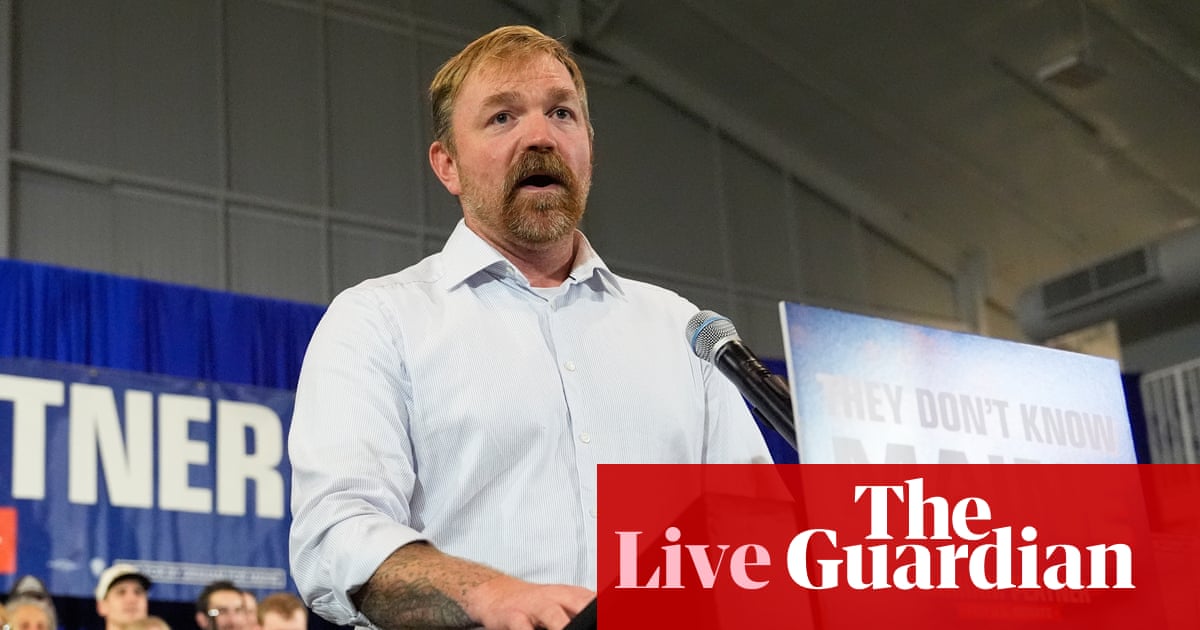
Graham Platner, Maine's Democratic Senate nominee, faces a sexual assault allegation from a woman who says they met on Bumble in 2019. Prominent Democrats including Senators Gallego and Representatives Khanna have pulled endorsements, with party leaders calling for his withdrawal by July 13.
A man named Graham Platner had just won the chance to run for the US Senate for Maine, but a woman said he hurt her in 2019. Many politicians who supported him changed their minds and said he should leave the race. Now his party is asking him to step aside so they can pick someone else before July 13.
Analysis
A Party Reckons With Its Own Nominee
Graham Platner secured the Democratic nomination for Maine's US Senate seat on June 9, positioning himself as a progressive insurgent candidate. Less than a month later, the party establishment he hoped to channel is moving decisively against him. Within hours of the sexual assault allegation becoming public, Senator Ruben Gallego called the claims "troubling and deeply serious" and announced he would rescind his endorsement. Representative Ro Khanna went further, describing the allegations as "very serious and credible" and withdrawing his support outright. The speed of the defections underscores how political risk calculations have shifted when credible assault claims surface against a party's standard-bearer.
The allegation itself, as described by the accuser Jenny Racicot in a CNN interview, dates to 2019. Racicot told anchor Jake Tapper she met Platner on the dating app Bumble and that he entered her home intoxicated and sexually assaulted her after she repeatedly said no. She specifically rejected any suggestion of political motivation, noting that her hesitation to come forward was precisely because she supported his political positions. Platner has denied the allegation in a social media video but said the campaign would "reflect" on the "best path forward," language that stops short of full-throated denial and has done little to stem the exodus.
The Progressive Infrastructure Pulls Back
The withdrawals extend beyond individual lawmakers to the progressive ecosystem that powered Platner's rise. Our Revolution, the group founded by Bernie Sanders, and the Super PAC A Fight Worth Having both rescinded their endorsements. Our Revolution executive director Joseph Geevarghese framed the decision in stark terms: "Sexual violence is a red line." The statement acknowledged Platner's right to due process but concluded the allegations were "too serious to treat as a distraction." For a campaign that leaned heavily on progressive infrastructure, the loss of these endorsements represents both a symbolic and operational blow.
Former Democratic National Committee interim chair Donna Brazile went further, setting a concrete deadline: "It's time for Mr. Platner to step aside and be replaced by July 13th." That date, roughly a week away, signals an expectation that the party will move quickly to install a replacement nominee should Platner exit. The Maine Democratic Party leadership has similarly called for his withdrawal, suggesting a coordinated effort to manage the transition.
A Senate Race Reshaped
The practical stakes are significant. Platner canceled several campaign town halls across Maine as the news broke, a sign his operation is already scaling back. With the 2026 midterm cycle underway, the question of who carries the Democratic banner in Maine now looms large. Platner's path from Marine veteran and oyster farmer to Senate nominee relied heavily on a populist, anti-establishment brand, qualities that made him an attractive candidate to progressive donors and activists. The allegation has exposed the vulnerability of insurgent candidacies when personal conduct becomes a campaign issue.
Maine's Senate race will now attract intense scrutiny over the coming days, particularly around the July 13 deadline. Whether Platner resists the pressure to withdraw or exits gracefully, the party faces the task of uniting behind a successor with the general election already in view. The episode also carries lessons for the broader Democratic primary apparatus about vetting, support structures, and the speed at which a winning coalition can dissolve when confronted with credible allegations of harm.
Key points
- Graham Platner, Maine's Democratic Senate nominee, was accused of sexual assault by a woman who told CNN they met on Bumble in 2019 and that he assaulted her after she said no.
- Senator Ruben Gallego, Representative Ro Khanna, and former DNC interim chair Donna Brazile are among those withdrawing endorsements or calling for him to exit by July 13.
- Progressive groups Our Revolution and A Fight Worth Fighting rescinded their endorsements, with Our Revolution calling sexual violence 'a red line.'
- Platner denied the allegation in a social media video and said the campaign would 'reflect' on the 'best path forward' while canceling planned town halls.
- The Maine Democratic Party leadership has called for his withdrawal, setting up a potential scramble to replace him on the ballot.
If Platner withdraws promptly and the party coalesces around a replacement nominee, Democrats can preserve resources and present a unified ticket for the general election. A clean transition would also demonstrate the party's commitment to taking sexual assault allegations seriously, potentially strengthening its standing with voters who prioritize accountability.
A prolonged fight over Platner's status could drain Democratic resources and attention from the general election, while the underlying allegation, regardless of outcome, may follow the party into November. Internal divisions over how to handle the situation could also spill into other races, as progressive and establishment factions debate the criteria for backing candidates.