Did the Trojan War Really Happen? What Archaeologists and Historians Say
Archaeologists and historians are re-examining the historical reality of the Trojan War, with new evidence suggesting conflicts occurred in the region around 1200 BC, though perhaps not on the epic scale described by Homer.
Intelligence analysis by Gemini 2.5 Flash
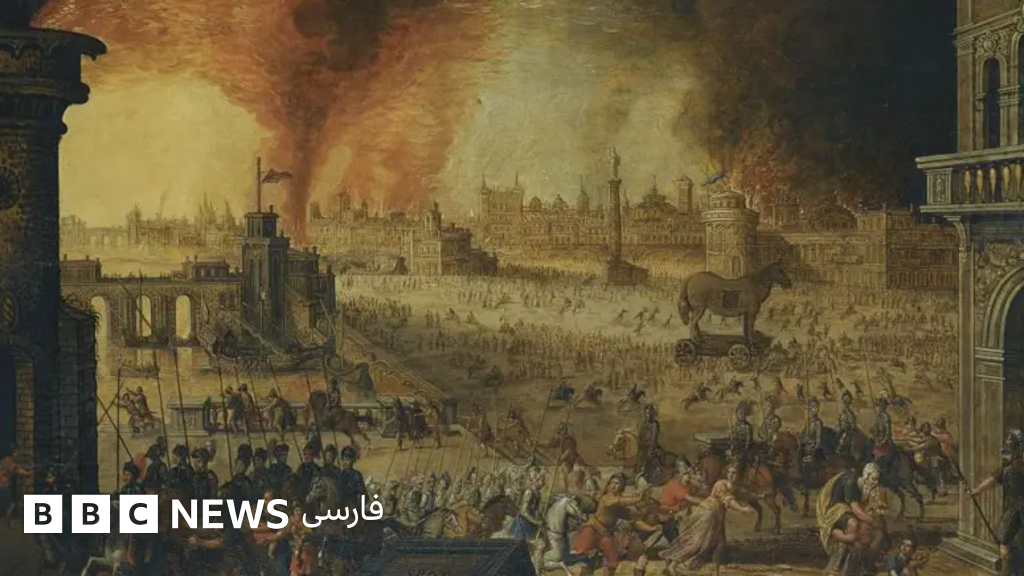
The article delves into the historical veracity of the Trojan War, a subject of ancient epics like the Iliad and Odyssey, now gaining renewed attention. Experts like Professor Rüstem Aslan and Dr. Daisy Dunn discuss archaeological findings and literary evidence, suggesting that while Troy was a significant city and experienced conflicts, the legendary 10-year war might be an amalgamat…
Imagine a really old, important city called Troy, which was like a big trading hub because it sat next to a special water path. People have told stories for thousands of years about a huge war there, with a giant wooden horse! Now, smart detectives who dig up old things (archaeologists) and history experts say that while there probably wasn't one giant 10-year war exactly like the stories, there were definitely lots of smaller fights and troubles around that city a very, very long time ago.
Analysis
Professor Rüstem Aslan
Professor Rüstem Aslan, who leads the archaeological excavations at the ancient city of Troy, asserts that ancient historians harbored no doubts regarding the actual occurrence of the Trojan War. Their primary disagreement centered only on the precise timing of the conflict, which is generally accepted to have taken place around 1200 BC. Aslan's work provides a crucial link between the literary accounts and tangible archaeological evidence, grounding the epic tales in historical context.
He further elaborates on the city's grandeur around 1200 BC, describing Troy as a magnificent settlement fortified with strong defensive walls, towering watchtowers, and a moat. The city, with an estimated population of 6,000, thrived on agriculture, animal husbandry, and maritime trade, benefiting significantly from its strategic control over the Dardanelles Strait. Aslan's findings, including arrowheads, spear tips, burnt layers, and human skeletons from the relevant archaeological strata, are presented as compelling evidence of actual conflicts in the region, now showcased at the Troy Museum.
Dardanelles Strait
The Dardanelles Strait played a pivotal role in Troy's prosperity and historical significance. This narrow waterway served as a crucial trade route connecting the Black Sea and the Aegean Sea, making Troy a wealthy and strategically important settlement in the ancient world. Its control over this passage likely made it a target for various powers, contributing to the conflicts that may have inspired the epic tales.
Troy's strategic location also fostered extensive trade relations with other major powers of the era, including the Mycenaean kingdoms in mainland Greece and the Minoan civilization on Crete. This economic and political prominence, stemming from its command of the Dardanelles, positioned Troy as a key player in the Late Bronze Age geopolitical landscape, making it a focal point for regional power struggles and military engagements.
Late Bronze Age
The period around 1200 BC, often referred to as the Late Bronze Age, was a time of significant upheaval across the Eastern Mediterranean. Professor Aslan notes that the destruction of Troy coincided with the demise of other major regional centers, such as Hattusa, the capital of the Hittite Empire. This widespread collapse suggests a broader pattern of instability and conflict that affected numerous civilizations.
Dr. Daisy Dunn, an expert on ancient Greece and Rome, supports the idea that the region likely experienced multiple smaller wars or raids during the Late Bronze Age, rather than a single, protracted 10-year conflict as depicted in Homer's epics. The archaeological record, including evidence of houses built closer together and large food storage containers, points to a period of uncertainty and fear among Troy's inhabitants, consistent with frequent threats of invasion. The oral tradition of transmitting epics like the Iliad and Odyssey, eventually written down around 730 BC, likely consolidated and embellished these numerous smaller conflicts into the grand narrative we know today.
Key points
- Ancient historians generally believed the Trojan War was real, differing only on its exact timing around 1200 BC.
- Archaeological excavations at Troy reveal a magnificent, fortified city around 3200 years ago, strategically controlling the Dardanelles Strait.
- Evidence like arrowheads, burnt layers, and skeletons suggests actual conflicts occurred in the region during the Late Bronze Age.
- Experts like Dr. Daisy Dunn propose that the epic 10-year war described by Homer was more likely a series of smaller wars or raids over time.
- No archaeological evidence has been found to confirm the existence of the legendary Trojan Horse.
- The Iliad and Odyssey were likely transmitted orally for centuries before being written down around 730 BC, preserving the narratives of these ancient conflicts.