Dollar-yuan becomes Hong Kong's most-traded currency pair for first time
The U.S. dollar-Chinese yuan has become the most-traded currency pair in Hong Kong, surpassing the Hong Kong dollar-U.S. dollar for the first time in April, the financial hub's Treasury Markets Association said.
Intelligence analysis by Llama
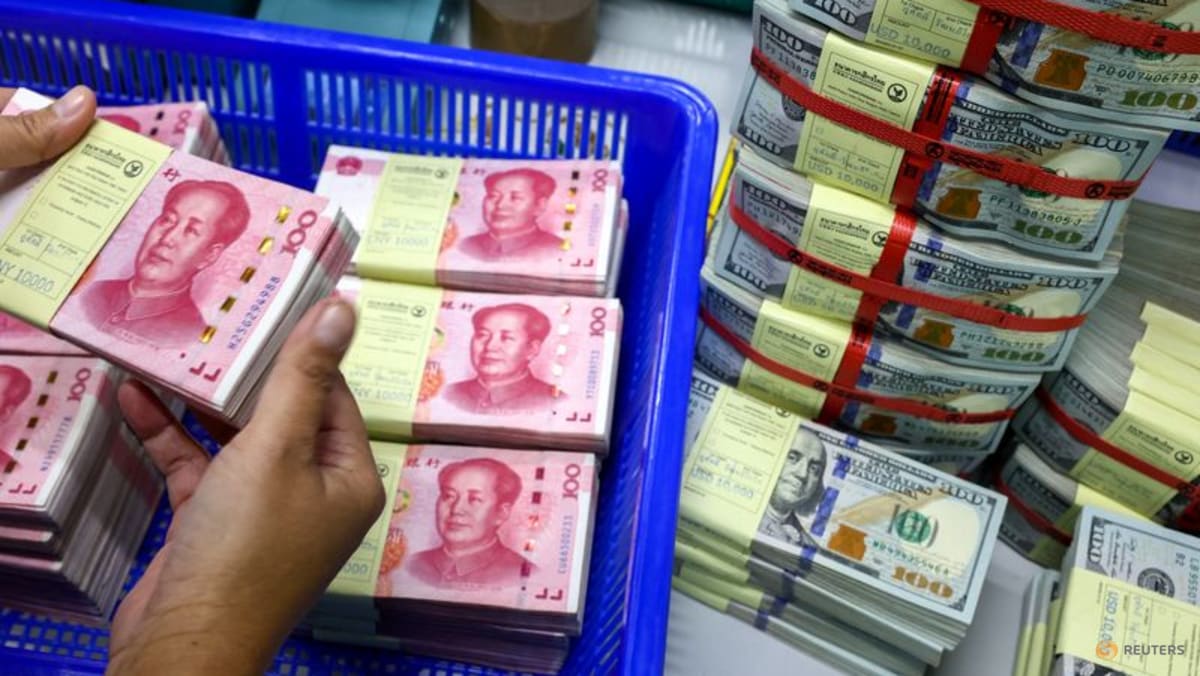
Hong Kong's Treasury Markets Association reported that the U.S. dollar-yuan pair accounted for 30.2% of the city's total foreign exchange transactions in April, with an average daily turnover of $274 billion.
Imagine Hong Kong's foreign exchange market is like a big store where people trade different currencies. Recently, the store has seen a lot of people trading the U.S. dollar and the Chinese yuan. This is a big deal because it means Hong Kong is becoming a more important place for trading these currencies.
Analysis
Hong Kong's New Role in the Global Financial System
The recent surge in the U.S. dollar-yuan pair's trading volume in Hong Kong marks a significant shift in the city's financial landscape. According to the Treasury Markets Association, the average daily turnover in the U.S. dollar-yuan pair climbed to $274 billion in April, accounting for about 30.2% of the city's total foreign exchange transactions. This is a notable increase from the previous survey, where the average daily turnover in the U.S. dollar-yuan pair was $198.6 billion.
The rise of the U.S. dollar-yuan pair in Hong Kong's foreign exchange market can be attributed to the city's efforts to establish itself as a leading offshore yuan centre. Beijing and Hong Kong authorities have unveiled a range of measures to bolster currency, bond, and gold trading in Hong Kong, stepping up efforts to establish the city as a major player in the global financial system.
Implications for Hong Kong's Economy
The increased trading volume in the U.S. dollar-yuan pair has significant implications for Hong Kong's economy. As the city's financial sector continues to grow, it is likely to attract more foreign investment and talent, further solidifying its position as a major financial hub. Additionally, the rise of the U.S. dollar-yuan pair may also lead to increased economic activity in the region, as more businesses and investors take advantage of the opportunities presented by the growing yuan market.
Challenges Ahead
While the rise of the U.S. dollar-yuan pair in Hong Kong's foreign exchange market presents opportunities for the city's financial sector, it also poses challenges. The increased trading volume may lead to higher risks for investors, particularly those who are not familiar with the yuan market. Additionally, the rise of the U.S. dollar-yuan pair may also lead to increased competition for Hong Kong's financial sector, as more cities and countries seek to establish themselves as major players in the global financial system.
Key points
- The U.S. dollar-yuan pair has become the most-traded currency pair in Hong Kong, surpassing the Hong Kong dollar-U.S. dollar pair for the first time in April.
- The average daily turnover in the U.S. dollar-yuan pair climbed to $274 billion in April, accounting for about 30.2% of the city's total foreign exchange transactions.
- Beijing and Hong Kong authorities have unveiled a range of measures to bolster currency, bond, and gold trading in Hong Kong, stepping up efforts to establish the city as a leading offshore yuan centre.
- The rise of the U.S. dollar-yuan pair has significant implications for Hong Kong's economy, including increased economic activity and more opportunities for businesses and investors.
If this trend continues, Hong Kong's financial sector is likely to attract more foreign investment and talent, further solidifying its position as a major financial hub. This could lead to increased economic activity in the region and more opportunities for businesses and investors.
However, the increased trading volume in the U.S. dollar-yuan pair also poses risks for investors, particularly those who are not familiar with the yuan market. Additionally, the rise of the U.S. dollar-yuan pair may lead to increased competition for Hong Kong's financial sector, as more cities and countries seek to establish themselves as major players in the global financial system.