Donald Trump's volatility may have made India decline G7 presser
The Indian government has justified its decision not to have a news conference after PM Modi's meeting with President Donald Trump on the margins of the G7 summit in France, citing Trump's 'unpredictable behavior' at media events.
Intelligence analysis by Llama
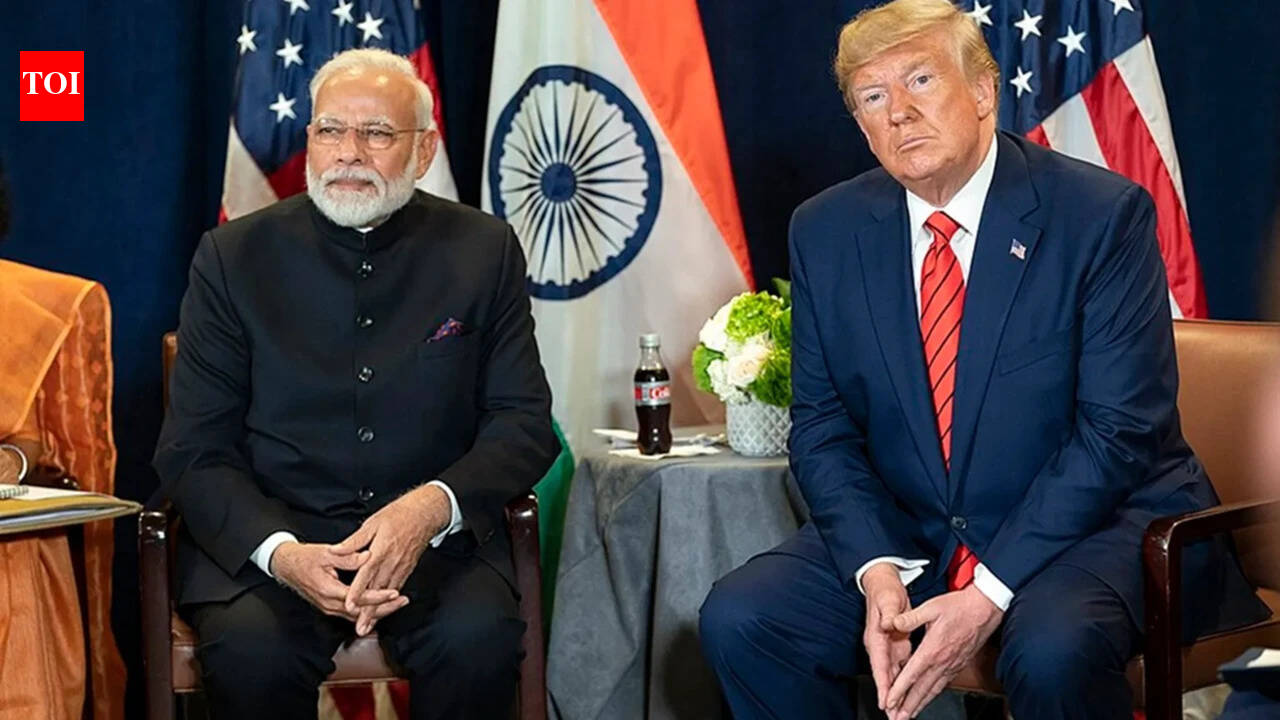
The Indian government has defended its decision not to hold a joint news conference with President Trump, citing his unpredictable behavior at previous media events. This decision was made despite the US ambassador's earlier comments suggesting that the Indian side had requested a photo opportunity and opening remarks without taking questions.
Imagine you're hosting a big dinner party, and one of your guests is known for being a bit unpredictable. You might want to plan the evening carefully to avoid any awkward moments. That's kind of what the Indian government did when they decided not to have a joint news conference with President Trump. They wanted to avoid any potential controversy or embarrassment that might arise from Trump's unpredictable behavior at media events.
Analysis
The Indian government's decision not to hold a joint news conference with President Trump has been justified by citing his unpredictable behavior at media events. This behavior has been observed in his interactions with the presidents of South Africa and Ukraine, which devolved into televised confrontations with Trump hectoring his visitors. The standard practice for the Indian government has been to not have unscripted joint news conferences by Modi in company of the host or visiting dignitaries. However, this practice has been questioned by local journalists recently in countries like Norway, the Netherlands, Australia, and New Zealand. The MEA has defended the arrangement, stating that standard diplomatic procedures for international visits are followed. The decision not to hold a joint news conference was made despite the US ambassador's earlier comments suggesting that the Indian side had requested a photo opportunity and opening remarks without taking questions. The US ambassador's disclosure of what might have been a private discussion is learned to have upset the government. The government sources have framed India's request as a necessary safeguard against unpredictable diplomatic settings. The government has been cautious in its approach, given Trump's unpredictable behavior at media events. This approach is in line with the standard practice of not having unscripted joint news conferences by Modi in company of the host or visiting dignitaries. The MEA has defended the arrangement, stating that standard diplomatic procedures for international visits are followed. The decision not to hold a joint news conference was made to avoid any potential controversy or embarrassment that might arise from Trump's unpredictable behavior at media events. The government has been cautious in its approach, given the potential risks associated with hosting a high-profile diplomatic event with a leader known for his unpredictable behavior. The decision not to hold a joint news conference was made to prioritize the smooth conduct of the event and to avoid any potential controversy or embarrassment that might arise from Trump's unpredictable behavior at media events. The government has been cautious in its approach, given the potential risks associated with hosting a high-profile diplomatic event with a leader known for his unpredictable behavior. The decision not to hold a joint news conference was made to prioritize the smooth conduct of the event and to avoid any potential controversy or embarrassment that might arise from Trump's unpredictable behavior at media events.
Key points
- The Indian government has justified its decision not to hold a joint news conference with President Trump, citing his unpredictable behavior at media events.
- The standard practice for the Indian government has been to not have unscripted joint news conferences by Modi in company of the host or visiting dignitaries.
- The MEA has defended the arrangement, stating that standard diplomatic procedures for international visits are followed.
- The decision not to hold a joint news conference was made despite the US ambassador's earlier comments suggesting that the Indian side had requested a photo opportunity and opening remarks without taking questions.
The Indian government's cautious approach to hosting a high-profile diplomatic event with President Trump may have helped to avoid any potential controversy or embarrassment. This could be seen as a positive outcome, as it allows for a smooth and successful event.
However, the decision not to hold a joint news conference may also be seen as a missed opportunity for the Indian government to engage with the international community and provide clarity on their policies and actions. This could be a negative outcome, as it may lead to a lack of transparency and accountability.