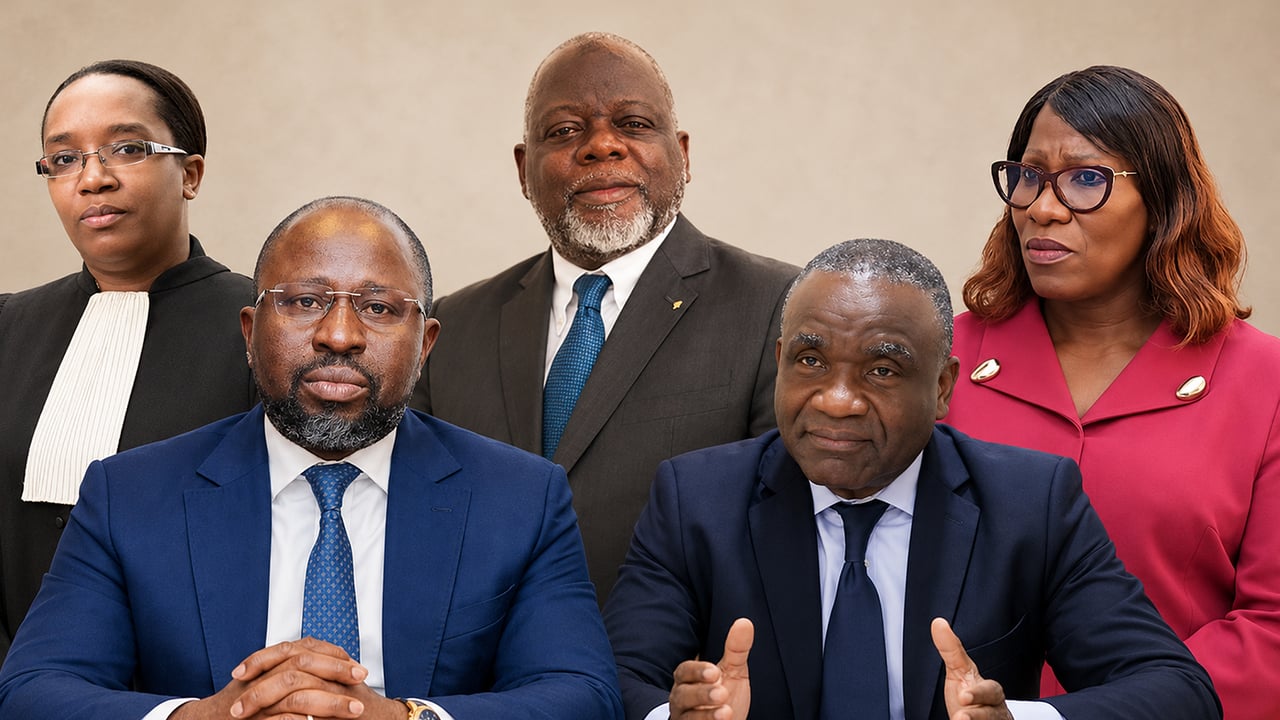
DR Congo's case against Rwanda moves ahead as World Court sets timetable
The International Court of Justice has established a timetable for the Democratic Republic of Congo's case against Rwanda, accusing Kigali of violating international law since 1996.
Intelligence analysis by Gemini 2.5 Flash
The World Court has set a schedule for the written phase of the DR Congo's legal challenge against Rwanda, which alleges decades of international law violations, including through proxy armed groups like M23. Kinshasa must submit its arguments by October 2027, with Kigali's response due in December 2028, setting the stage for oral hearings in 2029.
Imagine two countries, Congo and Rwanda, have been arguing for a very long time about who did bad things to whom, like a big playground dispute. Now, a very important judge, called the World Court, has set a schedule for them to tell their sides of the story, like setting dates for homework. Congo will tell its story first by October 2027, then Rwanda will get a chance to respond by December 2028, and eventually, the judge will decide who is right and what should happen next, hoping to make things fair.
Analysis
The International Court of Justice (ICJ), the principal judicial organ of the United Nations, has taken a significant procedural step in the case brought by the Democratic Republic of Congo against Rwanda. By setting a clear timetable for the submission of written arguments, the court is moving forward with a dispute that has deep historical roots and profound implications for the Great Lakes region. This formalization of the legal process underscores the international community's recognition of the gravity of the allegations and the need for a structured approach to resolving such complex interstate conflicts.
The ICJ's involvement provides a platform for both nations to present their cases under international law, offering a potential avenue for judicial resolution where diplomatic efforts have often faltered. The lengthy timeline, with submissions stretching into late 2028 and oral hearings anticipated in 2029, reflects the intricate nature of the claims and the extensive evidence that will likely be presented. This process, while slow, is designed to ensure thorough consideration of all facts and legal arguments, aiming for a judgment that is both just and internationally respected.
International Court of Justice
The International Court of Justice, often referred to as the World Court, is the highest judicial body of the United Nations. Its primary role is to settle legal disputes submitted to it by states and to give advisory opinions on legal questions referred to it by authorized UN organs and specialized agencies. In this instance, the ICJ is acting as an arbiter between two sovereign states, the Democratic Republic of Congo and Rwanda, concerning allegations of breaches of international law.
The court's decision to set a timetable signifies that it has accepted jurisdiction over the case and is proceeding with the substantive examination of the claims. This is a critical juncture, as the ICJ's rulings are binding on the states involved and can have far-reaching consequences for international relations and the enforcement of international humanitarian law. The process involves meticulous legal work, with each party preparing comprehensive memorials and counter-memorials to support their positions.
M23 Rebel Movement
A central component of the Democratic Republic of Congo's allegations against Rwanda involves the M23 rebel movement. Kinshasa explicitly accuses Kigali of committing crimes through armed groups it describes as Rwanda's proxies, with M23 being a prominent example. The M23 group has been a significant source of instability and conflict in eastern Congo, leading to widespread displacement and human rights abuses.
The DRC's legal strategy at the ICJ hinges on demonstrating a direct link between Rwanda and the actions of such armed groups. If successful, this could establish Rwanda's responsibility for violations of international conventions, including those covering genocide, racial discrimination, discrimination against women, and torture. Rwanda, for its part, has consistently denied these allegations, maintaining that its military actions in eastern Congo have been solely for self-defence and security concerns.
October 2027
October 4, 2027, marks a crucial deadline in the ICJ proceedings: the date by which the Democratic Republic of Congo must submit its written memorial. This document will contain Kinshasa's full legal arguments, detailed evidence, and specific claims against Rwanda, forming the foundation of its case. The preparation of this memorial will require extensive legal research, compilation of evidence, and articulation of complex international law principles.
Following the DRC's submission, Rwanda will have until December 4, 2028, to file its response, known as a counter-memorial. This staggered approach allows each party ample time to prepare their arguments in light of the other's submissions. The period leading up to October 2027 will be a period of intense legal activity for the DRC, as it marshals its resources to build a compelling case before the world's highest court.
Key points
- The International Court of Justice has set a timetable for the DR Congo's case against Rwanda.
- DR Congo accuses Rwanda of violating international law since 1996, including through proxy armed groups like M23.
- Kinshasa must file its written arguments by October 4, 2027, and Kigali's response is due by December 4, 2028.
- Oral hearings are expected to begin in early 2029, with a judgment potentially delivered about six months later.
- The DRC seeks official apologies, prosecution of those responsible, and compensation if the ICJ rules in its favor.
Should the ICJ rule in the DR Congo's favor, it could lead to official apologies from Rwanda, the prosecution of those responsible for alleged crimes, and compensation for damages suffered, potentially bringing a measure of justice and closure to victims. A clear legal resolution could also pave the way for improved diplomatic relations and greater stability in the Great Lakes region.
The lengthy legal process, spanning several years, could exacerbate existing tensions between the two nations, potentially leading to further instability if either side perceives the proceedings as unfair or unconstructive. Even with a judgment, there's a risk that the losing party might not fully comply, prolonging the dispute and undermining the authority of international law.