DRC: "no one doubts Tshisekedi wants a third term"
President Félix Tshisekedi is widely believed to desire a third term in the Democratic Republic of Congo, prompting efforts to amend the constitution and sparking a contentious national dialogue.
Intelligence analysis by Gemini 2.5 Flash
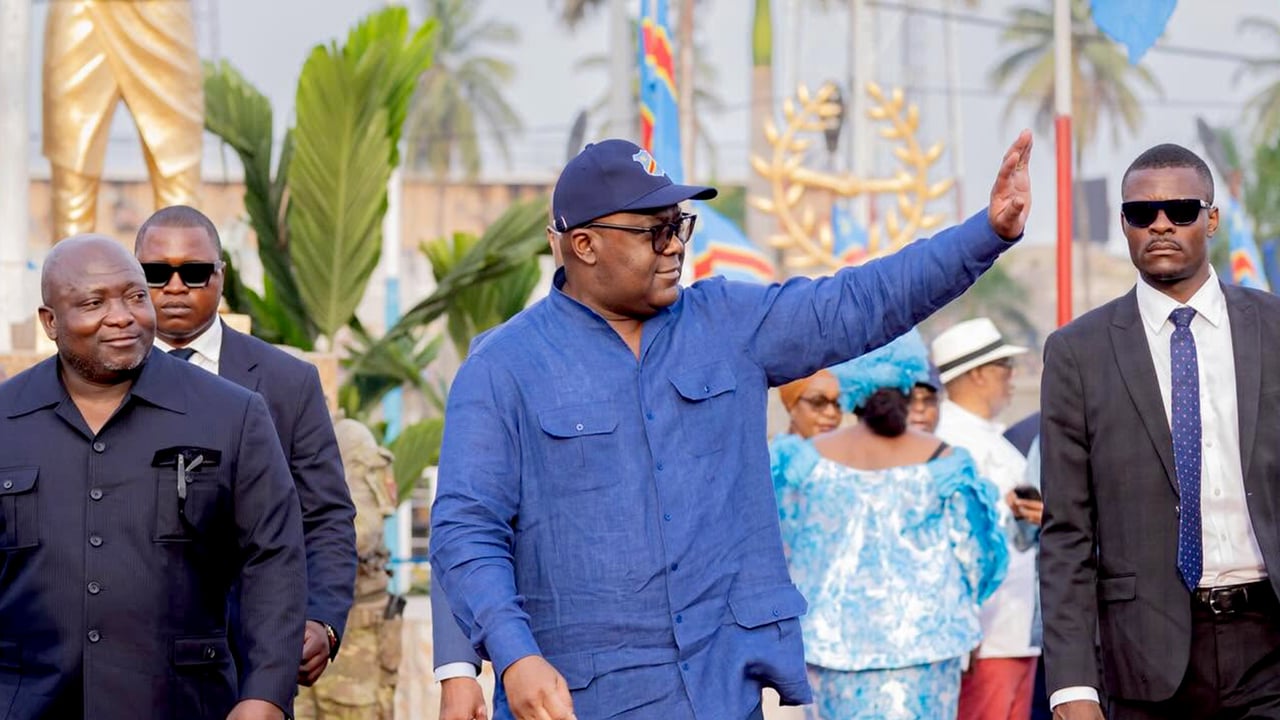
The political landscape in the DRC is dominated by speculation surrounding President Félix Tshisekedi's potential bid for a third term in 2028, which would require a constitutional amendment. A proposed referendum law and a national dialogue are central to this effort, though the dialogue is viewed skeptically due to deep divisions with a struggling opposition.
Imagine the president of a country, Félix, really likes his job and wants to stay for a third time, even though the rules say he can only do it twice. So, he's trying to change the rules. Other people don't want him to, and they're trying to talk about it, but it's hard because they disagree a lot. Félix seems to be in charge of when and how these talks happen, making it tough for those who want him to follow the old rules.
Analysis
Félix Tshisekedi's Ambition
The political landscape in the Democratic Republic of Congo is currently dominated by the widespread belief that President Félix Tshisekedi intends to seek a third presidential term in 2028. While he has not made an official declaration, François Soudan, director of Jeune Afrique's editorial board, states that "no one doubts" Tshisekedi's desire for another mandate. This ambition directly challenges the current Congolese Constitution, which strictly limits presidential terms to two.
Overcoming this constitutional barrier is a critical objective for Tshisekedi's administration. The article points to legislative efforts, such as the "loi référendaire" (referendum law) adopted in June and subsequently returned to Parliament for further deliberation in September, as a strategic move towards potentially adopting a new Constitution. This legislative pathway is seen as a deliberate step to remove the existing term limits and pave the way for his continued presidency.
Loi référendaire
The "loi référendaire" is a pivotal instrument in the unfolding political drama. Its adoption and subsequent return to Parliament signal a clear intent to modify the fundamental legal framework governing presidential terms. This legislative initiative is is perceived as the primary mechanism through which President Tshisekedi aims to circumvent the current constitutional restrictions that would otherwise prevent him from running in 2028.
The proposed constitutional reform is a highly contentious issue, drawing strong opposition from various political factions. The article highlights that this legislative push is a direct challenge to the established democratic norms and could fundamentally alter the nature of presidential power in the DRC. The process surrounding this law underscores the government's determination to reshape the constitutional landscape to align with the president's political aspirations.
C64
In response to the escalating tensions surrounding the constitutional reform project, Congolese authorities announced a national dialogue in mid-July. This initiative was intended to de-escalate the situation and incorporate recommendations from regional mediators. However, the prospects for its success are dim, with François Soudan noting that "even if it takes place, the chances of success of this dialogue appear slim, as the positions and objectives of the two camps are contradictory." The opposition's firm demand for the outright abandonment of constitutional reform creates an impasse.
The opposition, particularly the C64 coalition, faces significant challenges in mobilizing effectively and resisting the government's perceived repressive capabilities. This situation contrasts sharply with the period between 2015 and 2018, when the UDPS, now the ruling party, successfully spearheaded protests against former President Joseph Kabila's similar third-term ambitions. The article emphasizes that President Tshisekedi "dictates the agenda," suggesting a significant power imbalance that favors the incumbent and limits the opposition's influence.
Key points
- President Félix Tshisekedi is widely believed to desire a third presidential term in the DRC.
- This ambition necessitates a constitutional amendment, as the current law limits terms to two.
- A "loi référendaire" (referendum law) is seen as a step towards a new Constitution.
- A national dialogue has been announced but is viewed with skepticism due to conflicting objectives.
- The opposition, particularly the C64 coalition, struggles to mobilize effectively against the government.
- Tshisekedi is perceived to control the political agenda and believes the balance of power is in his favor.
If a genuine and inclusive national dialogue were to succeed, it could lead to a consensus on constitutional matters, potentially averting political instability and ensuring a peaceful transition of power in line with democratic principles.
The deep divisions and the government's perceived control over the political agenda suggest a high risk of constitutional crisis, increased political repression, and widespread protests, potentially leading to instability and undermining democratic institutions in the DRC.

