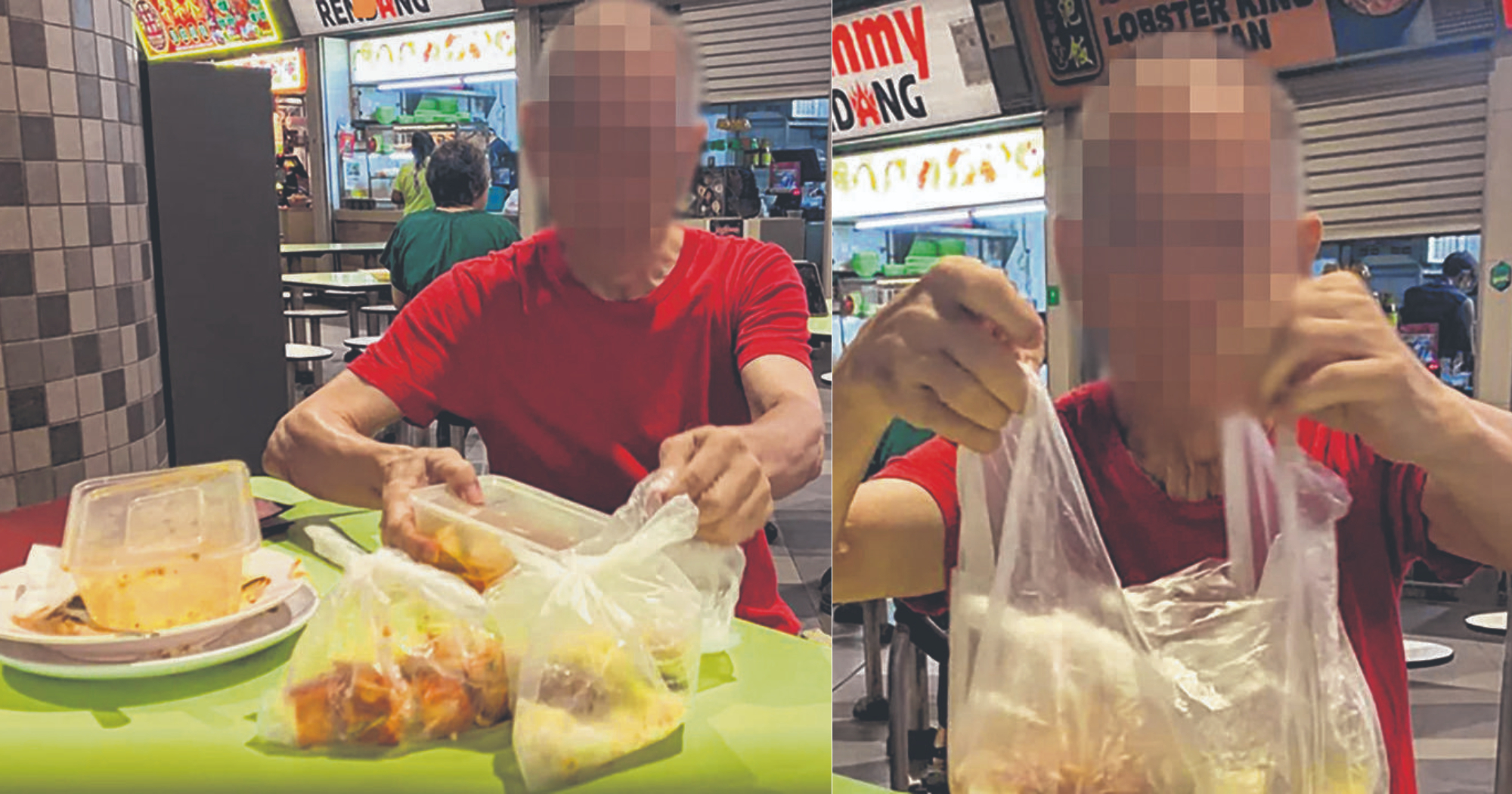
Elderly man seen picking up leftover food from Our Tampines Hub Hawker Centre, says he doesn't want food to go to waste
An elderly man has been observed daily collecting leftover food from tables at Our Tampines Hub Hawker Centre, stating he does so to prevent waste for his dinner.
Intelligence analysis by Gemini 2.5 Flash
The practice, initially reported by a resident to Shin Min Daily News, highlights a potentially widespread issue as cleaners at Our Tampines Hub and People's Park Food Centre confirm seeing other elderly individuals doing the same. While the man claims to be preventing waste, health experts warn of significant food poisoning and infectious disease risks from consuming scavenged leftov…
Imagine someone leaving their half-eaten lunch on a table at a big food court. An older man comes along and picks up that food, saying he doesn't want it to go to waste and plans to eat it for dinner. But doctors say eating food that's been sitting out for a long time can make you very sick, like getting a bad tummy ache, because tiny germs can grow on it. It seems other older people do this too, which makes grown-ups worry about their health.
Analysis
The sight of an elderly man collecting leftover food at Our Tampines Hub Hawker Centre, ostensibly to prevent waste, brings to the forefront a complex interplay of social, economic, and public health considerations within Singaporean society. While the individual's stated motivation is admirable in its intent to reduce food waste, the act itself carries significant risks and may hint at deeper societal challenges. The article suggests this is not an isolated incident, with similar observations made at other food centres, indicating a broader pattern that warrants attention.
Our Tampines Hub
The daily routine observed at Our Tampines Hub Hawker Centre, where an elderly man consistently gathers discarded food, underscores a visible manifestation of food waste concerns, or potentially, a struggle with food security. The fact that the man was not described as shabbily dressed complicates a simple interpretation of financial hardship, suggesting that motivations might be varied, from a deep-seated cultural aversion to waste to a personal economic strain that is not immediately apparent. This situation prompts questions about the adequacy of existing social support systems and community initiatives aimed at both food waste reduction and elderly welfare in bustling public spaces like hawker centres.
This particular hawker centre, a community focal point, becomes a microcosm for observing such behaviours. The reluctance of hawker centre staff to intervene, as noted in the article, highlights a dilemma between respecting individual autonomy and addressing potential health hazards. Their inaction, driven by a desire to avoid conflict, inadvertently allows a practice with serious health implications to continue, raising questions about the responsibilities of public space operators in ensuring the safety and well-being of patrons, even those engaging in unconventional activities.
Shin Min Daily News
The involvement of Shin Min Daily News, both as the recipient of the initial tip-off and the source of expert medical opinion, plays a crucial role in framing this narrative. Their reporting brings a critical public health perspective to an otherwise anecdotal observation. The doctor's warning about the increased risk of food poisoning and infectious diseases from consuming cooked food left out for more than two hours is a stark reminder of the dangers involved. This medical advice directly contradicts the perceived harmlessness of the act, emphasizing that good intentions regarding waste reduction do not negate biological realities concerning food spoilage.
Furthermore, the doctor's specific mention of heightened risks for individuals with weakened immune systems is particularly pertinent given the elderly demographic involved. This highlights a vulnerability that makes such practices even more concerning from a public health standpoint. The media's role in disseminating such expert opinions is vital for public awareness, ensuring that the community understands the potential severe consequences beyond the immediate act of collecting food.
People's Park Food Centre
The revelation that similar incidents occur at People's Park Food Centre in Chinatown, where two to three elderly men reportedly pick up food from tray return stations, broadens the scope of the issue beyond a single location. This suggests a systemic pattern rather than an isolated incident, indicating that the underlying factors driving such behaviour might be more pervasive across different communities in Singapore. The consistency of these observations over several years, as noted by a cleaner, further solidifies the idea that this is an ongoing challenge.
This wider geographical spread implies that any solutions or interventions would need to be community-wide or national in scope, rather than localized. It also suggests that the issue might be linked to broader demographic trends, such as an aging population and varying levels of social support or awareness among different elderly groups. Understanding the specific contexts of these different food centres could provide valuable insights into the diverse motivations and needs of the individuals involved, informing more targeted and effective responses.
Key points
- An elderly man is regularly seen collecting leftover food from tables at Our Tampines Hub Hawker Centre.
- He claims to be preventing food waste and intends to eat the collected food for dinner.
- Hawker centre staff have observed this but generally do not intervene to avoid conflict.
- Cleaners at Our Tampines Hub and People's Park Food Centre report similar practices by other elderly individuals over several years.
- A doctor warned that eating scavenged leftovers increases the risk of food poisoning and infectious diseases, particularly for those with weakened immune systems.
The continued practice of elderly individuals consuming scavenged leftovers poses significant public health risks, potentially leading to outbreaks of food poisoning and the spread of infectious diseases, especially among a vulnerable demographic with weakened immune systems. This situation could also indicate a failure in social safety nets, suggesting that some elderly residents may be resorting to unsafe practices due to financial hardship or a lack of awareness regarding food safety.