Electronic Warfare: Disrupting, Confusing, and Unsettling
A Ukrainian drone entered the airspace of NATO member Bulgaria, highlighting the growing threat of electronic warfare in the region. This tactic involves disrupting GPS signals to confuse and mislead enemy forces, with Russia being a major player in this area. The impact …
Intelligence analysis by Llama
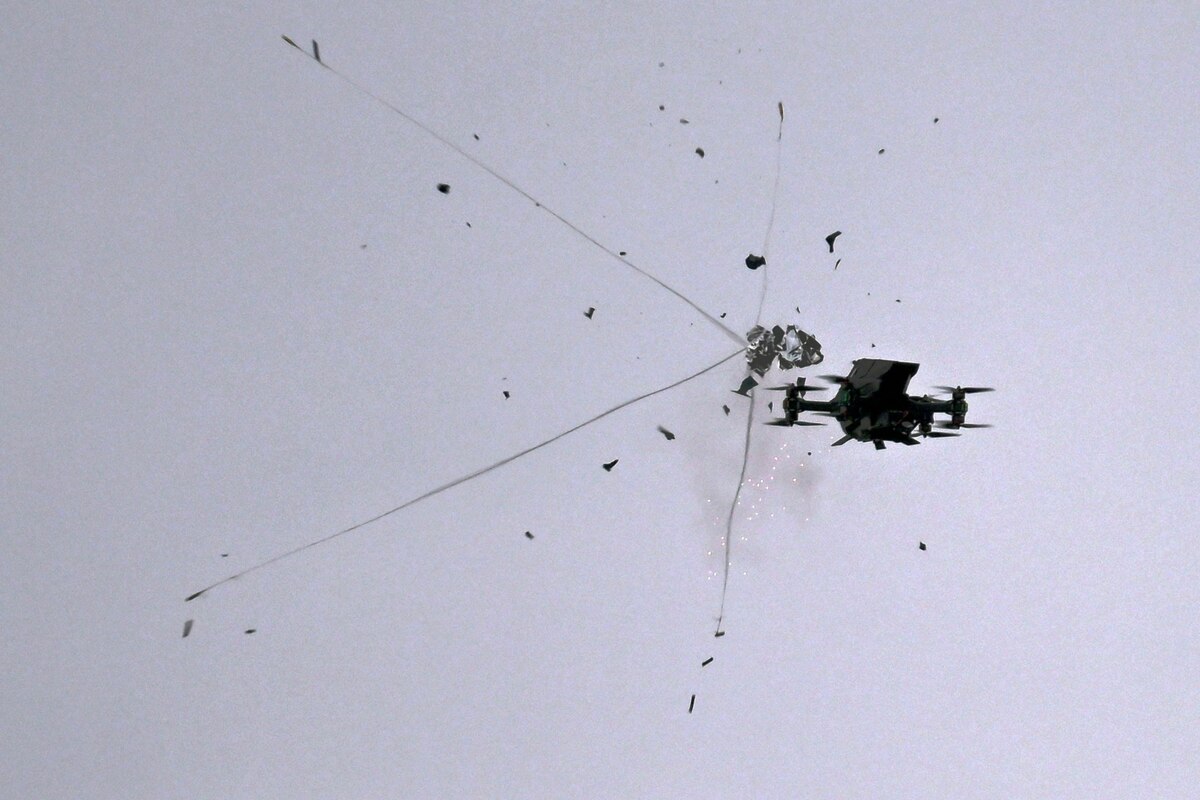
The increasing use of electronic warfare in the region is causing concern, with GPS signals being disrupted to confuse and mislead enemy forces. This tactic is not limited to military applications, but also affects civilian aviation and agriculture, with potential consequences for land use and navigation.
Imagine someone trying to whisper instructions in your ear, but then someone else starts shouting loudly, so you can't hear the instructions anymore. That's what's happening with GPS signals in the region. It's like a game of hide-and-seek, where the enemy is trying to confuse and mislead us. This technology is not just used for military purposes, but also affects civilian aviation and agriculture, which can have serious consequences.
Analysis
Electronic Warfare in the Region: A Growing Concern
The recent incident of a Ukrainian drone entering the airspace of NATO member Bulgaria has highlighted the growing threat of electronic warfare in the region. This tactic involves disrupting GPS signals to confuse and mislead enemy forces, with Russia being a major player in this area.
According to Ivo Müürsepp, a scientist at the Technical University of Tallinn, GPS signal disruption is a widespread tactic in current conflicts. "It's like someone trying to whisper something in your ear," he explains. "Now, go two steps to the left and then continue. And the disruption is like someone else standing next to this whispering person and just starting to shout, so you can't hear these instructions anymore."
This tactic is not limited to military applications, but also affects civilian aviation and agriculture. For instance, if there are inaccuracies of a few meters, there is a risk that self-driving harvesters will crash into a rock or something similar. This could have far-reaching consequences.
Finnish farmers have already reported such problems. The Estonian Ministry of Agriculture confirmed to the taz that signal disruptions are noticeable, but so far, there have been no significant effects. However, this could change in the future.
It is currently difficult to impossible to completely rely on GPS signals. And their disruption is part of the electronic warfare – by all sides.
The Impact of Electronic Warfare
The impact of electronic warfare extends beyond military applications, affecting civilian aviation and agriculture. This technology has the potential to disrupt navigation systems, causing accidents and damage to property.
Countermeasures and Mitigation
To counter the growing threat of electronic warfare, it is essential to develop effective countermeasures and mitigate its impact. This can be achieved through the use of alternative navigation systems, such as inertial navigation or terrain reference systems. Additionally, the development of more robust and secure GPS signals is crucial to prevent disruption.
Conclusion
The growing threat of electronic warfare in the region has significant implications for military operations, civilian aviation, and agriculture. Understanding this technology and its applications is crucial for developing effective countermeasures and mitigating its impact.
Key points
- Electronic warfare is a growing threat in the region, with GPS signals being disrupted to confuse and mislead enemy forces.
- This tactic is not limited to military applications, but also affects civilian aviation and agriculture.
- The impact of electronic warfare extends beyond military applications, affecting navigation systems and causing accidents and damage to property.
- Developing effective countermeasures and mitigating the impact of electronic warfare is crucial for military operations, civilian aviation, and agriculture.
- The international community must come together to develop more robust and secure navigation systems to prevent disruption.
If the international community can come together to develop effective countermeasures and mitigate the impact of electronic warfare, it could lead to a reduction in the number of incidents and a decrease in the disruption of GPS signals. This could also lead to increased cooperation and collaboration between countries to develop more robust and secure navigation systems.
If the threat of electronic warfare continues to grow, it could lead to a significant increase in the number of incidents, causing widespread disruption to civilian aviation and agriculture. This could also lead to a breakdown in international cooperation and collaboration, making it even more challenging to develop effective countermeasures.