Elon Musk becomes world's first trillionaire as SpaceX soars in stock market debut
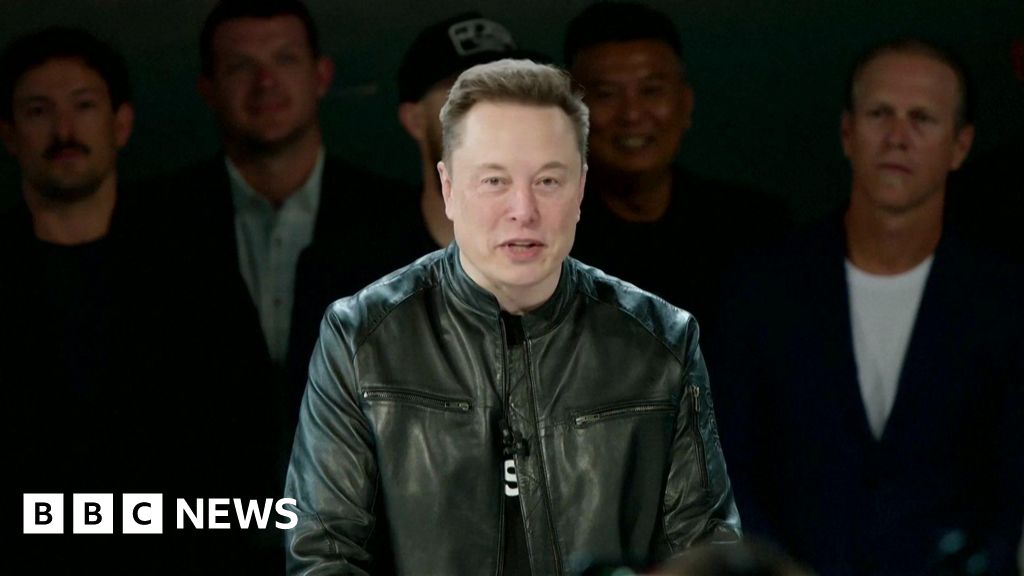
Elon Musk has become the world's first trillionaire after SpaceX's stock market debut propelled his net worth to $1.11 trillion, cementing his status as the richest person globally.
Intelligence analysis by Gemini 2.5 Flash
Elon Musk achieved the unprecedented milestone of becoming the world's first trillionaire following SpaceX's highly successful initial public offering (IPO) on the Nasdaq. The offering raised $75 billion, valuing the company at $2.2 trillion, largely based on future earnings potential rather than current profitability, igniting debates about wealth inequality and Musk's influence.
Imagine a super smart inventor who builds rockets and really fast internet. His company, SpaceX, just put its shares up for sale like toys in a store. Everyone was so excited to buy them that the shares became super valuable, making the inventor the richest person ever, even richer than a king! But a lot of his money is only on paper, like monopoly money, until he can actually sell his toy shares. Some people think it's not fair for one person to have so much, while others are excited about his big plans for space.
Analysis
Elon Musk officially became the world's first trillionaire on Friday after the stock market debut of his company, SpaceX. Shares in the rocket, telecommunications, and artificial intelligence (AI) company soared on the Nasdaq exchange, bringing its valuation to $2.2 trillion. Musk's personal net worth, primarily tied to his holdings in SpaceX and Tesla, reached $1.11 trillion, according to the Bloomberg rich list.
The initial public offering (IPO) for SpaceX generated $75 billion from investors and underwriters. Trading for SpaceX shares began at $150, climbing to $176.50 before closing at approximately $161. Musk retains a 42% ownership stake in SpaceX, granting him significant control over the company's direction and investments. His SpaceX shares were valued at $767.1 billion at the close of trading, with an additional $53.8 billion in SpaceX options. Furthermore, he holds $168 billion in Tesla shares and $116.4 billion in Tesla options.
Musk's new financial status has intensified discussions surrounding wealth inequality, with his wealth now comparable to the economic output of entire nations like Poland or Switzerland. This immense wealth has contributed to his role as a powerful and often controversial figure in global politics. The article notes his substantial financial contributions to political campaigns and his controversial tenure leading the Department for Government Efficiency, which resulted in cuts that researchers in The Lancet medical journal warned could lead to millions of additional deaths.
Despite his trillionaire status, the article clarifies that Musk's wealth is largely theoretical, being almost entirely tied to his stockholdings, which he cannot sell for at least a year. The IPO also created over 4,400 millionaires among current and former SpaceX employees through their stock options. SpaceX's high valuation is driven by optimism for its future earnings rather than its current financial performance; the company is not yet profitable, having reported losses exceeding $9 billion in 2025 and 2026 due to extensive investments in AI and other infrastructure. SpaceX's core business involves manufacturing and launching reusable rockets and Starlink internet satellites. Through its acquisition of xAI, SpaceX has also ventured into the AI sector. The company plans to use the IPO proceeds to support its growth strategies in rockets, Starlink, and AI, including ambitious plans for orbital data centers. Nancy Tengler of Laffer Tengler Investments, a SpaceX investor, described the company's AI business as a "cash incinerator" but expressed long-term confidence, anticipating a merger between SpaceX and Tesla within two years, potentially creating an even more valuable entity.
Future Ambitions and Concerns
SpaceX's ultimate mission, as outlined in its IPO prospectus, extends beyond current projects to "build the systems and technologies necessary to make lif."
Democratic US senators Bernie Sanders and Elizabeth Warren have condemned Musk's trillionaire status, with Warren calling it a "wake up call" for implementing wealth taxes. The debate underscores broader concerns about the concentration of wealth and its societal impact.
Key points
- Elon Musk became the world's first trillionaire after SpaceX's IPO pushed his net worth to $1.11 trillion.
- SpaceX's stock market debut on Nasdaq valued the company at $2.2 trillion, raising $75 billion from investors.
- Musk's wealth is predominantly in Tesla and SpaceX stock, making him unable to sell SpaceX shares for at least a year.
- The IPO made over 4,400 current and former SpaceX employees millionaires through their stock holdings.
- SpaceX is currently unprofitable, having lost over $9 billion in 2025 and 2026 due to investments in AI and infrastructure.
- The company's valuation is largely based on optimism about future earnings and its ambitious plans in rockets, Starlink, and AI.
The successful IPO of SpaceX could fuel significant advancements in space exploration, satellite internet, and artificial intelligence, potentially accelerating technological progress and opening new economic frontiers. The creation of thousands of millionaires among SpaceX employees suggests a broader distribution of wealth and incentivizes innovation within the company.
Musk's immense wealth, largely tied to speculative stock values, highlights concerns about wealth inequality and the potential for a single individual to wield disproportionate political influence. The fact that SpaceX is not yet profitable and has incurred substantial losses raises questions about the long-term sustainability of its valuation and the risks associated with its ambitious, capital-intensive projects.