Embodied-AI startup PsiBot raises over $100 million with industrial investors joining
Chinese embodied-AI startup PsiBot, focused on dexterous manipulation, has secured over US$100 million in a new funding round, attracting investments from industrial players and existing shareholders. The capital will fuel research into embodied-world models, human-operat…
Intelligence analysis by Gemini 2.5 Flash
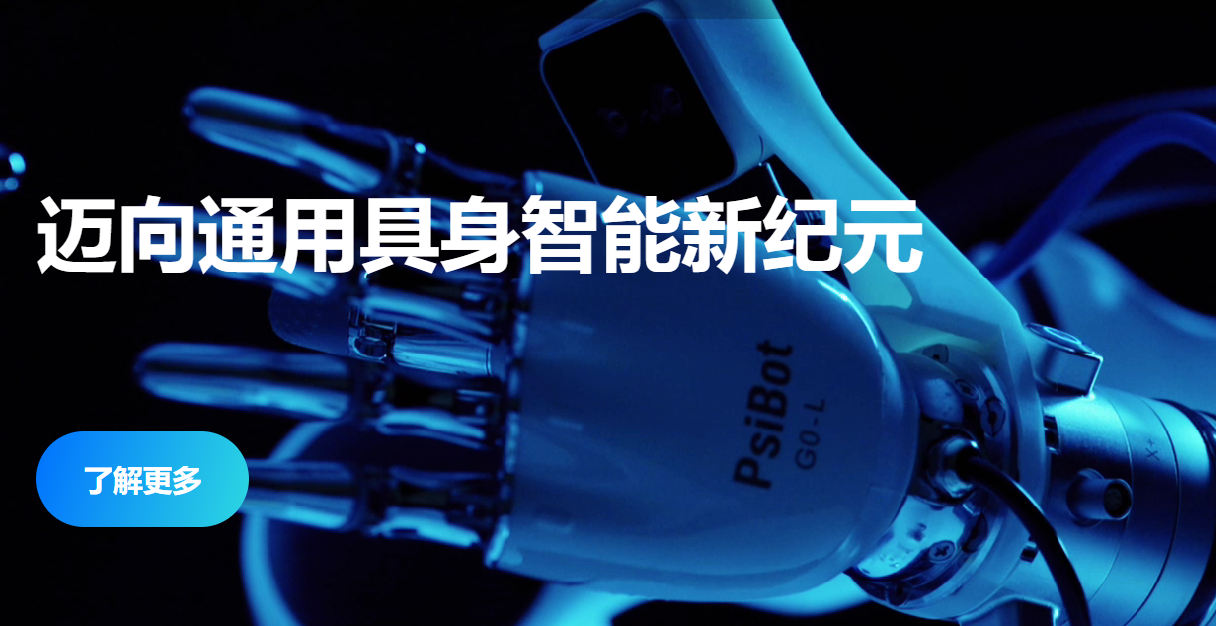
Chinese embodied-AI firm PsiBot has successfully closed a funding round exceeding $100 million, drawing significant investment from a consortium of industrial companies and its current backer. This substantial capital injection is earmarked for advancing its core research in embodied-world models and human-operation data, alongside expanding its application into key sectors like logis…
Imagine a smart robot company called PsiBot just got a huge piggy bank full of over $100 million from big companies that make things like car parts and phone screens. They'll use this money to teach their robots to be super good at picking up and moving tricky things, like how you might build with LEGOs, but much faster and more precisely. They want these robots to help in factories and warehouses, making work easier and quicker.
Analysis
PsiBot's recent funding round, securing over US$100 million, marks a significant milestone for the embodied AI sector, particularly in China. The substantial capital injection comes from a strategic mix of new industrial investors, including Ningbo Tuopu Group, a Chery Holdings-backed fund, Lens Technology, 37 Interactive Entertainment, Wuhu Investment Holding Group, and Fosun Fortune Capital. This diverse investor base, notably featuring manufacturing and technology firms, underscores a growing recognition of embodied AI's potential to revolutionize physical industries. The continued investment from existing shareholder Zhuhai Technology Industry Group further validates PsiBot's progress and vision. This financial backing is crucial for accelerating the company's ambitious research and deployment initiatives, positioning it at the forefront of developing intelligent robotic systems capable of complex physical interactions.
The allocated funds are earmarked for several critical areas designed to advance PsiBot's core mission. A significant portion will support embodied-world-model research, which is fundamental to enabling AI systems to understand and interact with the physical world in a more intuitive and adaptive manner. Concurrently, investment in human-operation data collection is vital for training these models, allowing robots to learn from human dexterity and problem-solving in real-world scenarios. These research efforts are directly linked to PsiBot's goal of deploying its technology in high-impact sectors such as logistics and advanced manufacturing, where precise and adaptable robotic manipulation can drive substantial efficiency gains and automation.
PsiBot's $100 Million Round
The successful closure of PsiBot's funding round, exceeding $100 million, highlights a robust investor appetite for practical AI applications, especially those addressing tangible industrial challenges. The participation of industrial heavyweights like Ningbo Tuopu Group, a significant player in automotive components, and Lens Technology, known for its advanced manufacturing capabilities, signals a clear intent to integrate cutting-edge AI into their operational frameworks. This strategic alignment between PsiBot's technological development and its investors' industrial needs creates a powerful synergy, potentially accelerating the adoption of embodied AI across various manufacturing and supply chain processes.
This substantial capital infusion is strategically directed towards advancing PsiBot's core technological pillars. A primary focus is on embodied-world-model research, which aims to equip AI systems with a deeper understanding of physical laws and object interactions, crucial for sophisticated manipulation. Simultaneously, the funds will bolster human-operation data collection efforts, providing the rich datasets necessary to train AI models for dexterous tasks that traditionally require human-level precision and adaptability. These investments are designed to propel PsiBot's solutions from advanced research into scalable, real-world deployments within logistics and advanced manufacturing environments.
Psi-R2 and Psi-W0 Architecture
PsiBot's technological foundation rests on a sophisticated dual-system architecture, comprising the Psi-R2 operation-policy model and the Psi-W0 action-conditioned world model. The Psi-R2 model is designed to govern the robot's operational policies, essentially dictating the sequence and nature of actions required to complete a given task, particularly those involving complex dexterous manipulation. This model acts as the strategic brain, planning the intricate movements and interactions necessary for precise execution.
Complementing Psi-R2, the Psi-W0 action-conditioned world model provides the robot with a dynamic understanding of its environment and the potential outcomes of its actions. This world model allows the AI to simulate and predict how its movements will affect objects and its surroundings, enabling more intelligent and adaptive decision-making. Together, these two models create a robust framework for embodied AI, allowing PsiBot's robots to not only execute complex tasks but also to understand and adapt to the nuances of physical interaction, a critical capability for real-world industrial applications.
Ningbo Tuopu Group's Strategic Interest
The involvement of industrial investors such as Ningbo Tuopu Group and the Chery Holdings-backed fund is particularly telling, indicating a strong demand for embodied AI solutions within traditional manufacturing sectors. Ningbo Tuopu Group, with its extensive operations in automotive parts, likely sees PsiBot's dexterous manipulation capabilities as a key enabler for automating intricate assembly processes, quality control, or material handling that currently rely on human labor. This investment reflects a proactive approach to leveraging advanced robotics for competitive advantage.
This strategic interest from industrial players directly aligns with PsiBot's stated goals of deploying its technology in logistics and advanced manufacturing. The capital provided by these investors is not merely financial; it also represents potential avenues for real-world testing and implementation. Such collaborations can provide PsiBot with invaluable feedback from industrial environments, accelerating the refinement and commercialization of its embodied AI systems, ultimately paving the way for more efficient, automated, and resilient supply chains and production lines.
Key points
- Chinese embodied-AI startup PsiBot raised over US$100 million in a new funding round.
- Industrial investors like Ningbo Tuopu Group and Lens Technology joined the round, alongside existing shareholder Zhuhai Technology Industry Group.
- Funds will support embodied-world-model research, human-operation data collection, and deployments.
- PsiBot focuses on dexterous manipulation and targets applications in logistics and advanced manufacturing.
- The company is developing a dual-system architecture featuring Psi-R2 and Psi-W0 models.
The substantial investment from industrial giants suggests a strong belief in PsiBot's ability to deliver practical, impactful embodied AI solutions. This capital infusion could accelerate the development and deployment of advanced robotic systems, leading to significant efficiency gains and automation breakthroughs in manufacturing and logistics.
Despite the significant funding, the development of truly dexterous and reliable embodied AI for complex industrial environments faces substantial technical hurdles. There's a risk that the ambitious research goals, particularly in embodied-world models and extensive data collection, may not yield commercially viable results within expected timelines or at the required scale.