Emphasis on Reforms: Jaishankar Says UN Irrelevant on Global Issues, Countries Oppose Changing UNSC System
External Affairs Minister S. Jaishankar has stressed the need for UN reforms, stating the global body is failing to make effective decisions on major global issues and is often irrelevant.
Intelligence analysis by Gemini 2.5 Flash Lite
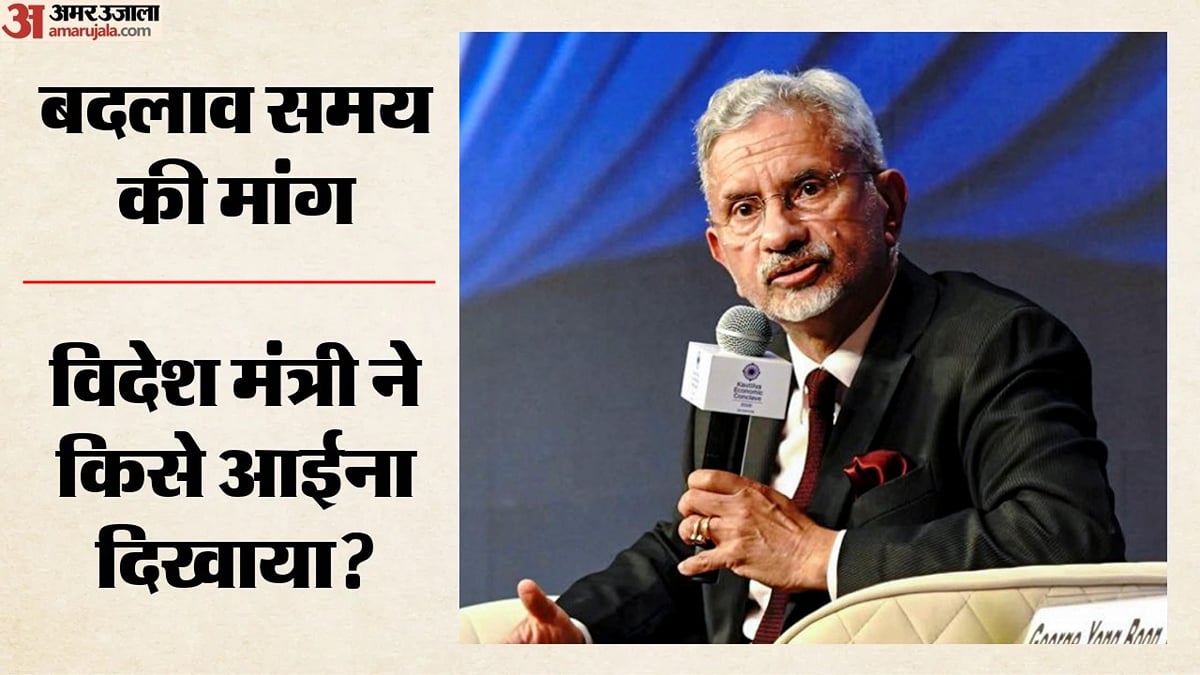
S. Jaishankar, India's External Affairs Minister, has strongly advocated for reforms within the United Nations, particularly the Security Council. He highlighted the UN's increasing irrelevance in addressing critical global challenges like the Ukraine conflict and the COVID-19 pandemic, attributing this to an outdated structure and opposition from certain member states to necessary ch…
Imagine the UN is like a school club that was formed a long time ago. It used to have only a few members, but now it has many more! The club's leaders, like the UN Security Council, are still using the old rules and haven't let enough new members join the decision-making. This makes it hard for the club to solve today's big problems, like arguments between countries, because the leaders don't represent everyone anymore.
Analysis
United Nations Security Council Stalemate
External Affairs Minister S. Jaishankar articulated a significant critique of the United Nations, particularly its Security Council, during a conclave in Delhi. He pointed out that the UNSC's decision-making process has become largely ineffective due to persistent stalemates. This paralysis, he argued, means the Council no longer accurately represents the entirety of global interests. The world has evolved into a more interconnected and multipolar entity, yet the UN's operational framework remains mired in an outdated structure, hindering its ability to respond decisively to contemporary crises.
Jaishankar cited the prolonged Ukraine-Russia conflict and ongoing tensions in the Gulf region as examples where the UN's effectiveness has been severely compromised. He also noted the organization's diminished role during the COVID-19 pandemic and in addressing issues pertinent to Africa. The minister's remarks suggest a deep-seated frustration with the UN's inability to adapt to the changing geopolitical landscape and its failure to provide timely and impactful solutions to pressing global problems.
Opposition to Reform
Ambiguous as to specific nations, Jaishankar stated that certain countries are actively opposing reforms within the UN. He noted that these opposing nations often invoke arguments related to Africa and its interests, a stance he found contradictory given Africa's own evolving position. The minister emphasized that Africa has clearly articulated its desired changes through inter-governmental negotiations, indicating a disconnect between the continent's aspirations and the resistance encountered within the UN system.
This resistance to reform, particularly concerning the UNSC's expansion and restructuring, perpetuates the imbalance in global representation. The UN, which began with 51 member states, has quadrupled its membership, yet its core governance structures, especially the Security Council, have not kept pace. This disparity raises questions about the legitimacy and efficacy of decisions made by a body that does not reflect the current global demographic and power distribution.
International Economic Order
Beyond the political and security dimensions, Jaishankar also touched upon the state of the international economic and trade systems. He observed a widespread sentiment that these systems are not functioning optimally. The existing framework, he explained, was built on market principles, but contemporary global trade is influenced by numerous non-market practices that have not received adequate attention. This conflict between established market rules and prevalent non-market practices is identified as a primary challenge to the international economic order.
This critique suggests that the UN and associated international financial institutions need to address not only geopolitical representation but also the evolving realities of global commerce. The minister's call for reform extends to ensuring that international economic governance is equitable and responsive to the diverse practices and needs of member states, moving beyond a purely theoretical market-based approach to acknowledge and manage real-world economic dynamics.
Key points
- External Affairs Minister S. Jaishankar emphasized the need for UN reforms, citing its ineffectiveness on major global issues.
- He highlighted the UN Security Council's outdated structure and decision-making stalemates as key problems.
- Jaishankar noted that some countries oppose reforms, hindering the UN's ability to adapt to a multipolar world.
- He also pointed to issues within the international trade and financial systems, suggesting they are not functioning optimally.
- The minister stressed that the solution is to reform the UN, not to bypass it.
If the UN undergoes significant reforms, it could regain its relevance and effectiveness in addressing global challenges, fostering greater international cooperation and stability. A more representative Security Council could lead to more equitable solutions for conflicts and crises, benefiting nations that have historically been underrepresented.
Continued resistance to UN reforms could further marginalize the institution, leading countries to bypass it entirely for global decision-making. This could result in a fragmented international order, increased geopolitical instability, and a failure to effectively tackle shared global threats.