End of the non-intervention doctrine: why Algiers is engaging militarily in the Sahel
Algeria is abandoning its six-decade-old non-intervention doctrine by deploying Sukhoi Su-30 combat aircraft to Niger to support its army against a coup attempt, marking a significant shift in its foreign policy.
Intelligence analysis by Gemini 2.5 Flash
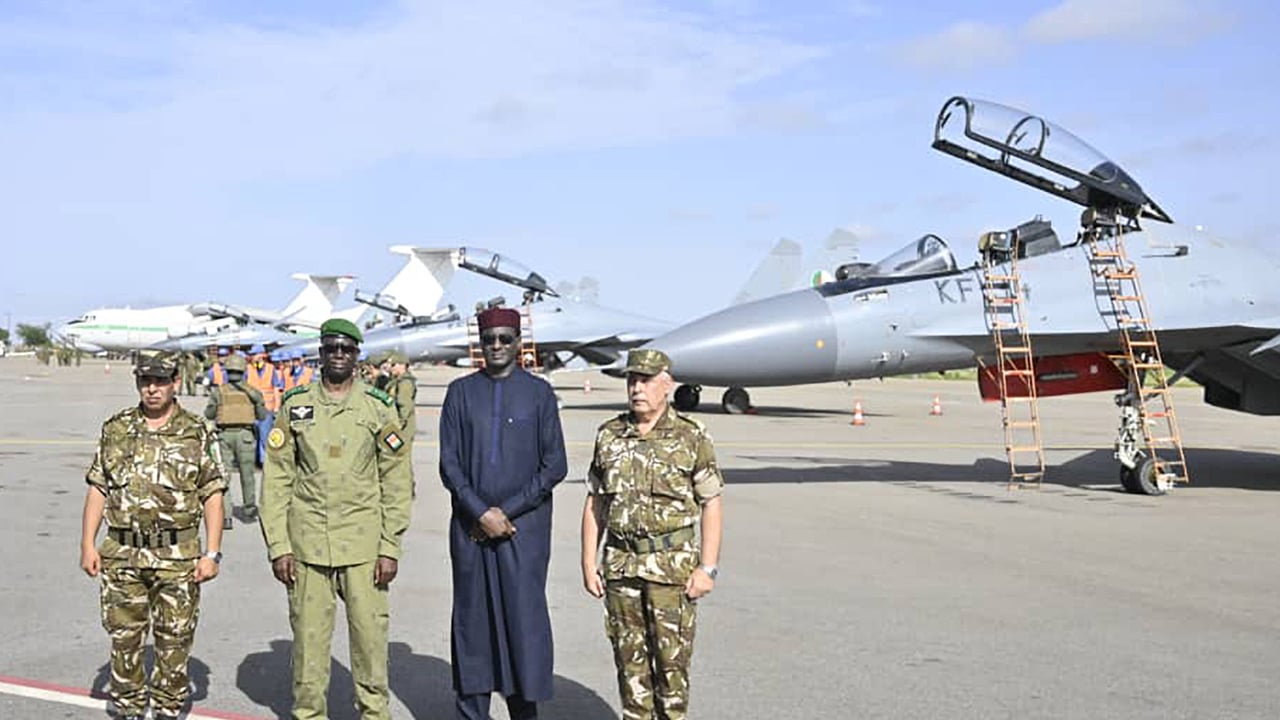
For over sixty years, Algeria has maintained a strict foreign policy of non-military intervention beyond its borders. However, a recent decision by General Saïd Chengriha to dispatch combat aircraft to Niger to aid in quelling a coup attempt signals a major departure from this long-standing principle, indicating a new era of Algerian military engagement in the Sahel region.
Imagine Algeria usually keeps its soldiers at home, like a kid who only plays in their own yard. But now, a neighbor (Niger) is having trouble, and Algeria's top general decided to send some special planes to help, like sending a big brother to help a friend who's being picked on. It's a big change for Algeria!
Analysis
Algeria's foreign policy has been anchored for over six decades by a fundamental principle: a strict commitment to non-intervention, prohibiting the deployment of troops or military equipment outside its national borders. This doctrine, deeply rooted in its post-colonial identity and sovereignty, has largely defined Algeria's approach to regional and international conflicts, emphasizing diplomatic solutions over military engagement.
Six Decades
This long-standing non-interventionist stance has been a cornerstone of Algerian diplomacy since its independence. It reflected a desire to avoid entanglement in external conflicts and to uphold the sovereignty of other nations. While the doctrine was largely consistent, the article notes two historical exceptions: Algeria's military engagement during the Arab-Israeli wars of 1967 and 1973, which were specific instances of solidarity with Arab nations against a common adversary.
Niger
The recent decision to send military assets to Niger on August 30 represents a significant and unprecedented departure from this established policy. The deployment involves two squadrons of Sukhoi Su-30 combat aircraft, with the explicit mission to support the Nigerian army. This intervention is aimed at countering a coup attempt and the broader destabilization efforts within Niger, directly addressing an internal security challenge in a neighboring state. This move signals a proactive engagement in a region grappling with widespread insecurity and political instability.
General Saïd Chengriha
The order for this military deployment came directly from General Saïd Chengriha, the Chief of Staff of the Algerian People's National Army. His directive underscores the high-level strategic decision-making behind this policy shift. The move suggests a re-evaluation within Algeria's military and political leadership regarding the country's role in regional security, potentially driven by the escalating threats in the Sahel and the perceived need for a more robust response to protect its own borders and interests.
Key points
- Algeria has historically maintained a strict non-interventionist military doctrine for over six decades.
- This policy has been broken by the decision to send Sukhoi Su-30 combat aircraft to Niger on August 30.
- The mission is to support the Nigerian army in countering a coup attempt and destabilization.
- General Saïd Chengriha ordered the deployment, marking a major evolution in Algerian foreign policy.
- Previous exceptions to the doctrine were military engagements during the 1967 and 1973 Arab-Israeli wars.
The intervention could stabilize Niger and the broader Sahel region, potentially preventing further escalation of conflicts and strengthening regional security cooperation against destabilizing forces. This new engagement might also foster stronger diplomatic ties and a more unified front among African nations facing similar threats.
This shift could draw Algeria into complex and protracted regional conflicts, risking military overextension and potential blowback. It might also be perceived as an infringement on national sovereignty by some, potentially exacerbating regional tensions or inviting further external interference.


