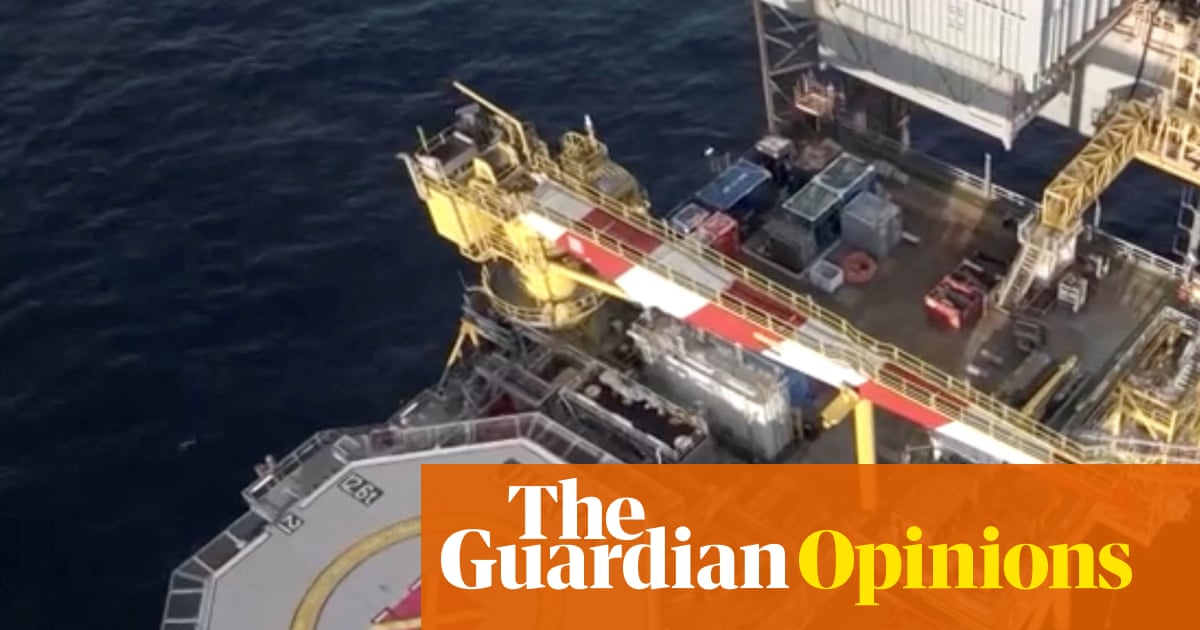
Energy secretary leaning towards rejecting Rosebank oilfield
UK Energy Secretary Miatta Fahnbulleh is reportedly leaning towards rejecting the large Rosebank oilfield project, a move that would be a significant win for climate campaigners but a setback for the North Sea energy industry.
Intelligence analysis by Gemini 2.5 Flash

The potential rejection of the Rosebank oilfield comes shortly after Fahnbulleh approved the smaller Jackdaw gasfield. Her rationale differentiates the two projects, citing Rosebank's higher carbon emissions and primary export focus versus Jackdaw's role in domestic gas supply during the transition to net zero. This decision highlights the government's balancing act between energy sec…
Imagine the UK needs energy, like a car needs fuel. The government is trying to decide where to get that fuel. They just said 'yes' to a smaller gas field called Jackdaw because it's like getting fuel from a nearby, cleaner pump for our own cars. But now, they're thinking of saying 'no' to a much bigger oil field called Rosebank. That's because Rosebank's fuel is dirtier and mostly for selling to other countries, not for our own cars. It's a big decision because they want to keep our lights on but also protect the planet from too much pollution.
Analysis
The potential rejection of the Rosebank oilfield by Energy Secretary Miatta Fahnbulleh marks a pivotal moment for the UK's energy strategy, underscoring the complex interplay between economic imperatives, energy security, and climate obligations. While Fahnbulleh recently approved the Jackdaw gasfield, her reasoning for Rosebank's likely refusal hinges on distinct characteristics, primarily its scale, carbon footprint, and export orientation. This nuanced approach suggests a government attempting to navigate the immediate energy needs while adhering to longer-term environmental goals, a challenge that resonates across global economies grappling with similar transitions.
Miatta Fahnbulleh's Rationale
Energy Secretary Miatta Fahnbulleh has articulated a clear distinction between the Jackdaw gasfield and the Rosebank oilfield, which underpins her leaning towards rejecting the latter. She emphasized that Jackdaw is a gasfield intended to cater to the domestic market, providing a relatively lower-carbon source of energy during the UK's transition to net zero, thereby enhancing energy security. In contrast, Rosebank is an oilfield primarily designated for export, meaning its output would do less to bolster UK energy security directly. Fahnbulleh stressed the importance of judging each application on its own merits, ensuring consistency with the UK's climate obligations, carbon budgets, and the ultimate goal of energy transition. This differentiation highlights a strategic attempt to balance immediate energy demands with long-term environmental commitments, even as the UK faces an energy crisis exacerbated by global conflicts.
Rosebank's Economic and Environmental Footprint
The Rosebank oilfield is characterized as one of the biggest in the North Sea, promising significant economic benefits in terms of jobs and longevity compared to Jackdaw. Neil McCulloch, chief executive of Adura, one of the companies behind the plans, highlighted its larger scale and longer operational life. However, the field's environmental impact is considerably greater, estimated to emit about seven times the carbon of Jackdaw. This substantial carbon footprint, coupled with the fact that most of the oil would be exported rather than used domestically, weakens the argument for its approval from an energy security perspective, according to Fahnbulleh's understanding. The UN Environment Programme's recommendations for drastic cuts in global carbon emissions within the next decade further amplify the pressure on such large-scale fossil fuel projects, making Rosebank a contentious point in the UK's climate policy.
Energy Wealth Fund and Political Implications
In a move to mitigate criticism and demonstrate commitment to green energy, Fahnbulleh announced a new energy wealth fund, set to receive £2bn in the budget. This fund, reallocated from other parts of her department's budget, is intended to channel future tax revenues from the North Sea oil and gas industry into renewables, nuclear, and other clean energy schemes. While the exact details of tax revenues and their generation remain to be clarified by the chancellor, this initiative aims to link fossil fuel extraction with green investment. Politically, the decision on Rosebank carries significant weight for Labour. While the approval of Jackdaw might boost Labour's standing in north-east Scotland, where the industry is concentrated, a poll by Savanta for E3G indicated that nearly a third of voters, including many Labour supporters and young people, would be less likely to vote Labour if more North Sea oil drilling were approved. This underscores the delicate balance the party must strike between supporting regional employment and satisfying its climate-conscious electorate.
Key points
- Energy Secretary Miatta Fahnbulleh is reportedly leaning towards rejecting the Rosebank oilfield.
- The decision follows her approval of the smaller Jackdaw gasfield, which she differentiated based on domestic use vs. export and carbon emissions.
- Rosebank is one of the biggest North Sea oilfields, with emissions seven times higher than Jackdaw's and primarily for export.
- A new £2bn energy wealth fund will be established to invest North Sea revenues into green energy projects.
- The decision carries significant political implications for Labour, balancing industry support with climate pledges and voter sentiment.
Rejecting Rosebank would signal a strong commitment to the UK's climate targets, potentially accelerating investment in renewable energy projects through the new energy wealth fund. This could enhance the UK's international reputation on climate action and align policy with scientific recommendations for emissions reductions, fostering a greener economy.
A rejection could be seen as a significant blow to the North Sea energy industry, potentially leading to job losses and reduced investment in the region. It might also raise concerns about the UK's energy security if domestic fossil fuel production is curtailed without sufficient alternative energy sources immediately available, especially amidst global energy crises.