EU trade enforcers descend on Beijing demanding China fix ‘untenable’ imbalances
A European Commission delegation is in Beijing to address China's surging exports and trade surplus with the EU, aiming to avert a trade war before an October deadline.
Intelligence analysis by Gemini 2.5 Flash
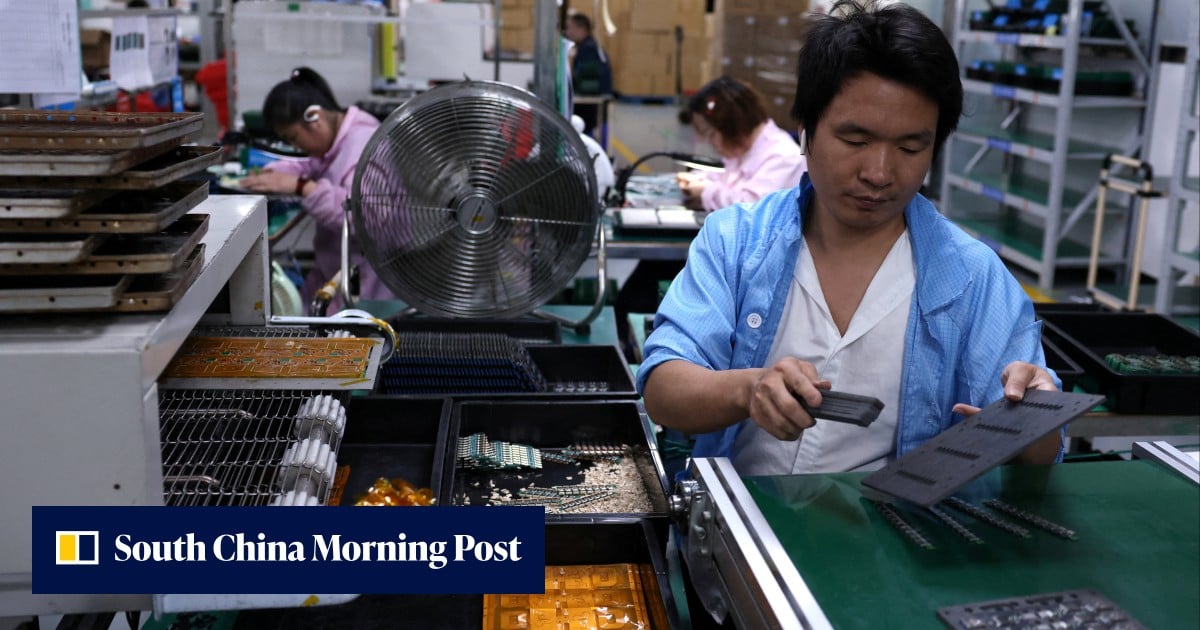
EU officials are holding high-stakes talks in Beijing, led by top trade enforcers, to press China on its growing trade imbalances and 'concentration dependencies' in strategic sectors. The discussions seek a commitment from Beijing to reduce its exports to the bloc, with the goal of preventing a damaging tit-for-tat trade conflict later this autumn.
Imagine Europe and China are playing a game where China keeps winning almost all the points, and Europe feels it's not fair because China has some special rules. So, Europe sent its best players to talk to China and ask them to change the rules a bit so everyone can have a fair chance. If they don't agree by October, Europe might stop playing with China in the same way, which could make things tricky for everyone.
Analysis
The current diplomatic efforts in Beijing represent a critical juncture in China-EU relations, as Brussels seeks to rebalance a trade relationship increasingly characterized by significant disparities. The European Union's concerns extend beyond mere trade deficits, focusing on what it perceives as 'untenable imbalances' and 'increasing concentration dependencies' within strategic sectors. This shift in rhetoric and policy approach underscores a growing apprehension within the EU regarding its economic vulnerability and reliance on Chinese supply chains, particularly in critical industries.
Denis Redonnet
Denis Redonnet, the EU's chief trade enforcement officer, is spearheading the delegation, a clear indication of the seriousness with which Brussels views the current trade situation. His recent appointment as the point person for China trade policy reflects a broader strategic recalibration within the EU, moving away from a narrative of partnership towards one dominated by rivalry and competition. This change in focus suggests that the EU is prepared to take a more assertive stance in defending its economic interests and ensuring fair trade practices, rather than simply engaging in dialogue.
Redonnet's presence signifies that the EU is not merely seeking discussions but is actively pursuing enforceable commitments from Beijing. The emphasis on trade enforcement highlights a potential readiness to deploy trade defense instruments if diplomatic solutions prove insufficient. The EU's strategy appears to be one of firm negotiation, aiming to secure concrete actions from China that would alleviate the perceived imbalances and reduce the bloc's strategic dependencies, thereby safeguarding its economic resilience.
October Deadline
The urgency of the current talks is underscored by an 'October deadline' set by Brussels, indicating a finite window for diplomatic resolution before potential escalatory measures are considered. This deadline serves as a clear signal to Beijing that the EU is not prepared to allow the current trade dynamics to persist indefinitely without significant adjustments. The prospect of a 'looming trade war' and a 'damaging tit-for-tat exchange' looms large, adding pressure to the ongoing negotiations.
Failure to reach a satisfactory agreement by this deadline could trigger a series of retaliatory actions from the EU, potentially including tariffs or other trade barriers. Such measures would inevitably impact both Chinese exporters and European consumers and businesses, disrupting global supply chains and potentially slowing economic growth. The deadline therefore represents a critical moment for both sides to demonstrate flexibility and a willingness to compromise to avoid a costly trade conflict.
Ditte Juul Jorgensen
Ditte Juul Jorgensen, the European Union’s top trade official, is set to follow Redonnet to Beijing later this month, reinforcing the high-level nature of these discussions. Her confirmation of the visit and her remarks at the European Parliament highlight the EU's dual approach: acknowledging China's engagement in talks while simultaneously emphasizing the 'very, very significant' challenges that remain. Jorgensen's upcoming visit suggests that the initial discussions led by Redonnet are foundational, with her subsequent engagement aimed at solidifying any potential concessions or agreements.
Jorgensen's focus on 'increasing concentration dependencies, including in strategic sectors' as a risk to the EU underscores a deeper concern about economic security and resilience. This goes beyond simple trade deficits, touching upon issues of industrial policy, state subsidies, and market access. Her involvement indicates that the EU is seeking not just a temporary fix but a more structural rebalancing of the trade relationship to ensure long-term stability and fairness for European industries.
Key points
- EU trade enforcers are in Beijing to address 'untenable imbalances' in trade with China.
- The EU seeks a commitment from China to reduce its surging exports and trade surplus.
- Brussels has set an October deadline to avoid a 'looming trade war' and 'damaging tit-for-tat exchange'.
- EU officials express concern over 'increasing concentration dependencies' in strategic sectors.
- Top EU trade official Ditte Juul Jorgensen will follow up on the talks later this month.
Should China agree to meaningful concessions and commit to reducing its trade surplus and addressing 'concentration dependencies,' a damaging trade war could be averted. This would lead to more balanced and sustainable trade relations between the EU and China, fostering continued economic cooperation and stability.
If the ongoing talks fail to yield significant commitments from China by the October deadline, a trade war could erupt. This would likely involve retaliatory tariffs and trade barriers, disrupting global supply chains, increasing costs for businesses and consumers, and negatively impacting economic growth for both blocs.