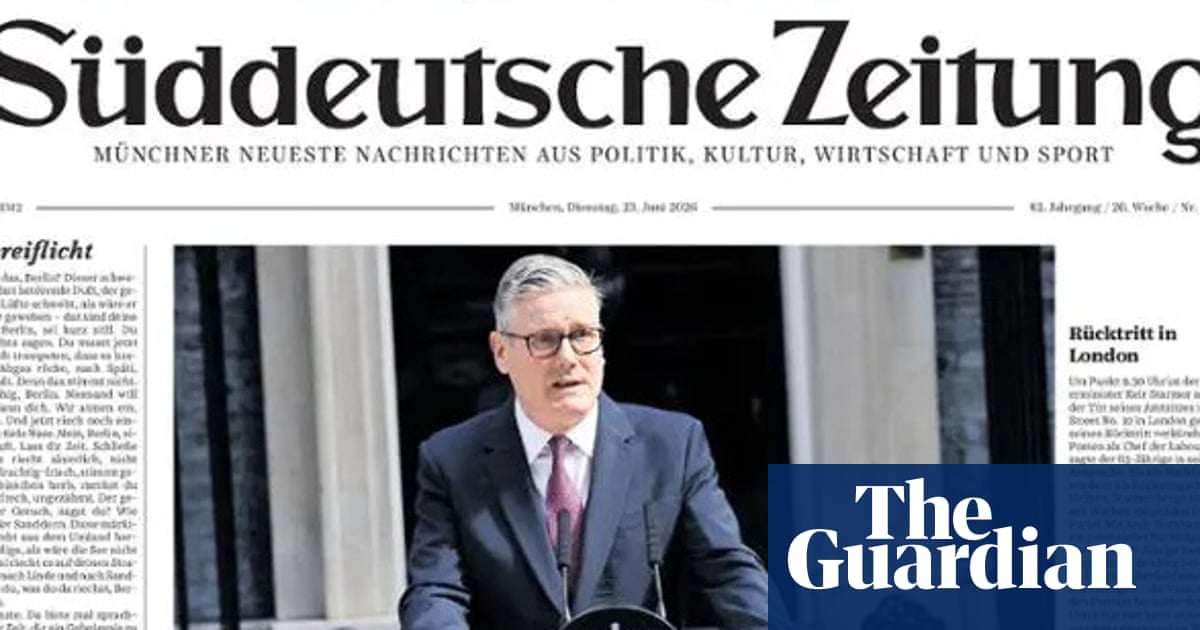
Europe’s media look on in bemusement at post-Brexit ‘revolving door’ of UK prime ministers
Germany's Der Spiegel compares Downing Street to a transit station, reflecting the frequent changes in UK prime ministers since Brexit. Spanish La Vanguardia notes that Britain has gone from a beacon of stability to a revolving door of politics.
Intelligence analysis by Qwen 2.5 (3B)
European media observe the rapid turnover of UK prime ministers post-Brexit with amusement and concern, highlighting the instability in British politics.
Imagine if every time you got a new job, your boss would suddenly quit and get a new job too. That's kind of what happened with British prime ministers after Brexit – they kept leaving their jobs quickly.
Analysis
A $60B Vote of Confidence
The UK’s economic situation post-Brexit has been marred by frequent changes in leadership. The revolving door phenomenon suggests a systemic issue within British politics.
Why Cursor?
The rapid turnover of prime ministers reflects the challenges faced by the Labour Party under Keir Starmer, exacerbated by Brexit-related issues and internal party divisions.
The Road Ahead
The appointment of Andy Burnham as the new Labour leader may not bring much change. The article suggests that political instability is here to stay in post-Brexit Britain.
Key points
- Germany's Der Spiegel compared Downing Street to a transit station
- Spain’s La Vanguardia noted that Britain has gone from a beacon of stability to a revolving door of politics
- The UK’s economic situation post-Brexit has been marred by frequent changes in leadership
- Andy Burnham is expected to be the new Labour leader, but it may not bring much change
The appointment of Andy Burnham as the new Labour leader might bring some stability to the party, but it won't solve the underlying issues caused by Brexit and internal party divisions.
Without significant changes in leadership or policies, the revolving door phenomenon is likely to continue, leading to further political instability in Britain.