Even in the 21st century, Sir Syed Ahmad Khan’s words resonate
Sir Syed Ahmad Khan's 209th birth anniversary is celebrated, highlighting his enduring legacy in India's social reforms through education, aiming for social progress and national integration.
Intelligence analysis by Gemini 2.5 Flash
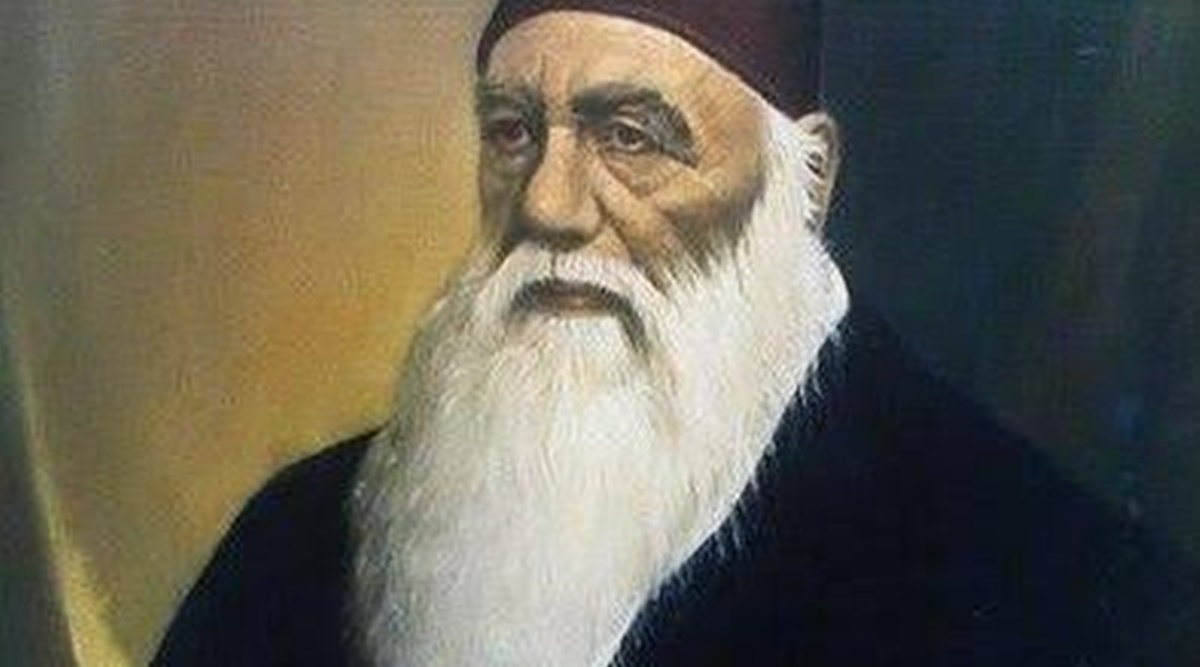
The article commemorates Sir Syed Ahmad Khan, founder of Aligarh Muslim University, emphasizing his pivotal role in 19th-century India. It argues that his advocacy for modern scientific education and his efforts to foster unity between Hindu and Muslim communities are still pertinent in the 21st century, especially in navigating technological advancements and societal divisions.
Imagine a super smart leader named Sir Syed from a long time ago. He believed that if everyone, both Hindus and Muslims, learned science and new ideas, they could make India a much better place, like two strong hands working together. He even started a special school, which is now a big university, to teach these new things. His ideas are still important today, like how we need to learn about new things like computers to make smart choices.
Analysis
The article celebrates Sir Syed Ahmad Khan's 209th birth anniversary, positioning him as a visionary whose ideas on education and national integration remain highly relevant in contemporary India. It moves beyond his common description as merely the founder of Aligarh Muslim University (AMU) to explore his broader impact on social reform during the latter half of the 19th century. The author, Tariq Mansoor, a former vice chancellor of AMU, argues that Sir Syed's genius lay in his ability to apply education to achieve the dual goals of social progress and national integration, a mission he articulated in 1883 in Patna.
Scientific Society
Sir Syed Ahmad Khan recognized the disruptive potential of Western science, which was then largely inaccessible due to language barriers. To address this, he established the Scientific Society. This initiative was crucial for translating scientific works from English and other European languages into Urdu and Hindi. His foresight in promoting scientific and technological education is presented as a parallel to today's challenges with artificial intelligence, suggesting that an educated mind is essential to critically evaluate information, whether from machines or other sources.
Hindu-Muslim Unity
A cornerstone of Sir Syed's educational renaissance project was the envisioning of a social compact between Hindus and Muslims. He aimed to liberate both communities from what he perceived as medieval habits of thought, guiding them towards reason, breadth of mind, and progress. His famous analogy of India as a bride with "two beautiful and captivating eyes: Hindus and Muslims" underscores his commitment to communal harmony. He actively demonstrated this by inviting Raja Dev Narayan Singh to be a patron of his school at Ghazipur and even urged Muslims to voluntarily abandon cow sacrifice to foster better relations with Hindus, showcasing his practical approach to integration.
Prime Minister Narendra Modi
The article notes that Sir Syed's relevance has been rekindled beyond mere political optics, particularly by Prime Minister Narendra Modi. During AMU's centenary celebrations in 2020, Modi quoted Sir Syed to invoke principles like "nation first" and "Sabka Saath, Sabka Vikas, Sabka Vishwas." Modi highlighted Sir Syed's belief that the primary duty of anyone concerned about their country is to work for the welfare of all people, irrespective of their caste, creed, or religion. This demonstrates how Sir Syed's philosophy continues to be invoked in modern Indian political discourse to promote inclusive development and national unity.
Key points
- Sir Syed Ahmad Khan's 209th birth anniversary is being celebrated, recognizing his role beyond just founding AMU.
- He championed modern scientific education for social progress and national integration in 19th-century India.
- He established the Scientific Society to translate Western science into Urdu and Hindi, foreseeing the need for critical thinking in the face of new knowledge.
- Sir Syed advocated for Hindu-Muslim unity, viewing them as "two beautiful and captivating eyes" of India, and actively promoted fellowship.
- Prime Minister Narendra Modi has invoked Sir Syed's principles to promote "nation first" and inclusive development.
Sir Syed's enduring legacy suggests that a renewed focus on modern scientific education and inter-community dialogue, as he advocated, could foster greater national integration and equip India's diverse population to thrive in the digital age. His emphasis on reason and progress offers a blueprint for overcoming societal divisions and embracing intellectual advancement.
The article acknowledges that some historians criticize Sir Syed's remarks or perceived closeness to colonial rule, indicating that his legacy, if stripped of context, could be misinterpreted or used to fuel historical grievances rather than promote unity. The challenge lies in ensuring his vision for inclusive education and communal harmony is genuinely embraced, rather than selectively applied or distorted for political ends.