Exclusive-Bessent's 'to do' list: buy $5-10 billion worth of Japanese yen, Reuters photo shows
U.S. Treasury Secretary Scott Bessent exposed a 'to-do' list during a cabinet meeting indicating he was contemplating U.S. purchases of $5 billion to $10 billion worth of Japanese yen. The list was photographed at 11:33 ET and shows no other words besides 'To Do' and 'Buy…
Intelligence analysis by Llama
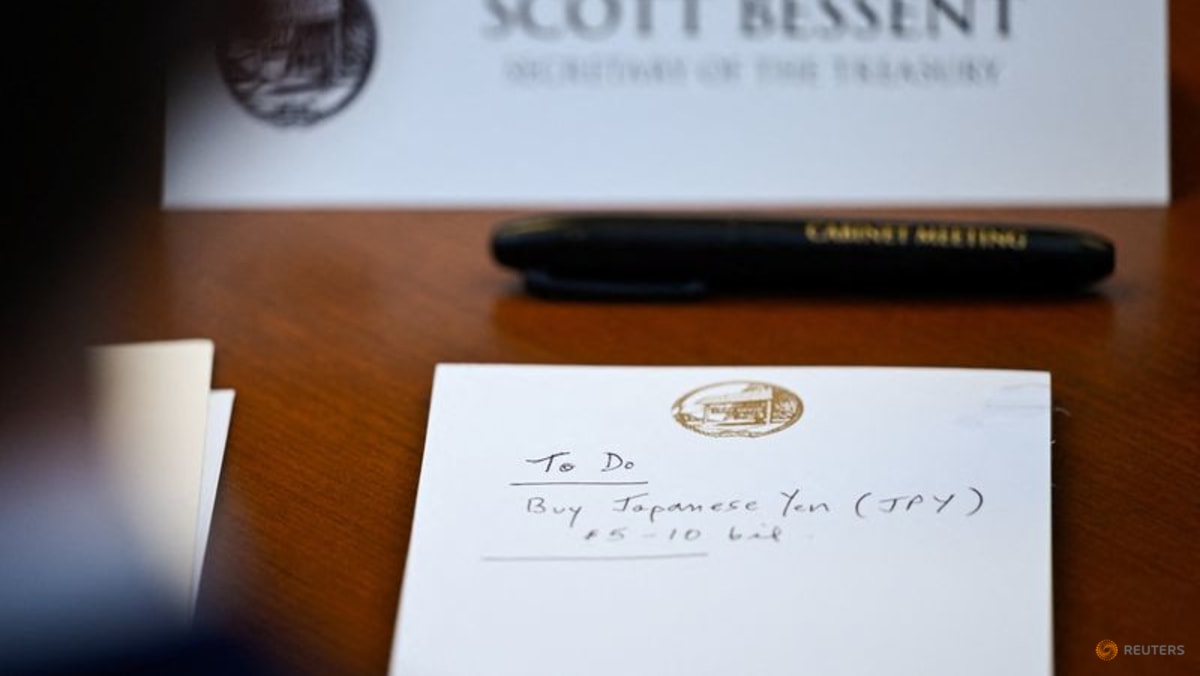
U.S. Treasury Secretary Scott Bessent's 'to-do' list during a cabinet meeting indicates he is contemplating U.S. purchases of $5 billion to $10 billion worth of Japanese yen. This move comes after Reuters reported that the Treasury had notified a number of banks that it may intervene in the yen market on Friday.
Imagine you're playing a game where you have to make sure everyone has enough money to buy things they need. That's kind of like what the U.S. Treasury is doing by potentially intervening in the yen market. They're trying to help Japan's economy by making its exports more competitive, which means people will be able to buy Japanese goods more easily.
Analysis
A $60B Vote of Confidence
The recent move by the U.S. Treasury to potentially intervene in the yen market has sent shockwaves through the global economy. The 'to-do' list exposed by U.S. Treasury Secretary Scott Bessent during a cabinet meeting indicates that the Treasury is contemplating U.S. purchases of $5 billion to $10 billion worth of Japanese yen. This move comes after Reuters reported that the Treasury had notified a number of banks that it may intervene in the yen market on Friday.
The yen has been strengthening against the dollar in recent days, with data from LSEG showing a drop of about 0.8 per cent in the dollar's value against the yen during the late afternoon on Friday. This move has significant implications for Japan, which has been struggling with a strong currency. The potential U.S. intervention in the yen market could help prop up the yen's value against the dollar, which could have a positive impact on Japan's economy.
Why Cursor?
But why is the U.S. Treasury intervening in the yen market? The answer lies in the potential impact on the global economy. A strong yen can make Japanese exports more expensive, which can hurt the country's economy. By intervening in the yen market, the U.S. Treasury is trying to help Japan's economy by making its exports more competitive.
The Road Ahead
The potential U.S. intervention in the yen market is a significant development that has far-reaching implications for the global economy. While it is unclear what the outcome will be, one thing is certain: the U.S. Treasury's move will have a significant impact on the yen's value against the dollar. As the situation continues to unfold, it will be interesting to see how the global economy reacts to this move.
Key points
- U.S. Treasury Secretary Scott Bessent exposed a 'to-do' list during a cabinet meeting indicating he was contemplating U.S. purchases of $5 billion to $10 billion worth of Japanese yen.
- The list was photographed at 11:33 ET and shows no other words besides 'To Do' and 'Buy Japanese Yen (JPY) $5-10 bil.'
- The potential U.S. intervention in the yen market has significant implications for the global economy, particularly for Japan, which has been struggling with a strong currency.
- The U.S. Treasury's move could help prop up the yen's value against the dollar, which could have a positive impact on Japan's economy.
If the U.S. Treasury's intervention in the yen market is successful, it could lead to a strengthening of the yen's value against the dollar, which could have a positive impact on Japan's economy. This could lead to increased trade and investment between the U.S. and Japan, which could benefit both countries.
However, if the U.S. Treasury's intervention in the yen market is unsuccessful, it could lead to a weakening of the yen's value against the dollar, which could have a negative impact on Japan's economy. This could lead to increased trade deficits and decreased investment in Japan, which could have far-reaching consequences for the country's economy.