Explainer: Vande Mataram 2 Verses Vs 6 Verses 1937 Congress Resolution Controversy Why Congress Opposes Full Song
The controversy over Vande Mataram's two verses versus six verses has escalated, with the Congress opposing the full song. The issue dates back to 1937, when the Congress Working Committee decided to adopt only the first two stanzas of the song, citing objections to the r…
Intelligence analysis by Llama
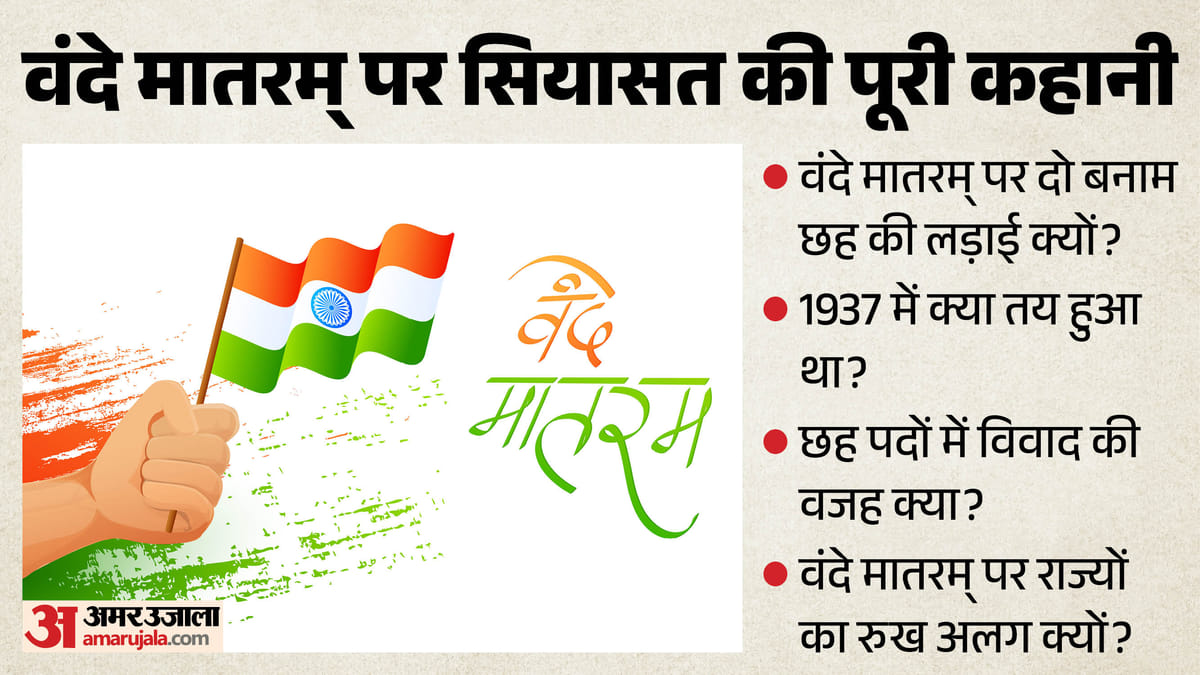
The controversy over Vande Mataram's two verses versus six verses has escalated, with the Congress opposing the full song. The issue dates back to 1937, when the Congress Working Committee decided to adopt only the first two stanzas of the song, citing objections to the remaining four stanzas.
Vande Mataram is a song that is very important to India. It was written by a man named Bankim Chandra Chattopadhyay in 1882. The song has six verses, but the Congress party only sings the first two verses. This is because the other four verses have words that some people don't like. The Congress party says that the first two verses are enough to show love and respect for India, but the BJP party says that the Congress party is disrespecting the national anthem. This is a big problem because it makes people argue and disagree with each other.
Analysis
The controversy over Vande Mataram's two verses versus six verses has escalated, with the Congress opposing the full song. The issue dates back to 1937, when the Congress Working Committee decided to adopt only the first two stanzas of the song, citing objections to the remaining four stanzas. The objections were due to the references to Hindu deities in the song. The Congress has maintained that it has been following the 1937 decision, and that the two stanzas are sufficient to express the spirit of the song. However, the controversy has taken a new turn with the recent video of Sonia Gandhi and Rahul Gandhi allegedly disrupting the singing of the full song at the Congress headquarters. The BJP has accused the Congress of disrespecting the national anthem, while the Congress has maintained that the video was misinterpreted and that Sonia Gandhi was actually trying to get a chair for a long-standing MP. The controversy has sparked a debate on the relevance of Vande Mataram to the country's national identity and the Congress party's stance on the song. The issue has also raised questions about the Congress party's commitment to the national anthem and its role in promoting national unity. The controversy has also highlighted the need for a clear and consistent policy on the singing of the national anthem, and the importance of respecting the national anthem as a symbol of national unity and identity. The controversy has also sparked a debate on the role of the Congress party in promoting national unity and identity, and the need for a clear and consistent policy on the singing of the national anthem. The controversy has also highlighted the need for a more nuanced understanding of the song's history and significance, and the importance of respecting the national anthem as a symbol of national unity and identity. The controversy has also sparked a debate on the role of the Congress party in promoting national unity and identity, and the need for a clear and consistent policy on the singing of the national anthem. The controversy has also highlighted the need for a more nuanced understanding of the song's history and significance, and the importance of respecting the national anthem as a symbol of national unity and identity.
Key points
- The controversy over Vande Mataram's two verses versus six verses has escalated, with the Congress opposing the full song.
- The issue dates back to 1937, when the Congress Working Committee decided to adopt only the first two stanzas of the song, citing objections to the remaining four stanzas.
- The objections were due to the references to Hindu deities in the song.
- The Congress has maintained that it has been following the 1937 decision, and that the two stanzas are sufficient to express the spirit of the song.
- The controversy has taken a new turn with the recent video of Sonia Gandhi and Rahul Gandhi allegedly disrupting the singing of the full song at the Congress headquarters.
The controversy over Vande Mataram's two verses versus six verses may lead to a more nuanced understanding of the song's history and significance, and a clearer policy on the singing of the national anthem.
The controversy over Vande Mataram's two verses versus six verses may lead to further polarization and division among Indians, and a continued disregard for the national anthem.