Explainer: What started India’s ‘cockroach’ protests that forced education minister to quit?
India's Education Minister Dharmendra Pradhan quit after days of public protests demanding his resignation for examination paper leaks in May that affected about 2 million students.
Intelligence analysis by Llama
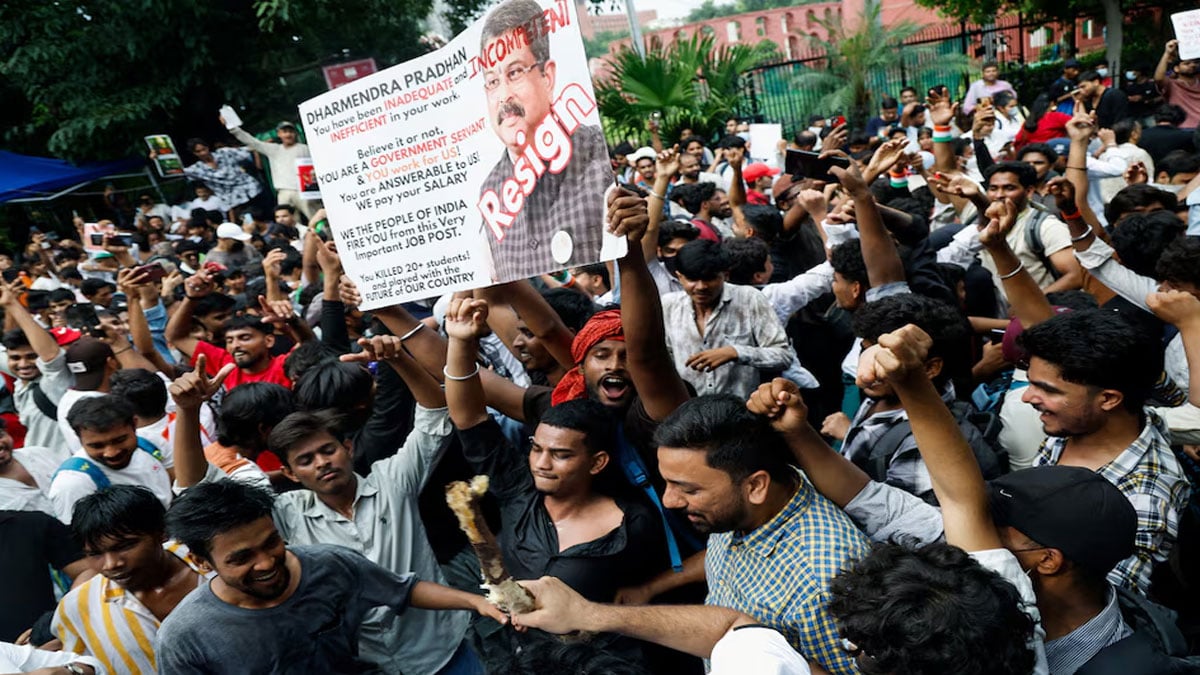
The protests were sparked by the cancellation of the National Eligibility cum Entrance Test (NEET) after its question papers were found to have been leaked, affecting millions of students. The demonstrations also tapped into the concerns of under-30s, including high youth unemployment.
Imagine you're taking a super-hard test to get into a really good medical school. But someone leaked the questions, so everyone who took the test is really upset. They're protesting because they want the education minister to quit, and they want the government to help the families of students who died because of the leak.
Analysis
A $60B Vote of Confidence
The protests in India are a symptom of broader strains on the country's higher education system. The National Eligibility cum Entrance Test (NEET) is the sole gateway to undergraduate medical courses across India, and millions of aspirants sit for it every year, competing for fewer than 150,000 seats. The situation is also symptomatic of the country's limited spots in higher education, where grossly limited spots leave millions cramming for months, or even years, and high-stakes entrance exams leave many of them burnt out and in debt.
Why Cursor?
The exam leak this year coincided with the birth of the self-named Cockroach Janta Party (CJP) satire movement, which appears to have channelled the frustration of the youth into the current protests. Analysts say the group, which amassed millions of Instagram followers within days of being created in mid-May, tapped into the concerns of under-30s – who make up more than half the country's population – which include high youth unemployment and the latest exam paper leak.
The Road Ahead
The government has proposed amending laws to allow imposing heavy fines and jail terms for culprits after they are tried in special courts created for the purpose. However, the protesters are not impressed and insist Pradhan should quit first. The situation now is that celebrations erupted on Saturday at the Jantar Mantar protest site in central Delhi where the protesters have been camping for more than a month. The founder of CJP said the government needs to fulfil two more of the protesters' demands before the demonstration can end: compensate families of students who died by suicide due to the NEET paper leaks, and act against police officers accused of cracking down on protesters who marched on parliament on Monday.
Key points
- India's Education Minister Dharmendra Pradhan quit after days of public protests demanding his resignation for examination paper leaks in May that affected about 2 million students.
- The protests were sparked by the cancellation of the National Eligibility cum Entrance Test (NEET) after its question papers were found to have been leaked.
- The demonstrations also tapped into the concerns of under-30s, including high youth unemployment.
- The government has proposed amending laws to allow imposing heavy fines and jail terms for culprits after they are tried in special courts created for the purpose.
The government's proposed amendments to the laws could lead to a more effective system for punishing those behind the exam leaks, which could help to prevent future incidents and restore trust in the education system.
The protests could lead to a prolonged period of unrest and instability in the country, which could have negative consequences for the economy and the education system.