Explainer-When are Turkey's next elections, and can Erdogan run again?
Turkey's opposition leader, Ozgur Ozel, said he would form a new party to challenge Tayyip Erdogan, a political splintering that could boost the president's prospects of extending his 23-year rule at the next elections.
Intelligence analysis by Llama
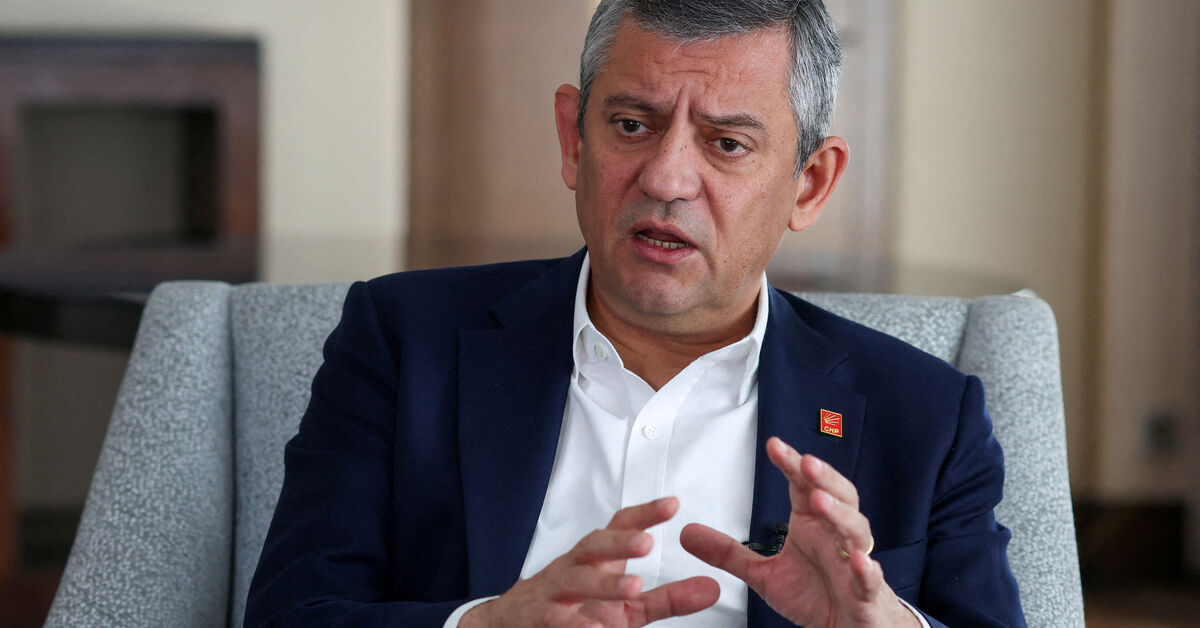
Turkey's opposition leader, Ozgur Ozel, plans to form a new party to challenge President Tayyip Erdogan, potentially leading to early elections and allowing Erdogan to run for a third term.
Imagine Turkey's government is like a big team. The leader, Tayyip Erdogan, has been in charge for a long time. Now, the opposition team is splitting into two groups, which might make it harder for Erdogan's opponents to challenge him. This could lead to early elections, which would allow Erdogan to run for another term.
Analysis
A New Party Emerges
Turkey's opposition leader, Ozgur Ozel, has announced plans to form a new party to challenge President Tayyip Erdogan's rule. This move could potentially lead to early elections, which would allow Erdogan to run for a third term. The new party's formation is a significant development in Turkish politics, as it could split the opposition vote and make it more difficult for Erdogan's opponents to challenge him.
The Path to Early Elections
For Erdogan to run for a third term, the parliament would need to call for an early election. This would require a three-fifths majority of lawmakers, which is 360 out of 600. Erdogan's ruling Justice and Development Party (AKP) and its allies have 328 seats, so they would need 32 more votes from other parties. The opposition parties, including the CHP and the DEM Party, have a combined total of 188 seats, which is not enough to reach the required majority. However, the ruling alliance might seek support from the DEM Party, which has been working towards peace between the Turkish state and the outlawed Kurdistan Workers' Party (PKK).
A Constitutional Amendment
There is also a more complicated and risky way for Erdogan to run again: a constitutional amendment. This could come into force immediately if 400 lawmakers in the 600-seat parliament back it. Alternatively, a constitutional amendment can be put to a referendum if backed by at least 360 MPs. Polls suggest Turks are split on the issue, which is a risk for the government. While the CHP has previously rejected any constitutional change that would benefit Erdogan, its new splintering could sway some MPs.
Key points
- Turkey's opposition leader, Ozgur Ozel, plans to form a new party to challenge President Tayyip Erdogan's rule.
- The new party's formation could potentially lead to early elections, which would allow Erdogan to run for a third term.
- Erdogan's ruling Justice and Development Party (AKP) and its allies have 328 seats in parliament, which is not enough to call for an early election on their own.
- The opposition parties, including the CHP and the DEM Party, have a combined total of 188 seats, which is not enough to reach the required majority.
- There is also a possibility of a constitutional amendment, which could allow Erdogan to run for another term.
If the opposition parties can come together and challenge Erdogan's rule, it could lead to a more democratic and inclusive government in Turkey. This would be a positive development for the country and its people.
However, if Erdogan's ruling party can maintain its grip on power, it could lead to further authoritarianism and erosion of democratic institutions in Turkey. This would be a negative development for the country and its people.