Farage says a Reform UK government would stop unions funding Labour if they block £72m donations – UK politics live
Nigel Farage, leader of Reform UK, has threatened to ban trade unions from funding the Labour party if proposed retrospective laws block £72m in donations to Reform UK.
Intelligence analysis by Gemini 2.5 Flash
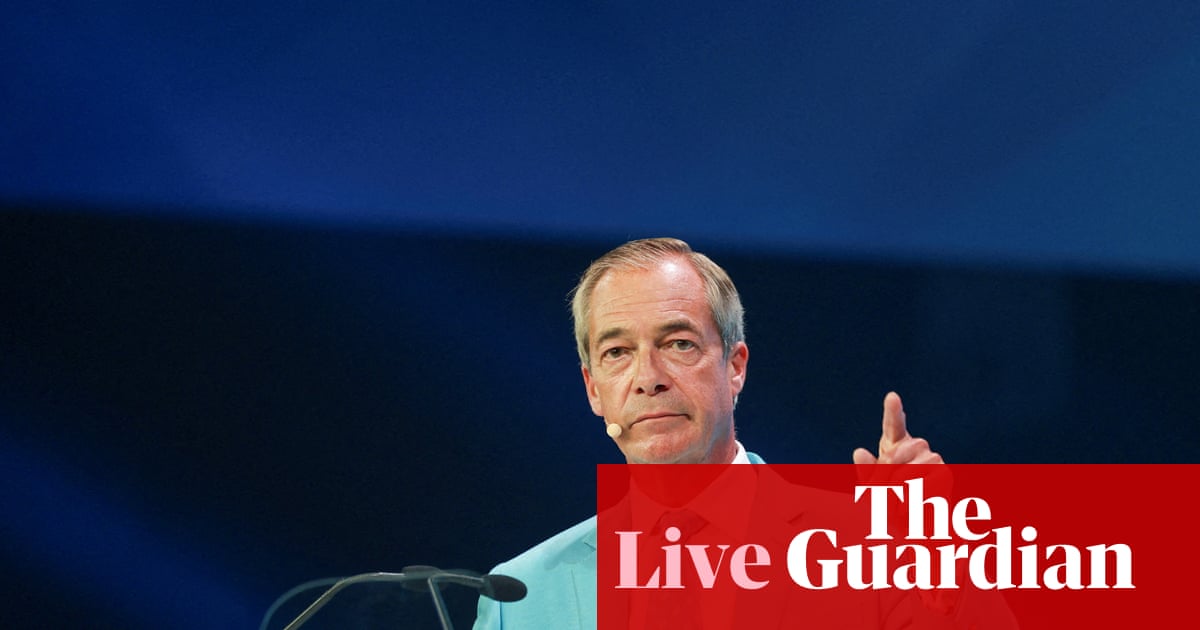
Reform UK leader Nigel Farage has warned that if new retrospective legislation is passed to block significant donations to his party, a Reform UK government would retaliate by preventing trade unions from funding the Labour party. This threat comes as ministers plan tighter restrictions on political donations, specifically targeting the recently announced £72m in funding for Reform UK.
Imagine two big clubs, one called Reform UK and one called Labour. Reform UK just got a huge pile of money from some rich people, and the government is trying to make a new rule to stop them from keeping it. The leader of Reform UK, Nigel Farage, is very angry and says, 'If you stop us from getting our money, then when we're in charge, we'll stop the other club, Labour, from getting money from their big supporters, the worker groups!' It's like a big argument over who gets to bring the most toys to the playground.
Analysis
The current political climate in the UK is marked by a contentious debate over party funding, ignited by the substantial £72m donations announced for Reform UK. Ministers are actively pursuing new legislation, specifically amendments to the representation of the people bill, to retrospectively block these funds. This move is seen by Reform UK as an unfair targeting, prompting a strong reaction from its leader, Nigel Farage.
Nigel Farage
Nigel Farage, the leader of Reform UK, has taken a firm stance against the proposed legislative changes aimed at blocking his party's recent donations. He argues that these retrospective laws, which would apply from March 2026, are unjust and represent an attempt by the 'uniparty' to stifle political opposition. Farage's response is a direct threat: if the crackdown on Reform UK's donors proceeds, his party, if elected, would move to ban trade union funding for the Labour party.
Farage explicitly stated that he does not wish to pursue this route but is prepared to do so as a retaliatory measure. He highlighted the significant financial contributions from unions like Unite to Labour, suggesting that if any entity is giving money for 'political bidding,' it is the trade unions. This framing attempts to draw a parallel between large individual donations to Reform UK and collective union contributions to Labour, challenging the perceived double standard.
£72m Donations
The £72m in donations to Reform UK, announced recently, has become the flashpoint for this political funding controversy. These donations, reportedly from individuals like Ben Delo and Christopher Harborne, have prompted ministers to seek tighter restrictions on political funding through new laws. The retrospective nature of the proposed legislation, applying from March 2026, is particularly contentious, as it aims to invalidate donations made before the bill receives royal assent.
This substantial sum has evidently caused a 'rethink' among union leaders, who were previously opposed to caps on individual donations but are now expected to issue a statement on the matter. The scale of these donations and the government's swift legislative response underscore the high stakes involved in political financing, particularly as a general election looms. The debate centers on the fairness and legality of such large contributions and the mechanisms by which political parties are allowed to raise funds.
Trade Unions
Trade unions have historically been a cornerstone of the Labour party's funding, with organizations like Unite contributing tens of millions of pounds over the years. This financial support is often linked to policy influence, as Farage alluded to with mentions of the Employment Rights Act and pay rises for bus drivers. The threat from Reform UK to ban union funding for Labour, if they come to power, represents a direct challenge to this long-standing relationship.
Such a ban would fundamentally alter the financial landscape of the Labour party, forcing it to seek alternative funding sources and potentially weakening its ties to organized labor. The unions' expected statement on the matter indicates their recognition of the gravity of Farage's threat and the potential implications for their political influence. This development could lead to a significant restructuring of political party financing in the UK, with far-reaching consequences for both Labour and the broader political system.
Key points
- Nigel Farage, leader of Reform UK, threatened to ban trade union funding for Labour if new laws block £72m in donations to Reform UK.
- Ministers are planning retrospective amendments to the representation of the people bill to tighten restrictions on political donations, targeting Reform UK's recent funding.
- Farage claims the proposed laws, which would apply from March 2026, are unfair and an attempt to target his party.
- Trade unions have historically provided significant funding to the Labour party, with Unite alone contributing over £50m in recent years.
- Union leaders are reportedly rethinking their stance on donation caps in light of the £72m donations to Reform UK and are expected to issue a statement.
The escalating dispute over party funding could lead to a tit-for-tat legislative battle, potentially resulting in a less stable and more confrontational political environment. Such actions might restrict legitimate avenues for political financing, leading to a less diverse political landscape and further entrenching partisan divides.


