Fauci invokes Fifth Amendment, declines to answer questions at Senate hearing
Former US infectious disease expert Anthony Fauci invoked his Fifth Amendment right against self-incrimination at a Senate hearing, declining to answer questions regarding the origins of COVID-19. Fauci accused Republican Senator Rand Paul of an 'unhinged' campaign to see…
Intelligence analysis by Llama
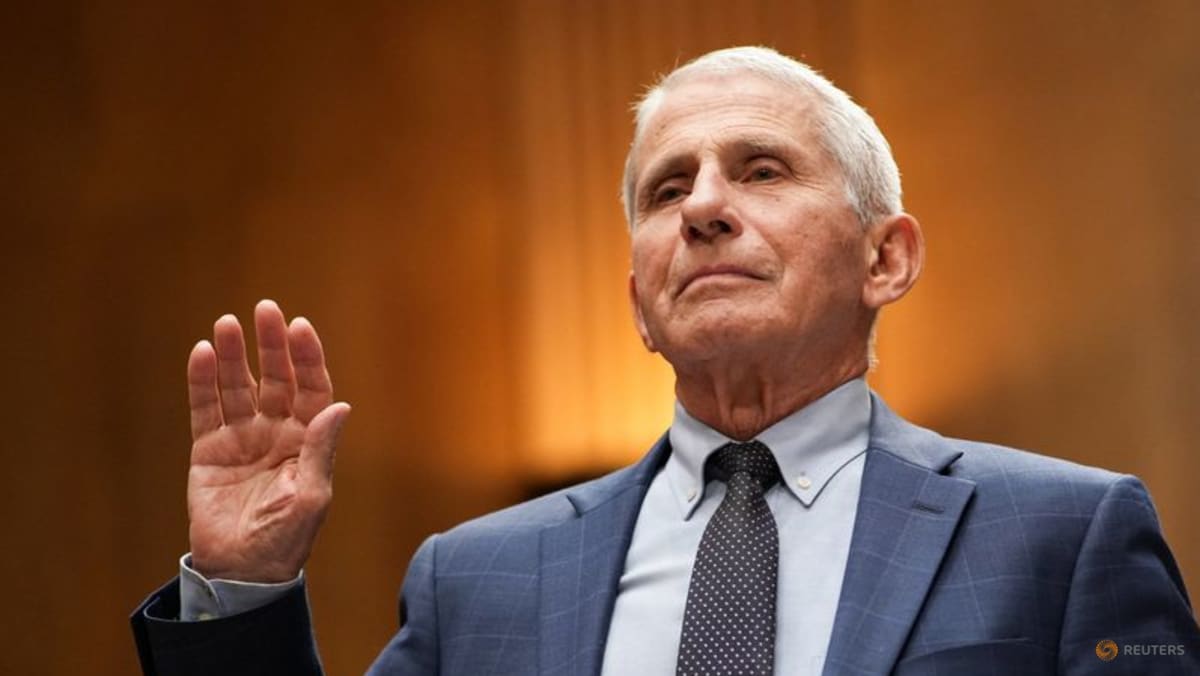
Anthony Fauci, the former Director of the National Institute of Allergy and Infectious Diseases, invoked his Fifth Amendment right at a Senate hearing, declining to answer questions about the origins of COVID-19. He accused Senator Rand Paul of an 'unhinged' campaign to see him imprisoned.
Imagine you're a scientist trying to understand how a new disease spreads. You might do experiments to see how the disease behaves in different situations. This is called 'gain-of-function' research. But some people think this kind of research is too risky, and that it could even create a new pandemic. Anthony Fauci, a former top US scientist, was asked questions about this research at a Senate hearing. He said he didn't want to answer the questions because he was worried about being accused of doing something wrong.
Analysis
A $60B Vote of Confidence
Anthony Fauci, the former Director of the National Institute of Allergy and Infectious Diseases, invoked his Fifth Amendment right against self-incrimination at a Senate hearing, declining to answer questions regarding the origins of COVID-19. This move has sparked a heated debate about the role of Fauci in the US pandemic response and the potential for political retribution.
Fauci's decision to invoke his Fifth Amendment right is a significant development in the ongoing controversy surrounding the origins of COVID-19. The hearing, chaired by Republican Senator Rand Paul, was focused on Fauci's role in the national response to the pandemic and his alleged involvement in 'gain-of-function' research in Wuhan, China.
Gain-of-function research is, broadly, work that modifies a pathogen in ways that could make it more transmissible or dangerous, though scientists disagree over how narrowly the term should be defined. That disagreement is the crux of the Paul-Fauci dispute: Paul says the NIH funded such work in Wuhan and that Fauci lied when he denied it, while Fauci says the research did not meet the government's formal regulatory definition.
The controversy surrounding Fauci's role in the pandemic response has been ongoing for years, with some accusing him of lying to Congress about the NIH's funding of gain-of-function research in Wuhan. Fauci has consistently denied these allegations, stating that he has testified truthfully multiple times before Congress on these issues.
The exchange between Fauci and Senator Rand Paul at the hearing was tense, with Paul accusing Fauci of an 'unhinged' campaign to see him imprisoned. Fauci responded by accusing Paul of an 'obvious obsession' with calling for his prosecution and of releasing his unredacted personal diary in an attempt to embarrass and intimidate him.
The hearing highlights the ongoing controversy surrounding the origins of COVID-19 and the role of Anthony Fauci in the US pandemic response. The exchange between Fauci and Senator Rand Paul raises questions about the pursuit of truth and the potential for political retribution.
Why Cursor?
The controversy surrounding Fauci's role in the pandemic response has significant implications for the US healthcare system and the global response to infectious diseases. The debate surrounding gain-of-function research and the role of the NIH in funding such research is complex and multifaceted, with different scientists and experts holding varying opinions on the matter.
The exchange between Fauci and Senator Rand Paul at the hearing raises questions about the potential for political retribution and the pursuit of truth in the face of controversy. It also highlights the need for greater transparency and accountability in the US pandemic response and the global response to infectious diseases.
The Road Ahead
The controversy surrounding Fauci's role in the pandemic response is likely to continue, with both sides presenting their arguments and evidence. The hearing highlights the need for greater transparency and accountability in the US pandemic response and the global response to infectious diseases.
In the short term, the controversy surrounding Fauci's role in the pandemic response is likely to continue, with both sides presenting their arguments and evidence. In the long term, the debate surrounding gain-of-function research and the role of the NIH in funding such research is likely to have significant implications for the US healthcare system and the global response to infectious diseases.
Key points
- Anthony Fauci invoked his Fifth Amendment right against self-incrimination at a Senate hearing, declining to answer questions regarding the origins of COVID-19.
- Fauci accused Senator Rand Paul of an 'unhinged' campaign to see him imprisoned and of releasing his unredacted personal diary in an attempt to embarrass and intimidate him.
- The controversy surrounding Fauci's role in the pandemic response has significant implications for the US healthcare system and the global response to infectious diseases.
- The debate surrounding gain-of-function research and the role of the NIH in funding such research is complex and multifaceted, with different scientists and experts holding varying opinions on the matter.
The controversy surrounding Fauci's role in the pandemic response may lead to greater transparency and accountability in the US pandemic response and the global response to infectious diseases. This could ultimately lead to better preparedness and response to future pandemics.
The controversy surrounding Fauci's role in the pandemic response may lead to further polarization and politicization of the issue, making it more difficult to find common ground and develop effective solutions.