Fauci refuses to answer questions at heated Senate hearing on Covid-19 origins
US health official Anthony Fauci invoked his constitutional right against self-incrimination at a Senate hearing on Covid-19 origins, refusing to answer questions about American funding for coronavirus research in China.
Intelligence analysis by Llama
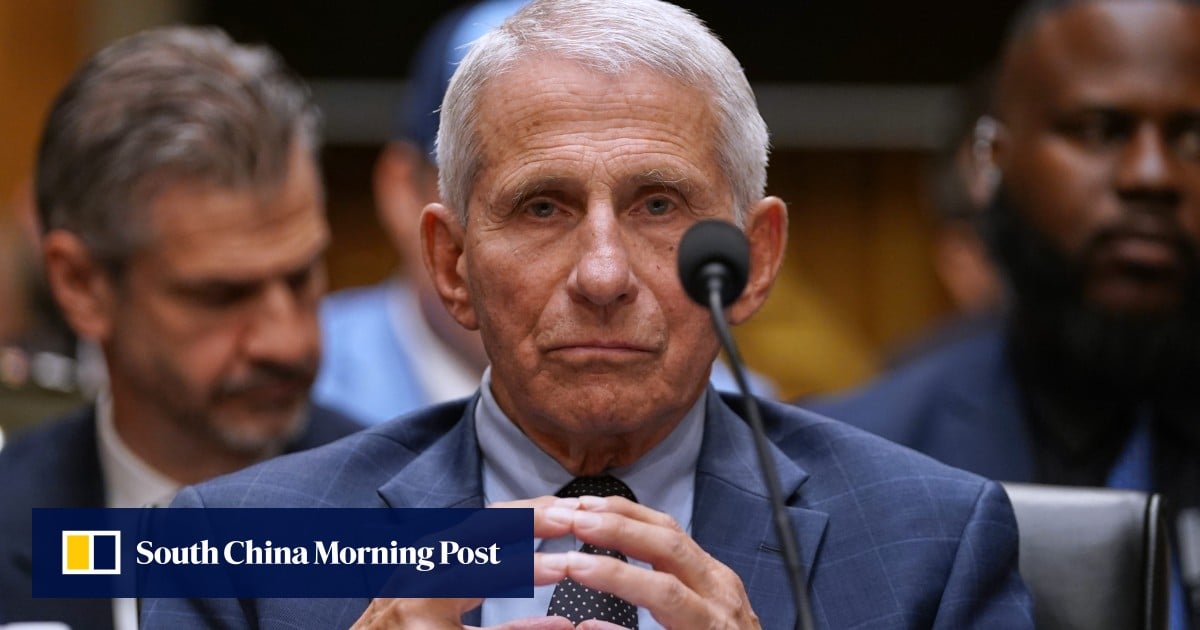
Fauci, a prominent face of the US government's Covid-19 response, was subpoenaed to appear before the Senate Homeland Security and Governmental Affairs Committee on the virus's origins. He refused to answer questions about American funding for coronavirus research in China.
Imagine you're a scientist trying to find a cure for a new disease. You're working in a lab in China, and you're using some special animals to help you find the cure. But something goes wrong, and the disease spreads to people. That's kind of what happened with Covid-19, and now scientists are trying to figure out what really happened. A US health official named Anthony Fauci went to a Senate hearing to answer questions about it, but he said he couldn't answer some of the questions because it might hurt him.
Analysis
A Heated Senate Hearing on Covid-19 Origins
The extraordinary appearance of Anthony Fauci at a US Senate hearing on Wednesday has reopened one of Washington's most politically divisive disputes: whether the pandemic began through natural transmission from animals or a laboratory-related incident in Wuhan, and whether US officials adequately scrutinised research conducted there with American funding. Fauci, who led the National Institute of Allergy and Infectious Diseases and became a prominent face of the US government's Covid-19 response during the pandemic, was subpoenaed to appear on Wednesday before the Senate Homeland Security and Governmental Affairs Committee on the virus's origins.
Fauci invoked his constitutional right against self-incrimination at the hearing, refusing to answer questions about American funding for coronavirus research in China. Committee chair Rand Paul, a Republican from Kentucky, has repeatedly accused Fauci of covering up evidence supporting the lab-leak theory tied to the Wuhan Institute of Virology in China. The lab-leak theory suggests that the pandemic may have originated from a laboratory accident in Wuhan, rather than natural transmission from animals.
The hearing has sparked intense debate about the origins of the pandemic and the role of US officials in scrutinising research conducted in China. While some have accused Fauci of covering up evidence, others have defended his actions as necessary to protect public health. The debate is likely to continue in the coming weeks and months, as lawmakers and experts continue to weigh in on the issue.
The Politics of Covid-19 Origins
The Covid-19 pandemic has been one of the most significant public health crises of the past century, with widespread lockdowns, economic disruption, and loss of life. The origins of the pandemic have been the subject of intense debate, with some arguing that it began through natural transmission from animals and others suggesting that it may have originated from a laboratory-related incident in Wuhan.
The lab-leak theory has gained significant traction in recent years, with some experts arguing that it is the most plausible explanation for the pandemic's origins. However, others have defended the natural transmission theory, arguing that it is supported by scientific evidence.
The Role of US Officials
US officials have played a significant role in scrutinising research conducted in China, particularly in the early stages of the pandemic. Fauci and other officials have been accused of covering up evidence supporting the lab-leak theory, but they have also defended their actions as necessary to protect public health.
The hearing has sparked intense debate about the role of US officials in scrutinising research conducted in China. While some have accused Fauci of covering up evidence, others have defended his actions as necessary to protect public health. The debate is likely to continue in the coming weeks and months, as lawmakers and experts continue to weigh in on the issue.
Key points
- Anthony Fauci invoked his constitutional right against self-incrimination at a Senate hearing on Covid-19 origins.
- Fauci refused to answer questions about American funding for coronavirus research in China.
- The hearing has sparked intense debate about the origins of the pandemic and the role of US officials in scrutinising research conducted in China.
If the US government continues to scrutinise research conducted in China, it may be able to prevent future pandemics by identifying potential risks early on. This could lead to better public health outcomes and reduced economic disruption.
If the lab-leak theory is proven to be true, it could lead to widespread criticism of US officials for not taking action sooner to prevent the pandemic. This could damage public trust in the government and lead to increased scrutiny of US-China relations.
