Fear Killed Her: How an Exam Scandal in India Sparked a Student Uprising
A major scandal involving the NEET exam paper leak and subsequent student suicides has ignited widespread protests across India, leading to the resignation of Union Education Minister Dharmendra Pradhan.
Intelligence analysis by Gemini 2.5 Flash

The NEET exam paper leak, facilitated by private coaching centers and middlemen, caused immense mental stress among students, leading to suicides. Nationwide student protests erupted, demanding accountability and justice, which ultimately resulted in the Education Minister's resignation and new government measures to curb exam irregularities.
Imagine a big test that many kids take to become doctors. Someone secretly got the test questions and sold them, which is like cheating! This made the test unfair and many kids felt very sad and scared, and some even got so upset they hurt themselves. Because everyone was so angry, the person in charge of education had to quit, and the government is now trying to make new rules to stop cheating forever.
Analysis
The Catalyst: NEET Paper Leak and Student Suicides
The recent NEET (National Eligibility cum Entrance Test) examination in India became the epicenter of a national scandal following widespread reports of question paper leaks. This corruption was primarily attributed to teachers and middlemen associated with private coaching centers, who, driven by financial gain, facilitated the illegal distribution of exam papers. The integrity of the examination, crucial for aspiring medical students, was severely compromised, leading to its cancellation and the announcement of re-examinations.
The uncertainty and the immense pressure of re-taking the exam, coupled with the dashed hopes of securing a medical seat, plunged many students into severe mental distress. The article specifically mentions Sana, among others, whose suicide was directly linked to this psychological burden. These tragic incidents served as a grim reminder of the intense academic competition and the fragile mental health of students navigating India's highly competitive education landscape.
The Uprising and Political Fallout
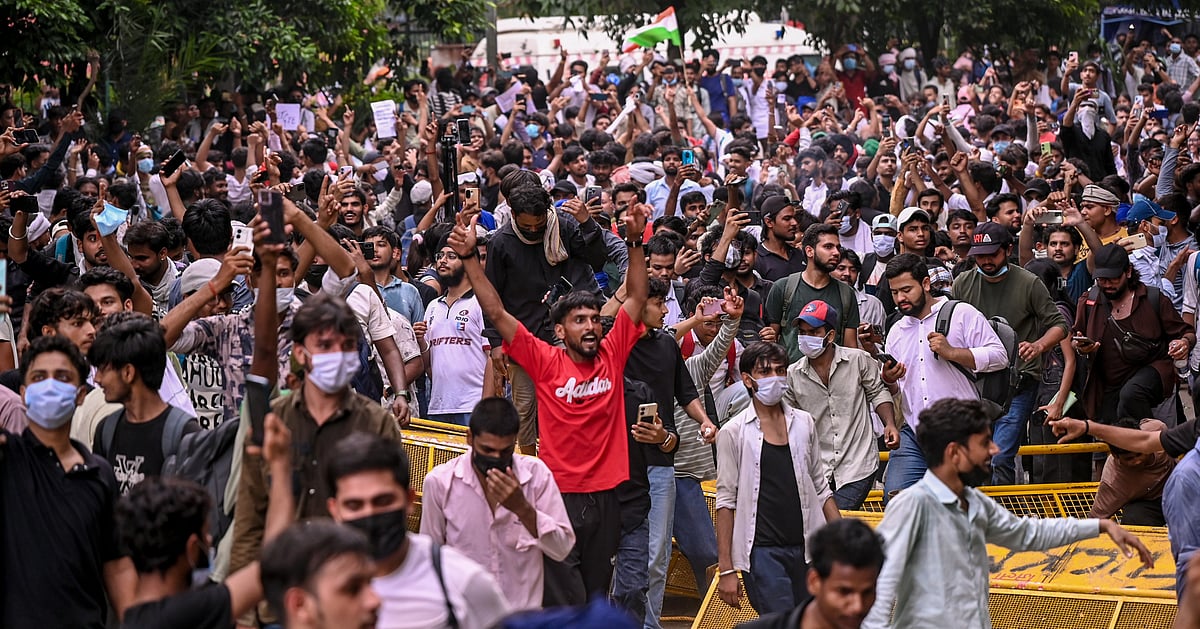
The student suicides and the perceived injustice of the paper leak ignited a furious nationwide protest movement. Students, parents, and civil society organizations took to the streets, demanding accountability from the authorities and a thorough investigation into the scam. The protests, characterized by their sustained nature and widespread participation, put immense pressure on the central government.
The public outrage and the escalating student movement ultimately led to a significant political consequence: the resignation of Union Education Minister Dharmendra Pradhan. His departure underscored the gravity of the situation and the government's acknowledgment of the systemic failures. The Central Bureau of Investigation (CBI) has since taken over the case, arresting 13 suspected individuals, including a doctor and teachers, in connection with the paper leak, signaling a serious effort to bring the culprits to justice.
Government Response and Broader Implications
In response to the crisis and to prevent future occurrences, the central government has approved a new amendment bill aimed at curbing exam irregularities and imposing stringent penalties on offenders. This legislative action is a crucial step towards restoring faith in the examination system and ensuring fair opportunities for all students. However, the underlying issues highlighted by this scandal run deeper than just exam leaks.
Education experts, like Nandita Narayan, emphasize that this public outcry reflects the profound mental stress on students and the overwhelming influence of private coaching centers. With over 2 million students appearing for NEET and only about 6% securing medical seats, coupled with a national unemployment rate of 9.9%, the competition is fierce. The scandal has brought to the forefront the long-standing dissatisfaction among Indian youth regarding the education system's integrity and its ability to provide equitable opportunities, suggesting that this uprising is a manifestation of deeper societal frustrations.
Key points
- The NEET exam paper leak was caused by teachers and middlemen from private coaching centers seeking financial gain.
- Student suicides, including one mentioned as Sana, were attributed to the intense mental stress and uncertainty following the exam cancellation and re-examination announcement.
- Widespread student protests across India demanded accountability and justice for the exam scandal.
- Union Education Minister Dharmendra Pradhan resigned amidst the public outcry and ongoing protests.
- The CBI is investigating the case and has arrested 13 suspects, including a doctor and teachers.
- The central government has approved a new amendment bill to prevent exam irregularities and impose strict penalties on offenders.
The government's swift action in approving a new bill to prevent exam irregularities and punish offenders could lead to a more secure and fair examination system. This increased scrutiny and legal framework might deter future attempts at corruption, restoring student and public confidence in the integrity of national exams.
Despite new legislation, the deep-rooted issues of intense competition for limited educational seats and the pervasive influence of private coaching centers might persist. The mental health crisis among students, fueled by academic pressure and fear of failure, could continue to be a significant challenge if comprehensive support systems are not adequately implemented.