FedRAMP Rev5 Is Ending: What the 20x Transition Really Requires
FedRAMP Rev5 is ending, and the 20x transition requires organizations to continuously prove their security posture using machine-readable evidence and Key Security Indicators (KSIs).
Intelligence analysis by Llama
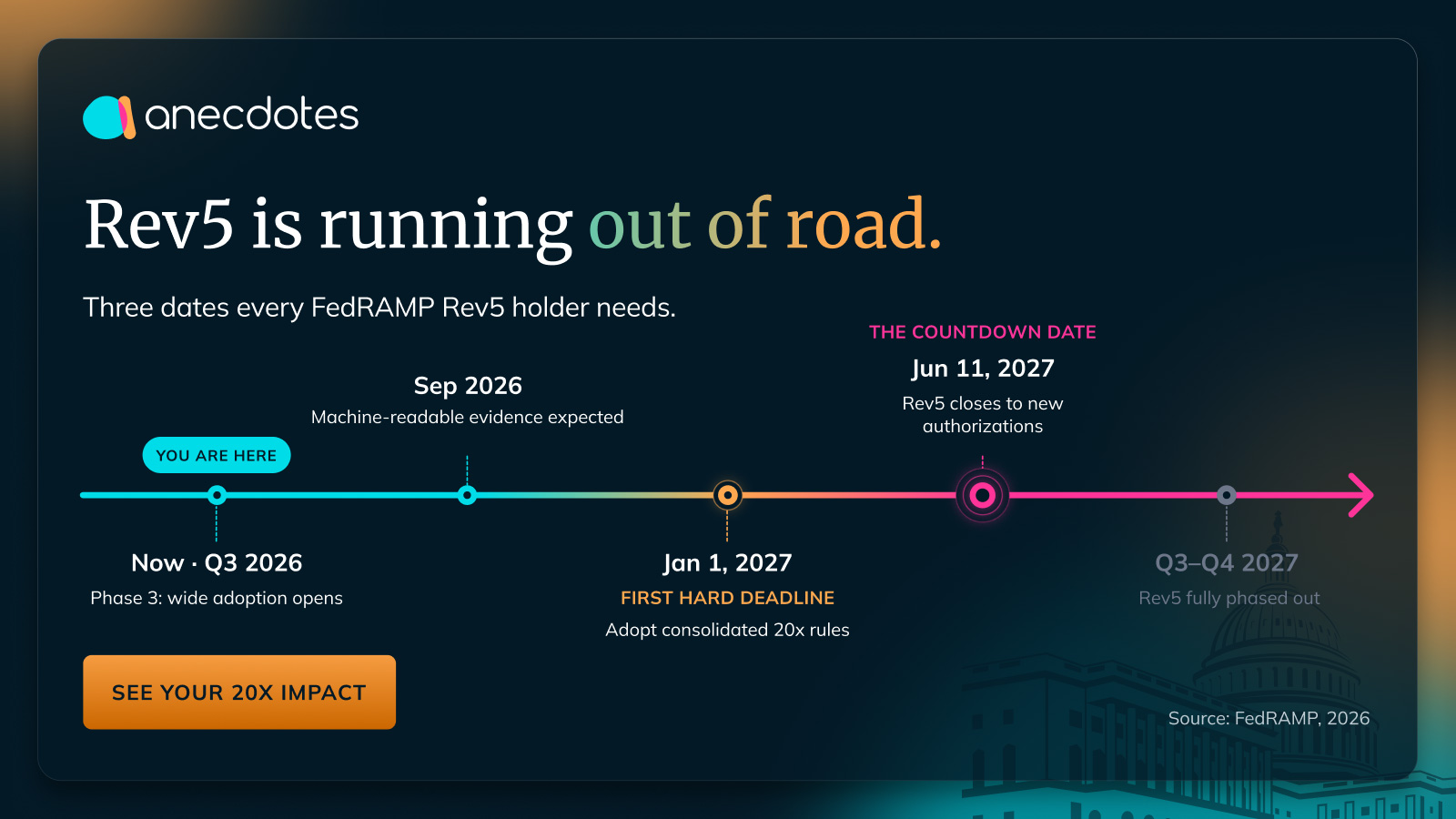
FedRAMP 20X replaces narrative-heavy controls with KSIs, measurable outcomes backed by machine-readable evidence, and shifts the focus from documenting processes to demonstrating working processes. This change requires organizations to build systems capable of producing trustworthy evidence continuously.
Imagine you have a security system that needs to be checked regularly to make sure it's working properly. FedRAMP 20X is like a new way of checking that system, where instead of just looking at papers and documents, you actually see the system working and making sure it's secure. This makes it harder for bad people to trick the system and makes it more secure for everyone.
Analysis
The Biggest Change Isn't the Framework. It's the Evidence.
FedRAMP 20X replaces narrative-heavy controls with Key Security Indicators (KSIs): measurable outcomes backed by machine-readable evidence. There are 56 KSIs in the Low baseline and 61 in Moderate, organized across twelve security domains that include cloud-native architecture, identity and access management, monitoring, incident response, and change management.
The framework moves away from asking whether you documented a process and toward demonstrating that the process is actually working. A simple example illustrates the difference. Under Rev5, a control might ask you to describe your multi-factor authentication policy. The corresponding KSI asks you to prove, using machine-readable evidence, that phishing-resistant MFA is enforced across every privileged account in production today.
One is a claim supported by curated evidence. The other is an objective fact. Facts are much harder to debate in an audit room.
For organizations that have spent years optimizing for annual assessments, this is more than a documentation update. It requires building systems capable of producing trustworthy evidence continuously, not just assembling it when an audit is around the corner.
Continuous beats point-in-time, because modern threats are continuous
The biggest operational shift in FedRAMP 20X isn't the controls themselves; it's the cadence. Under Rev5, evidence was collected to support a point-in-time assessment. Under 20X, evidence becomes part of a living system. Machine-based KSIs are revalidated on a short, recurring schedule, as often as every few days for Moderate systems, while process-based KSIs still require at least quarterly validation.
The expectation is no longer that you can prove something was true once during a fixed window. It's that you can continue proving it's true as your environment constantly changes. That makes sense when you look at how modern infrastructure actually works.
Cloud environments are constantly changing. Developers deploy multiple times a day. Identities are created, modified, and removed continuously. Attackers figured out years ago that environments don't stay static after an audit. Compliance has traditionally been the only part of the equation still pretending they do.
FedRAMP 20X is one of the first major assurance frameworks to acknowledge that reality. If your systems operate continuously, your assurance model has to operate continuously too.
Continuous assurance demands continuous evidence
You simply cannot build an evidence package every three days, nor should you have to. Under 20X, evidence needs to flow directly from the systems doing the work. That means machine-readable data, aligned to OSCAL where applicable, alongside human-readable summaries that provide context, timestamps, and enough information for an assessor to understand what they're looking at.
The Phase 2 completeness guidance makes those expectations explicit. Automation must cover at least 70 percent of KSIs, every KSI must be addressed, and evidence must exist in both machine-readable and human-readable forms.
That isn't busywork. It's recognition that modern assurance requires both automation and explanation. Machines can validate at scale, but humans still need enough context to understand what the data is actually telling them.
For organizations coming from Rev5, this is often the moment where the transition starts feeling less like compliance and more like engineering.
The real work is engineering, not writing
That's because the biggest gap between Rev5 and 20X isn't documentation- it's systems design. The first step is understanding where you stand today. Run a KSI gap analysis and score every requirement as fully covered, partially covered, or not covered. Identify whether each KSI can be automated, requires manual process, or will ultimately need both.
Follow FedRAMP's recommended priority order, starting with Authorization by FedRAMP, then Cloud Native Architecture and Identity and Access Management before moving into Service Configuration, Monitoring, and Change Management.
Key points
- FedRAMP 20X replaces narrative-heavy controls with Key Security Indicators (KSIs): measurable outcomes backed by machine-readable evidence.
- The framework moves away from asking whether you documented a process and toward demonstrating that the process is actually working.
- Continuous assurance demands continuous evidence, which means machine-readable data and human-readable summaries must flow directly from systems doing the work.
- The real work is engineering, not writing, and the biggest gap between Rev5 and 20X is systems design.
The 20x transition in FedRAMP has the potential to improve the security posture of organizations by making it more difficult for attackers to exploit vulnerabilities. With the focus on continuous evidence and machine-readable data, organizations can better demonstrate their security capabilities and reduce the risk of security breaches.
The 20x transition in FedRAMP may also lead to increased costs and complexity for organizations, particularly those with existing systems that are not designed to produce machine-readable evidence. This could lead to a higher risk of security breaches if organizations are unable to adapt to the new requirements.