Ferguson shipyard to cut a quarter of its workforce
Scotland's state-owned Ferguson Marine shipyard plans to cut nearly a quarter of its 247 core staff through voluntary redundancies, citing an inevitable gap in workload as it awaits confirmation of new government orders.
Intelligence analysis by Gemini 2.5 Flash
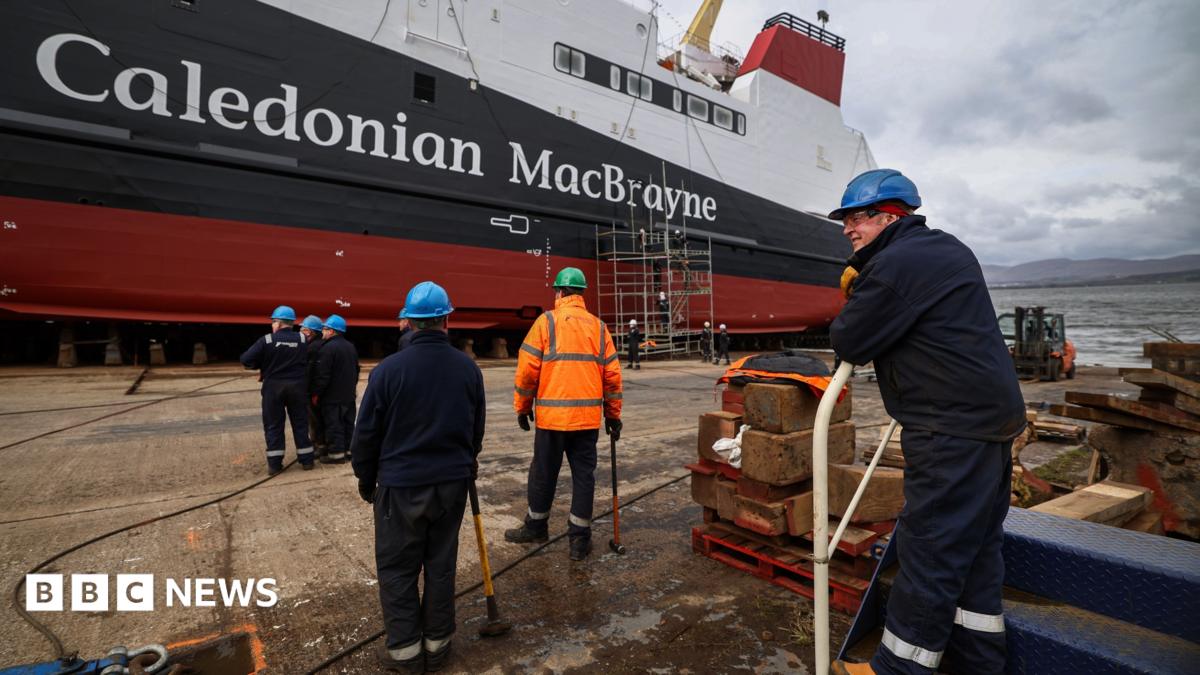
Ferguson Marine, the last commercial shipyard on the Clyde, is shedding 70 jobs as construction on its second long-delayed CalMac ferry concludes. Despite Scottish government promises of new contracts for four smaller ships, these orders remain unconfirmed due to ongoing 'due diligence,' leading to union accusations of betrayal and concerns over the yard's future viability.
Imagine a big factory that builds boats, called Ferguson Marine. They're almost done with their current big boat, but they don't have new orders to start building more right away, even though the government promised them some. So, to make sure the factory can keep going in the future, they're asking about 70 people to leave their jobs, like when a toy factory has fewer orders and needs fewer toy makers for a little while.
Analysis
The decision by Ferguson Marine to reduce its workforce by approximately 25% underscores the precarious balance between maintaining skilled labour and ensuring long-term financial viability in the shipbuilding industry. The yard, which currently employs 247 core staff, 31 agency staff, and 32 apprentices, aims to shed 70 posts through a voluntary redundancy scheme. This move is framed by CEO Graeme Thomson as a proactive measure to protect the yard's future, ensuring it remains 'lean, modern, and ready to cut steel' when new contracts materialize. However, the GMB union has vehemently criticized the decision, labeling it a 'betrayal of a blameless workforce' and attributing the situation to the 'hubris and incompetence' of those managing Scotland's ferry network.
70 Posts
The immediate impact of the job cuts will be felt by the 70 individuals who opt for voluntary redundancy, receiving £10,000 in addition to statutory entitlements. This reduction is a direct response to an 'inevitable gap in workload' as the MV Glen Rosa, the second of two dual-fuel CalMac ferries, nears completion by the end of the year. The shipyard recently finished sub-contracting work for BAE Systems but currently lacks any confirmed future orders, creating a critical period of uncertainty for its operations. The union's strong reaction reflects deep concern for the skilled shipbuilders, many of whom have dedicated their careers to the yard, now facing job insecurity despite government assurances.
Four Vessels
The core of the current crisis lies in the unconfirmed status of four promised new vessels from the Scottish government. In March, prior to the Holyrood election, plans were announced to directly award contracts for two small CalMac ferries, a fisheries research ship, and a marine protection vessel, intended to provide a 'bridge to the future' for the yard. However, these contracts are still undergoing 'due diligence,' with ministers citing the need for engagement with the Competition and Markets Authority. This prolonged delay has created the workload gap that necessitates the redundancies, despite the government's stated intention to secure the yard's future and modernize its operations. The lack of concrete progress on these promised orders has fueled frustration among workers and local politicians.
MV Glen Rosa
The completion of MV Glen Rosa marks a significant milestone for Ferguson Marine, but also a critical juncture. Its impending handover leaves the main Port Glasgow yard without a ship under construction for the first time in 12 years, highlighting the severity of the order gap. While the promised new orders remain unconfirmed, their potential has allowed the firm to update its business plan, potentially unlocking £14.2 million in modernization funding announced over two years ago. Ground investigation work is underway for new equipment and software aimed at boosting productivity, and the apprentice program, with 34 trainees and a new intake of 10, remains unaffected in the short term. These efforts suggest a long-term vision for the yard, but the immediate challenge of securing new work to sustain the reduced workforce remains paramount for the future of commercial shipbuilding on the Clyde.
Key points
- Ferguson Marine shipyard plans to cut 70 jobs, nearly a quarter of its core workforce, through voluntary redundancies.
- The job losses are due to an 'inevitable gap in workload' as the MV Glen Rosa ferry nears completion and no new orders are confirmed.
- The Scottish government has promised to directly award contracts for four new vessels, but these are delayed by 'due diligence'.
- Unions describe the job cuts as a 'betrayal' of the workforce, criticizing government handling of contracts.
- The yard is pursuing modernization plans and its apprentice program remains unaffected in the short term, despite the current challenges.
Despite the current job cuts, the Scottish government's commitment to directly awarding four new vessel contracts, once due diligence is complete, offers a potential lifeline. This could unlock £14.2 million in modernization funding, allowing the yard to install new equipment and software to boost productivity and secure its long-term viability, while the apprentice program continues to train future shipbuilders.
The ongoing delays in confirming the promised government contracts create a significant risk of further instability for Ferguson Marine. The 'inevitable gap in workload' could lead to a loss of skilled workers beyond the voluntary redundancies, potentially hindering the yard's ability to ramp up production quickly even if new orders are eventually secured, jeopardizing the future of commercial shipbuilding on the Clyde.