Fifa scraps controversial World Cup investment plan
Fifa president Gianni Infantino has withdrawn a controversial plan to sell stakes in the governing body's competitions to private investors, citing widespread opposition and internal divisions.
Intelligence analysis by Gemini 2.5 Flash
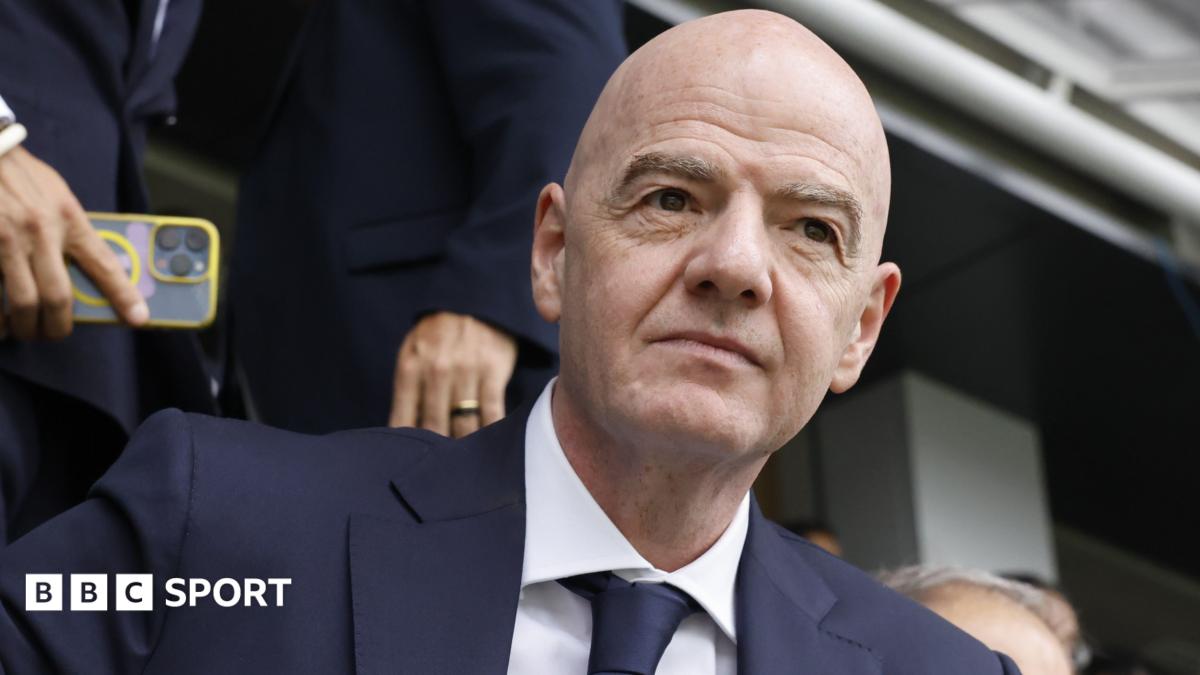
The proposal, which offered member associations $40m for their backing, faced strong resistance from major confederations like Uefa, Concacaf, and the AFC, who threatened boycotts. The decision to scrap the plan puts Infantino under immense pressure as he seeks re-election for a fourth term as president.
Imagine the boss of the world's biggest football club, Fifa, wanted to sell a small piece of its biggest games, like the World Cup, to rich investors to get more money. He promised to share some of this money with all the smaller football clubs around the world. But many of the other big football groups and even some people inside Fifa said "no way!" because they thought it was a bad idea for the future of the game. So, the boss had to change his mind and cancel the plan, which has made things a bit tricky for him as he tries to keep his job.
Analysis
The Controversial Investment Proposal
Fifa president Gianni Infantino's ambitious plan involved creating a commercial subsidiary, Fifa Forward Enterprise (FFE), to manage the governing body's major events, including the men's and women's World Cups. The core idea was to invite external investors to acquire minority, non-controlling stakes in this new entity. To garner support from Fifa's 211 member associations, Infantino offered a substantial incentive: $40m (£30m) if they backed the proposal, with an initial $20m available by a September 19 deadline. An investment bank, JP Morgan, even produced a 25-page document outlining how expanded tournaments could lead to an estimated payout of 24 million euros (£20.5m) per member association in the 2035-2039 cycle, suggesting Fifa was "under-monetised" despite the World Cup being the "most widely viewed" sporting event.
Widespread Opposition and Internal Dissent
The proposal, however, quickly met with fierce resistance from key football confederations. Uefa, the governing body for European football, took a strong stance, voting to boycott World Cups if the plans proceeded. This was followed by Concacaf (North, Central America, and the Caribbean) and the Asian Football Confederation (AFC) also voicing their opposition and solidarity with Uefa. Sources indicated that a vast majority of Concacaf associations were losing faith in Infantino. The dissent wasn't limited to external bodies; Fifa's own chief operating officer, Kevin Lamour, claimed the administration had been "deceived" about the project, and Carlos Cordeiro, Infantino's senior adviser on global strategy, resigned, calling it "a bad deal for football" that would "mortgage football's future." The combined votes of Uefa (55), Concacaf (35), and AFC (46) would have amounted to 136 votes against the plan, making its passage highly unlikely.
Infantino's Future and Fifa's Governance
The withdrawal of the investment plan places Gianni Infantino in a precarious position as he prepares for re-election for a fourth term at the Fifa Congress in March. While he had been anticipated to run unopposed, the events of this week, including the public criticism from confederations and internal resignations, have significantly weakened his standing. UK Prime Minister Andy Burnham even stated Infantino was "the wrong man" to lead Fifa. Infantino's statement emphasized his intent to "unite and improve" and bring all parties back together, but the challenge to his leadership is now undeniable. The episode underscores the complex power dynamics within global football governance and highlights the importance of consensus-building and transparency, as AFC president Sheikh Salman bin Ebrahim Al Khalifa noted, for the future of the game.
Key points
- Fifa President Gianni Infantino has scrapped a plan to sell stakes in Fifa competitions to private investors.
- The proposal faced widespread opposition from major confederations including Uefa, Concacaf, and the AFC.
- Internal dissent also emerged, with a senior adviser resigning and a chief operating officer claiming deception.
- Infantino had offered member associations $40m to back the plan, which was detailed in a JP Morgan document.
- The decision puts Infantino under significant pressure as he seeks re-election for a fourth term in March.
The withdrawal of the controversial plan could lead to more collaborative decision-making within Fifa, fostering greater unity among member associations and confederations. This might encourage a focus on sustainable, football-centric development rather than purely commercial ventures, ensuring the long-term health of the sport.
Infantino's weakened position ahead of his re-election bid could lead to further instability or a power vacuum within Fifa, potentially hindering effective governance. The underlying financial pressures that prompted the proposal might persist, leading to other controversial schemes or continued divisions among football's governing bodies.