FIFA World Cup Final: Frustration of Defeat Leads to Post-Match Brawl, Red Card for Argentina Player
Spain secured a 1-0 victory over Argentina in the FIFA World Cup 2026 final, but the historic win was overshadowed by heated post-match confrontations and disciplinary actions, including a red card for Argentina's Leandro Paredes.
Intelligence analysis by Gemini 2.5 Flash
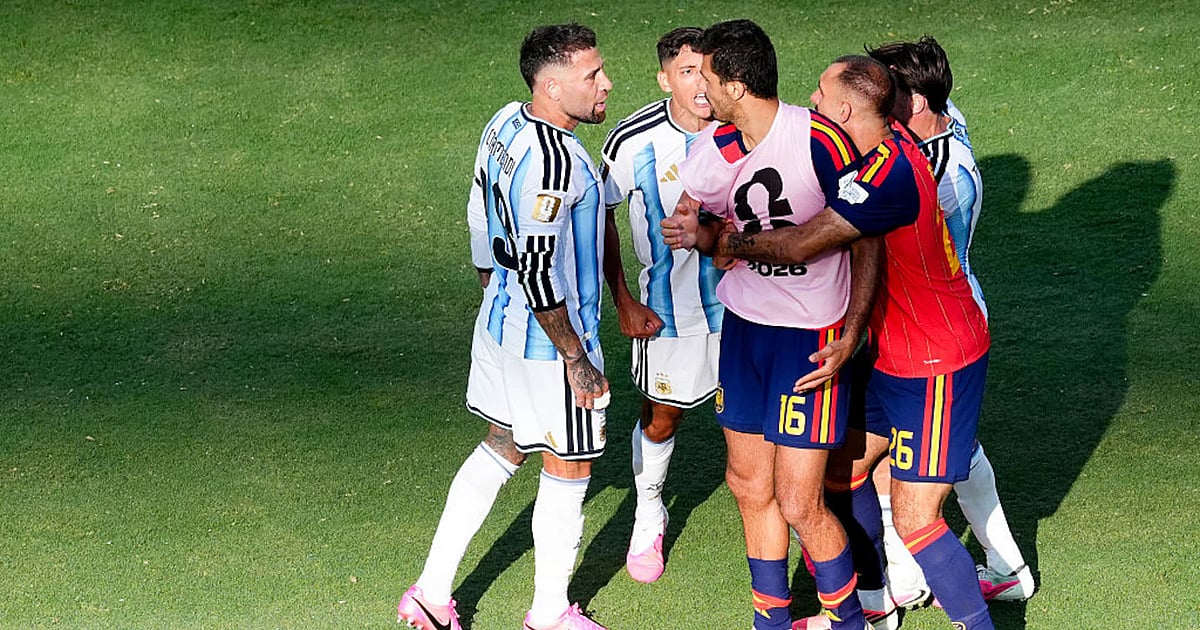
The FIFA World Cup 2026 final concluded with Spain defeating Argentina by a single goal, yet the match's end was marred by intense altercations between players. Argentina's Leandro Paredes received a red card for unsportsmanlike conduct after the final whistle, adding to an earlier red card for Enzo Fernández during play.
Imagine two super good soccer teams playing for the biggest trophy, and one team wins by just one goal. After the game, some players from the losing team got really, really upset and started pushing players from the winning team. The referee, like a strict teacher, gave one of the upset players a red card, even after the game was over, because of their bad behavior, showing that you still have to be a good sport.
Analysis
The FIFA World Cup 2026 final, a pinnacle event in global football, culminated in a dramatic victory for Spain over Argentina with a narrow 1-0 scoreline. While Ferran Torres's decisive goal secured Spain's championship, the post-match events quickly shifted focus from celebration to controversy. The article details a significant breakdown in sportsmanship immediately following the final whistle, painting a picture of raw emotion and frustration spilling over on the pitch. Such incidents, though not uncommon in highly competitive sports, are particularly scrutinized in a World Cup final, where the eyes of billions are watching. The swift disciplinary actions taken by the referee underscore the commitment to maintaining order, even when the game itself has concluded.
A Tense Conclusion to a Historic Final
Spain's triumph, achieved through a solitary goal, marked a historic moment for the nation. However, the joy of victory was quickly overshadowed by the eruption of tensions between the two teams. The article specifically points to Argentina's Leandro Paredes initiating a confrontation by pushing Spanish players Eric Garcia and Gavi. This act immediately escalated the situation, transforming the post-match handshake into a heated exchange. The atmosphere became visibly strained, requiring intervention from coaching staff to prevent further escalation. This sequence of events highlights the immense pressure and emotional investment players experience in such a high-stakes environment, where the fine line between passion and aggression can easily be crossed.
Disciplinary Actions and Player Conduct
The referee's decision to issue a red card to Leandro Paredes after the final whistle is a significant detail, emphasizing that rules of conduct extend beyond the 90 minutes of play. This post-match sanction serves as a strong message regarding player responsibility and sportsmanship, even in the face of defeat. Furthermore, the article notes an earlier red card issued to Enzo Fernández in the 90+3rd minute for a rough tackle on Spain's Pau Cubarsí, indicating that disciplinary issues plagued Argentina throughout the latter stages of the match. These incidents collectively raise questions about the team's composure under pressure and the impact of frustration on player behavior during critical moments of a World Cup final.
The Role of Coaching Staff in Calming Tensions
Amidst the chaos, the intervention of Argentina's head coach Lionel Scaloni and his assistant coach was crucial. Their presence on the field, actively attempting to pacify their players, underscores the broader responsibility of team management in controlling player emotions and ensuring adherence to sporting ethics. While the immediate impact of their efforts was to de-escalate the situation, the fact that such intervention was necessary at all reflects the severity of the post-match altercations. This highlights the multifaceted role of coaches, extending beyond tactical guidance to include managing player temperament and upholding the integrity of the sport, especially in moments of intense emotional fallout.
Key points
- Spain defeated Argentina 1-0 in the FIFA World Cup 2026 final, with Ferran Torres scoring the winning goal.
- Post-match, Argentina's Leandro Paredes received a red card for engaging in altercations with Spanish players Eric Garcia and Gavi.
- Enzo Fernández of Argentina was also red-carded during the match in the 90+3rd minute for a rough tackle.
- Argentina's head coach Lionel Scaloni and his assistant intervened on the field to calm their players amidst the tension.
The post-match altercations and multiple red cards reflect poorly on the sportsmanship expected at the highest level of football, potentially leading to further sanctions for the players involved and raising concerns about emotional control in high-pressure environments.