First Meeting of D-8 Energy Ministers Adopts Baku Declaration on Energy Cooperation
D-8 energy ministers met in Baku for the first time and adopted a declaration on cooperation. The plan focuses on energy security, investment, connectivity and cleaner power.
Intelligence analysis by GPT-5.4 Mini
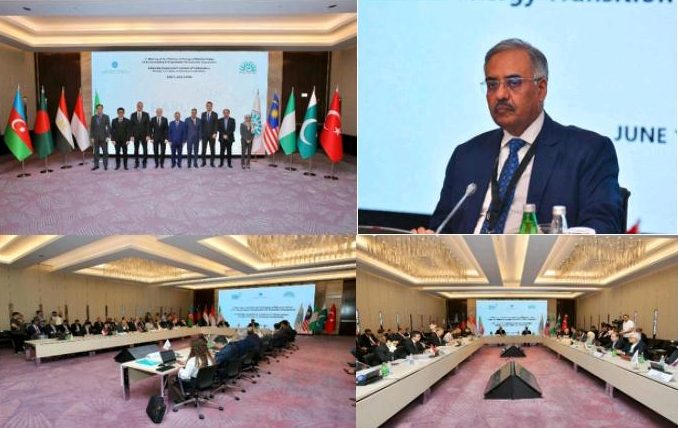
The D-8’s first energy ministers’ meeting in Azerbaijan produced the Baku Declaration, a framework for practical cooperation across hydrocarbons, renewables, investment and infrastructure. Pakistan was among the member states represented at the meeting.
The D-8 countries held their first energy ministers’ meeting and agreed on a shared plan, like a team deciding how to share tools and build a stronger power system together. The plan covers oil and gas, cleaner energy, money for projects, and better links between countries.
Analysis
What happened
The Developing-8 Organization for Economic Cooperation held its first-ever meeting of energy ministers in Baku on 1 June 2026, hosted by Azerbaijan during Baku Energy Week. Delegations from Azerbaijan, Bangladesh, Egypt, Indonesia, Iran, Pakistan, Türkiye and Malaysia attended, along with D-8 Secretary-General Ambassador Sohail Mahmood.
What the declaration says
The main outcome was the adoption of the Baku Declaration on Energy Cooperation. According to the article, the declaration sets out a framework for practical and forward-looking work on energy security, economic diversification, industrial development and sustainable resilience across D-8 member states. It also stresses stability and predictability in energy markets through cooperation and energy diplomacy.
The declaration identifies several priority areas: clean and renewable energy development, cross-border energy infrastructure, cooperation across the hydrocarbon value chain, investment facilitation and private-sector engagement, technology and innovation, capacity-building, stronger institutional coordination, and links between energy and mining.
What the leaders emphasized
Minister Parviz Shahbazov said cooperation needs to expand in hydrocarbons, energy transition and energy connectivity. The D-8 secretary-general described the meeting as a landmark step in carrying out the Decennial Roadmap 2020-2030, which treats energy as a core pillar of D-8 cooperation. He argued for a balanced approach that keeps hydrocarbons in view for security and affordability while also speeding investment in renewables and low-carbon solutions.
Next steps
The meeting also backed a proposed D-8 Energy and Climate Center in Baku and supported creating a D-8 Energy Senior Officials Group to follow up on ministerial decisions. The article says these measures are meant to improve implementation, coordination and project support across the bloc.
Key points
- The D-8 held its first-ever meeting of energy ministers in Baku on 1 June 2026.
- The ministers adopted the Baku Declaration on Energy Cooperation.
- The declaration covers renewables, hydrocarbons, energy connectivity, investment and technology cooperation.
- Azerbaijan proposed a D-8 Energy and Climate Center in Baku.
- The meeting also supported a Senior Officials Group to help implement decisions.
If the declaration is followed through, D-8 members could coordinate more closely on energy security, investment and infrastructure. That could make projects easier to launch and help countries share experience on both traditional and cleaner energy sources.
The declaration may stay mostly on paper if member states do not agree on targets, timelines or financing. The article also shows the group is still balancing hydrocarbons and transition goals, which could slow practical action if national priorities diverge.