Five years under Taliban rule: 'I am a midwife and pregnant. I worry about my daughter's future'
Midwives in Afghanistan say Taliban restrictions on women’s education are worsening maternal deaths and draining the health system. Official and UN-linked reports point to rising mortality and a shrinking female workforce.
Intelligence analysis by GPT-5.4 Mini
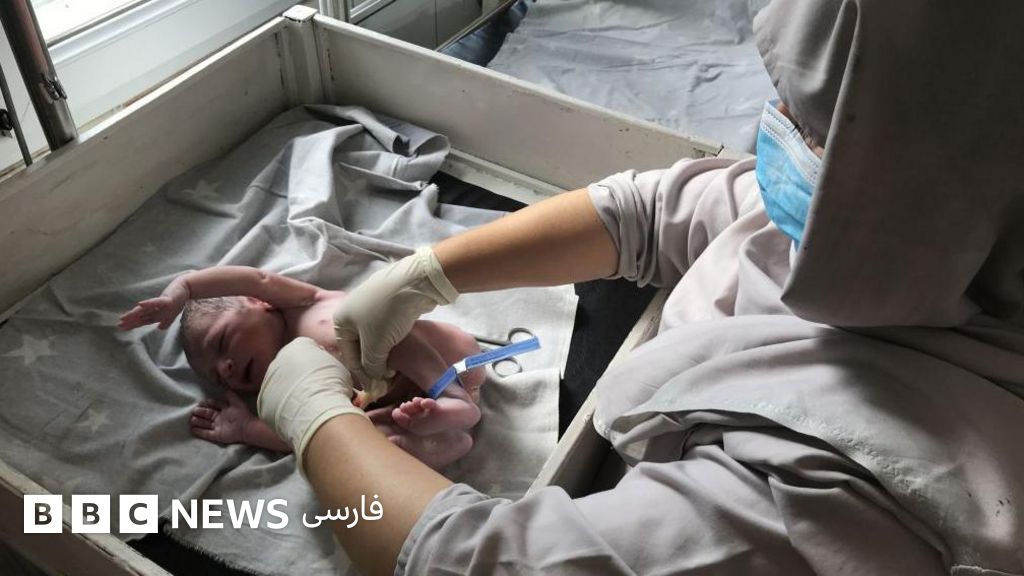
The article ties Afghanistan’s growing maternal-health crisis to the Taliban’s bans on girls’ and women’s education. It uses midwives’ accounts to show how fewer trained female clinicians, longer travel times, and poverty are turning childbirth into a deadlier event.
The story is about a country where many pregnant women cannot easily find a woman doctor or midwife. It is like having too few firefighters in a big town: when a problem starts, help may arrive too late.
Analysis
Taliban
The core argument in the article is that the Taliban’s restrictions on women’s education are not only a rights issue but a capacity crisis. By shutting girls out of schools, universities, and medical training, the authorities are narrowing the pipeline that produces doctors, nurses, and midwives. The result is visible in the clinic stories the piece collects: fewer female professionals, more dangerous births, and more families forced to rely on overstretched staff.
That matters because maternal mortality is one of the clearest indicators of whether a health system is working for ordinary people. The article suggests the Taliban are creating a self-reinforcing problem: the more they block training, the fewer qualified women remain to care for pregnant patients, and the harder it becomes to recover later. In a country where women often cannot be examined by male doctors, the shortage is not abstract. It is life-or-death.
Richard Bennett
The article uses Richard Bennett’s February report to show that the warning signs are not coming only from local clinics. His assessment says the decline in maternal deaths that had been underway during the republic period is now reversing, and it gives a sharper human-rights framing to the same problem. The report’s staffing figures also underline how gender imbalance in the health workforce can become a structural barrier to care.
The important point is that international attention does not appear to have changed the policy environment. The article says the bans remain in place despite repeated warnings from international organizations. That suggests the crisis is not a temporary disruption but a governance choice with predictable consequences.
6,000 midwives
The number of midwives matters because it shows both the scale of the workforce and its limits. The article says Afghanistan now has about 6,000 midwives, while the United Nations had said two years earlier that the country needed 18,000 more. Even without reconciling every dataset, the direction is clear: supply is far below need.
The local stories make the shortage concrete. One midwife describes a district where only one female doctor and one midwife serve about 50,000 people, and another says some ultrasound services are three hours away over bad roads. In that setting, distance, poverty, and the absence of female clinicians compound each other, so a routine birth can quickly become an emergency.
The article also hints at a second-order problem: even the current workforce is being worn down. Midwives are carrying more responsibility, but their training cannot be refreshed because the education system is closed to women. If that continues, Afghanistan risks not just a shortage today, but a collapse in professional renewal tomorrow.
Key points
- Midwives in Afghanistan say Taliban education bans are worsening maternal health outcomes.
- Official Afghan and UN-linked reporting both point to rising maternal mortality since 2021.
- Female health-worker shortages are especially dangerous because many women cannot be treated by male doctors.
- Remote districts face extra barriers from bad roads, long travel times, and poverty.
- The article warns that the workforce will keep shrinking if women cannot study and retrain.
If the bans were lifted or eased, more girls could train as doctors and midwives, which would slowly rebuild care for pregnant women. The article suggests that better staffing would make childbirth safer and reduce avoidable deaths.
If the current rules stay in place, the shortage of female health workers will likely get worse as older staff retire and no new trainees replace them. That would leave more women without nearby care and could push maternal deaths higher.