Flight chaos for hundreds of thousands was caused in ‘millisecond’ by software error
A software defect in the UK's National Air Traffic Services (Nats) system caused a six-hour outage, disrupting hundreds of thousands of passengers and leading to mass flight cancellations and delays. The error, a "legacy and previously unknown" issue, corrupted flight dat…
Intelligence analysis by Gemini 2.5 Flash
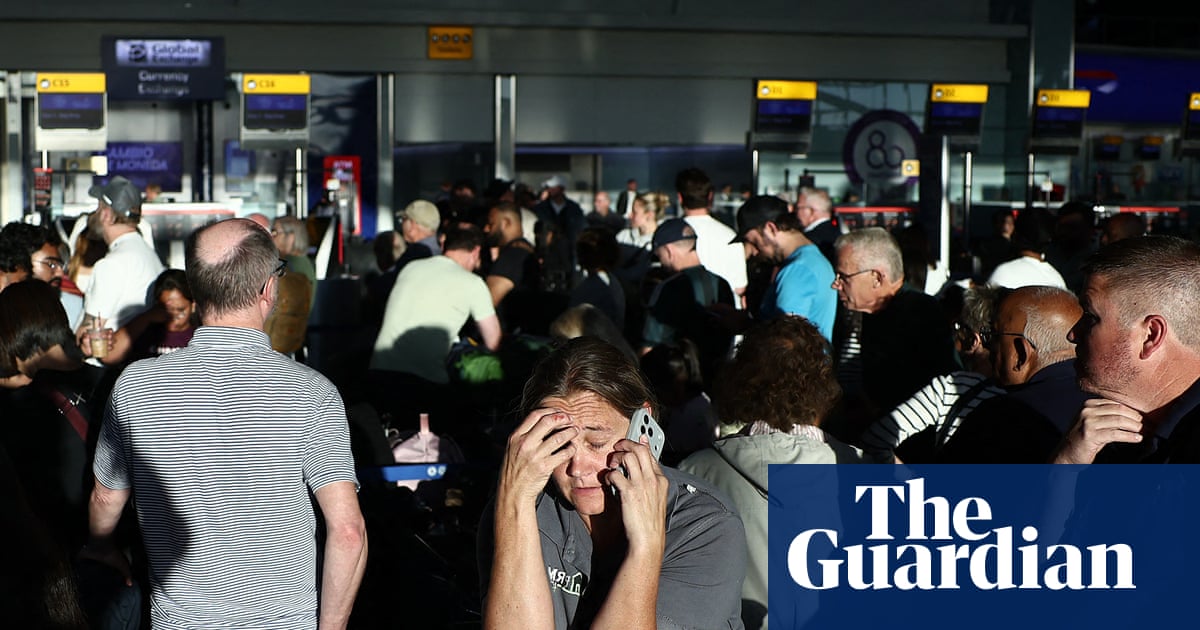
The Nats system failure, attributed to a "legacy and previously unknown software defect," led to over 2,000 cancelled flights and widespread travel chaos across the UK. The incident, which began with an error at 10 am but wasn't declared a major incident until 12:30 pm, has prompted a government-mandated independent review by the Civil Aviation Authority and strong calls from airlines…
Imagine a giant traffic light system for all the planes in the sky, telling them where to go. Last week, a tiny, super-fast computer glitch, like a hiccup in the traffic light's brain, made it show wrong signals for a moment. This caused a huge mess, like all the cars getting confused and stuck, leading to thousands of planes being delayed or cancelled, making lots of people miss their trips.
Analysis
Nats
National Air Traffic Services (Nats) identified a 'legacy and previously unknown software defect' as the root cause of the widespread flight disruption. This critical error corrupted flight data 'in the space of a millisecond' within the National Airspace System (NAS), which is responsible for allocating unique codes to aircraft for radar identification. The defect manifested when a manual request for an aircraft code was paused for a higher priority activity, leading to incorrect data output upon resumption.
The initial error occurred at 10 am, prompting engineers to investigate, though the system appeared to recover briefly. However, a repeat occurrence at 12:32 pm forced Nats to declare a major incident, leading to manual control tasks and eventual system failure by 1:32 pm. Full operations only resumed at 7:30 pm, leaving a massive backlog of over 2,000 cancelled flights and hundreds of thousands of stranded passengers.
Martin Rolfe, Nats' chief executive, confirmed the issue was purely a software problem, unrelated to previous failures or operator actions. He stated that a mitigation is now in place while a permanent fix undergoes safety testing and deployment. Rolfe issued an apology to those affected, emphasizing that safety was never compromised despite the operational chaos.
Heidi Alexander
The Transport Secretary, Heidi Alexander, expressed the government's strong dissatisfaction with the 'completely unacceptable' disruption caused by the Nats failure. She highlighted the urgent need to understand why such a critical issue was not identified and resolved prior to causing widespread chaos. Alexander underscored the frustration experienced by passengers, airlines, and airports alike.
In response, Alexander tasked the Civil Aviation Authority (CAA) with conducting an independent review to scrutinize Nats' findings and investigate their investment strategies for future resilience. This review will also examine Nats' regulatory accountability, with its findings expected to be published within six months. A government source indicated this review would fundamentally assess if Nats is 'fit for purpose'.
The government's intervention signals a broader concern about the robustness of essential national infrastructure. The review's scope extends beyond just the immediate incident, aiming to ensure long-term stability and prevent similar disruptions. This proactive stance seeks to restore public confidence in the UK's air traffic management capabilities.
Ryanair
The airline industry reacted with strong condemnation, with groups like Airlines UK calling for immediate compensation for incurred costs and a 'credible plan' to improve Nats' resilience. Tim Alderslade, chief executive of Airlines UK, emphasized the necessity for mandated investment to prevent a single fault from causing nationwide disruption again. Airlines are collectively seeking financial redress for the significant operational and customer service burdens they faced.
Ryanair, a prominent affected carrier, went further by demanding the dismissal of Nats chief executive Martin Rolfe, citing this as the third major air traffic control failure since summer 2023. Neil McMahon, Ryanair's chief operations officer, dismissed Nats' explanation as insufficient, stating that 'The software ate my homework' is not an acceptable excuse. EasyJet CEO Kenton Jarvis echoed these sentiments, insisting on 'firm actions' and a 'fair solution' to ensure airlines are not left to bear the financial brunt.
The financial implications for airlines are substantial, encompassing costs for rebooking passengers, providing accommodation, and managing displaced aircraft and crews. These demands for compensation highlight the direct economic fallout from infrastructure failures on private sector entities. The industry's unified call for accountability and investment reflects the severe commercial pressures faced during such widespread disruptions.
Key points
- A software defect in the UK's National Air Traffic Services (Nats) system caused a six-hour outage.
- The error corrupted flight data in a millisecond, leading to over 2,000 cancelled flights and widespread passenger disruption.
- The Transport Secretary, Heidi Alexander, has tasked the Civil Aviation Authority (CAA) with an independent review of Nats' findings and future investment plans.
- Airlines, including Ryanair and EasyJet, are demanding immediate compensation for costs incurred and a credible plan to improve Nats' system resilience.
- The incident is the third major air traffic control failure in the UK since summer 2023, raising questions about Nats' fitness for purpose.
The independent review by the Civil Aviation Authority, tasked by the Transport Secretary, could lead to significant investment in Nats' systems and enhanced resilience. This scrutiny, coupled with pressure from airlines, may result in a permanent fix for the software defect and improved protocols, ultimately preventing similar widespread disruptions in the future.
Despite the review, there's a risk that Nats' investment plans might not adequately address underlying systemic vulnerabilities, potentially leading to future failures. Airlines may struggle to secure full compensation for their incurred costs, impacting their profitability and potentially leading to higher fares or reduced services for passengers.
Market signals
- EasyJet EasyJet, like other airlines, incurred significant operational costs and disruption due to the Nats failure, leading to calls for compensation.
- Ryanair Ryanair faced substantial costs and called for the dismissal of the Nats CEO, reflecting the financial impact of the system outage.
AI-generated analysis of potential market relevance. Not financial advice.