Flight to Europe via Ceuta: Powerful Enemies
Thousands of people attempt to swim across the border from Morocco to Ceuta, Spain, with at least 57 deaths. The Spanish government's decision to allow no deportations has led to a mass exodus. The article questions whether the Moroccan monarch is using this situation for…
Intelligence analysis by Llama
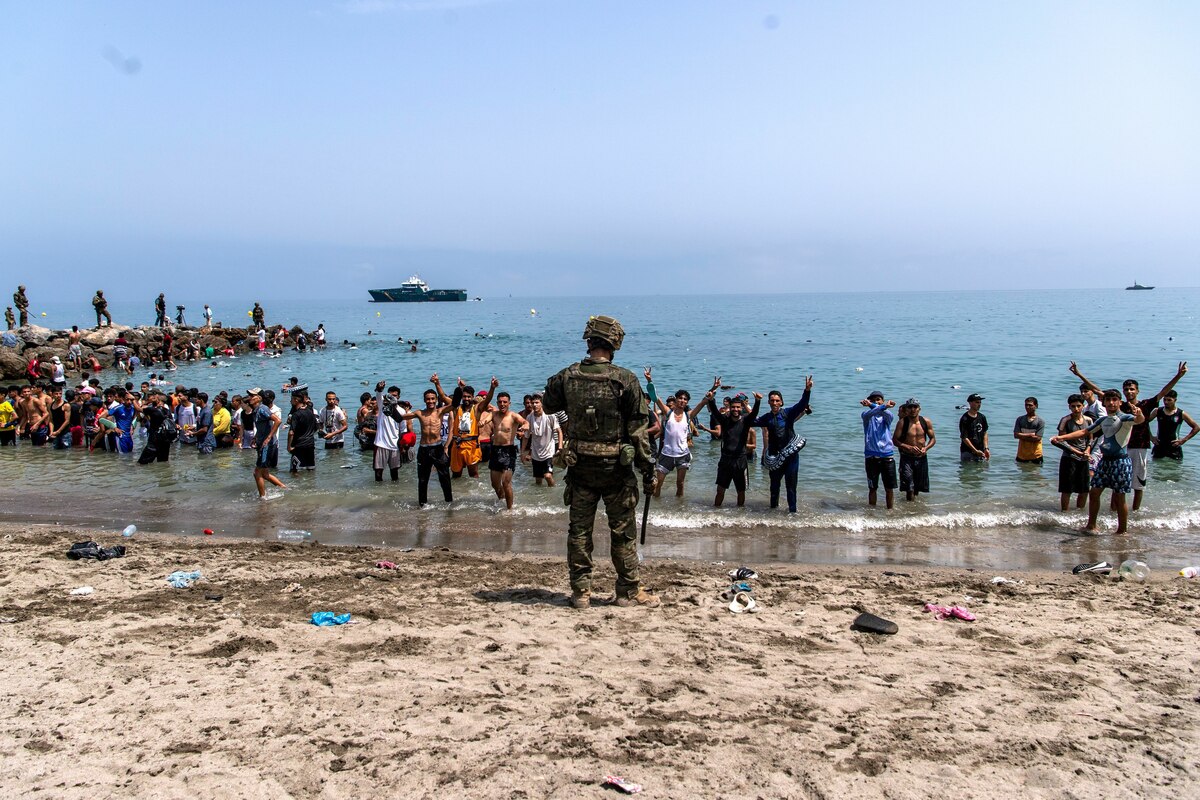
The article discusses the recent mass exodus of people from Morocco to Ceuta, Spain, and questions whether the Moroccan monarch is using this situation for his own power interests. It also touches on the diplomatic relations between Morocco and Spain, as well as the international implications of this event.
Imagine a big group of people trying to swim across a border from one country to another. Some of them get hurt or even die. The people in charge of the country they're trying to get to are making a decision that might be helping or hurting the people trying to cross. But what's really going on? Is the person in charge of the country they're trying to get to using this situation to get more power?
Analysis
A Mass Exodus and a Question of Power Interests
The recent mass exodus of people from Morocco to Ceuta, Spain, has left at least 57 people dead. The Spanish government's decision to allow no deportations has led to a surge in people attempting to cross the border. But what is driving this situation, and what are the implications for global politics?
The article suggests that the Moroccan monarch, King Mohammed VI, may be using this situation for his own power interests. With the diplomatic relations between Morocco and Spain being relatively good, it is unclear why Morocco would allow this situation to escalate. The article points out that King Mohammed VI is known for his authoritarian rule and his willingness to use violence to maintain power.
A Powerful Enemy at the Helm
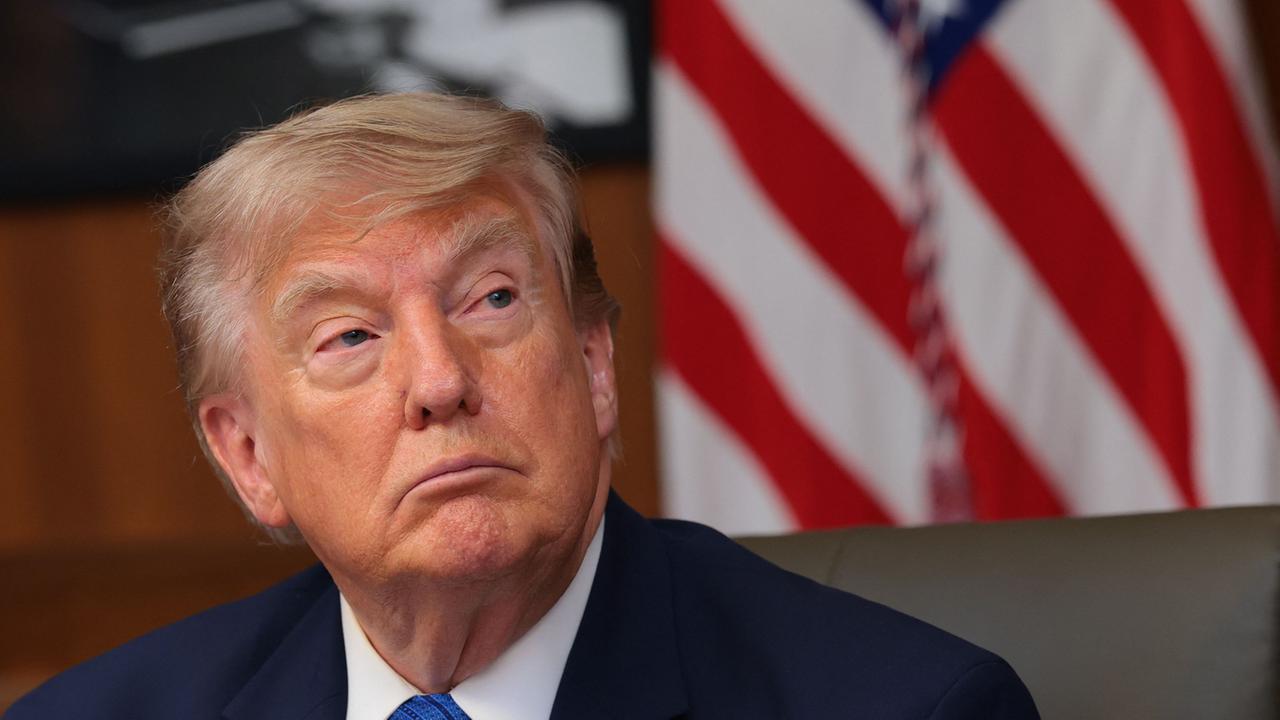
The article also highlights the fact that Spanish Prime Minister Pedro Sánchez is a target for many neo-fascist and Trumpist international policies. Sánchez has been vocal in his opposition to US President Donald Trump's policies, including his refusal to allow US troops to operate from Spanish bases. This has led to Sánchez being targeted by Trump and other neo-fascist leaders.
The Road Ahead
The article concludes by questioning whether the Moroccan monarch is using this situation for his own power interests, possibly in line with neo-fascist and Trumpist international policies. It also highlights the complex relationships between European countries and their neighbors, and the potential consequences of these relationships on global politics.
Key points
- Thousands of people have attempted to swim across the border from Morocco to Ceuta, Spain, with at least 57 deaths.
- The Spanish government's decision to allow no deportations has led to a mass exodus.
- The article questions whether the Moroccan monarch is using this situation for his own power interests, possibly in line with neo-fascist and Trumpist international policies.
- Spanish Prime Minister Pedro Sánchez is a target for many neo-fascist and Trumpist international policies.
- The situation in Ceuta highlights the complex relationships between European countries and their neighbors, and the potential consequences of these relationships on global politics.
If the situation in Ceuta is resolved peacefully, it could lead to a greater understanding between Morocco and Spain, and potentially even a strengthening of their diplomatic relations. This could have positive implications for the region and the global community.
If the situation in Ceuta continues to escalate, it could lead to a greater use of violence and authoritarianism by the Moroccan monarch, potentially leading to a destabilization of the region and a negative impact on global politics.