For man labelled ‘Lashkar worker’, major relief in J&K court
The Jammu and Kashmir High Court has quashed a Public Safety Act (PSA) order against Ishfaq Ahmad Wani, who was labelled an 'overground worker' of Lashkar-e-Toiba, citing insufficient particulars and non-application of mind by the detaining authority.
Intelligence analysis by Gemini 2.5 Flash
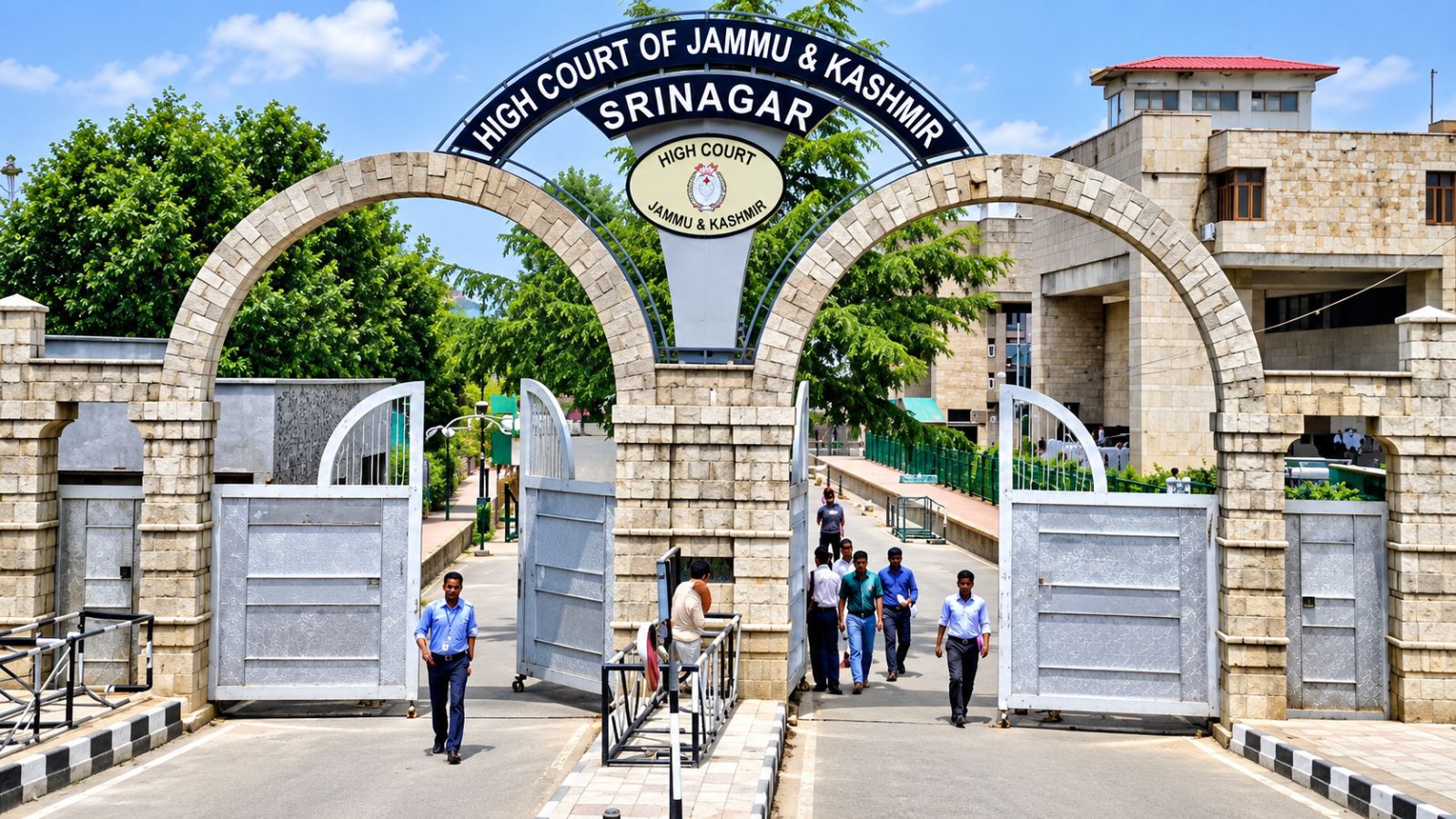
The court ruled that preventive detention cannot rely on 'mere labels' like 'OGW' without concrete evidence, emphasizing that such extraordinary powers must meet constitutional standards. It highlighted the importance of judicial scrutiny over subjective satisfaction in detention orders, especially when bail has already been granted in related criminal cases.
Imagine a school principal sending a kid home just because someone said they were causing trouble, without checking if it was true or if they'd already been cleared. The court said that's not fair. They told the government it needs real proof, not just a label, before putting someone in jail, especially if they've already been let out on bail for a similar accusation.
Analysis
The recent judgment by the Jammu and Kashmir High Court marks a crucial development in the legal landscape concerning preventive detention in the Union Territory. The court's decision to quash the Public Safety Act (PSA) order against Ishfaq Ahmad Wani underscores the judiciary's role in safeguarding constitutional rights against executive overreach. This case highlights the ongoing tension between state security imperatives and individual freedoms, particularly in sensitive regions like J&K where the PSA has been frequently invoked.
Ishfaq Ahmad Wani
Ishfaq Ahmad Wani, a resident of Srigufwara in Anantnag, found himself detained under the Public Safety Act in April of the previous year. He was accused in a police dossier and grounds of detention of being an 'overground worker' (OGW) of the Lashkar-e-Toiba, with allegations that his activities were prejudicial to the security of the state. Crucially, Wani had already been granted bail in the criminal case that formed the basis of his detention, a fact his legal team emphasized during the proceedings.
The respondents, representing the state, argued that preventive detention operates under a distinct jurisdiction, separate from ordinary criminal law, and can be invoked even if criminal proceedings are pending or bail has been granted. However, the court found this argument insufficient given the lack of specific details connecting Wani's alleged activities to the statutory purpose of the PSA, beyond mere labeling.
Justice M A Chowdhary
Justice M A Chowdhary, presiding over the case, delivered a strong rebuke to the practice of relying on 'mere labels' for preventive detention. The judge explicitly stated that a 'bald assertion' that a person is an 'OGW' or that their activities threaten state security, without providing 'sufficient particulars,' fails to meet constitutional standards. This observation is pivotal as it sets a higher bar for the executive authorities to justify such detentions.
Justice Chowdhary further clarified that preventive detention is not punitive but rather aims to prevent future prejudicial conduct. However, this power, being an 'exceptional encroachment upon the cherished rights of personal liberty guaranteed in Article 21 of the Constitution,' demands rigorous adherence to constitutional safeguards. The court's emphasis on the need for factual disclosure and a clear link between alleged activities and the purpose of detention is a significant legal precedent.
District Magistrate, Anantnag
The court's scrutiny extended to the 'subjective satisfaction' of the detaining authority, specifically the then District Magistrate, Anantnag. Justice Chowdhary observed that the District Magistrate had not adequately applied his mind when issuing the detention order. A key failing identified was the reliance on an FIR in which Wani had already been granted bail, without meaningfully considering this 'material fact.'
The judgment underscored the critical distinction between the 'existence of material' and the 'consideration of material,' asserting that merely including an FIR in a dossier does not equate to an application of mind. The court concluded that the detention order suffered from 'non-application of mind, reliance upon stale and materially weakened antecedents, failure to consider vital intervening circumstances including bail granted in favour of petitioner, and insufficiently specific grounds.' This detailed critique of the administrative process highlights the judiciary's commitment to ensuring due process even in matters of national security.
Key points
- The J&K High Court quashed a Public Safety Act (PSA) order against Ishfaq Ahmad Wani, accused of being a Lashkar-e-Toiba 'overground worker'.
- Justice M A Chowdhary ruled that preventive detention cannot rest on 'mere labels' without sufficient particulars, emphasizing constitutional standards.
- The court found that the detaining authority, the District Magistrate, Anantnag, failed to apply its mind, particularly by not considering Wani's prior bail in the related criminal case.
- The judgment highlights that preventive detention is not punitive and requires a live and proximate link between past conduct and the necessity for present detention.
- The ruling reinforces judicial review over subjective satisfaction in detention orders, ensuring statutory and constitutional safeguards are observed.
This ruling reinforces the constitutional safeguards for individual liberty, signaling a stronger judicial check on the executive's power of preventive detention in Jammu and Kashmir. It could lead to more rigorous scrutiny of detention orders, ensuring that such measures are based on concrete evidence rather than mere allegations, thereby upholding due process.
Despite the court's intervention, the underlying security concerns and the broad powers granted by the PSA mean that individuals might still face arbitrary detentions. The executive could continue to invoke the act, potentially finding new ways to justify detentions, leading to ongoing legal battles and a climate of uncertainty for those accused of being 'overground workers'.