France, allies eye national measures to pressure Israel over West Bank, diplomats say
France and allies are discussing national sanctions, including asset freezes and travel bans, over West Bank violence. EU-wide action remains blocked.
Intelligence analysis by GPT-5.4 Mini
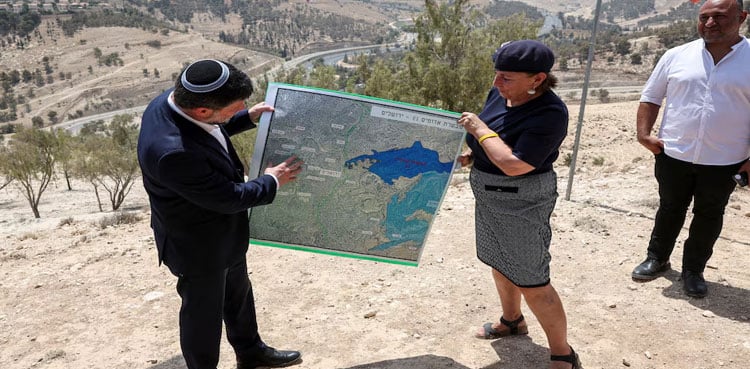
European diplomats say France is coordinating with several countries on national sanctions rather than waiting for EU unanimity. The effort targets people linked to West Bank violence as settlement expansion and the E1 project fuel concern about Palestinian statehood.
France and some other countries are trying to punish people they say are linked to violence in the West Bank by freezing money and stopping travel. It is like a group of school leaders trying to stop a fight, but they cannot all agree on one big rule, so they may make their own smaller rules instead.
Analysis
What France is pushing
France is working with several countries on coordinated national sanctions against individuals linked to violence in the occupied West Bank, according to three European diplomats cited by Reuters. The measures under discussion would include asset freezes and travel bans, but the exact lists have not been finalized and different countries may choose different targets.
Why this route
The article says efforts to agree tougher measures at the European Union level have stalled because there is no unanimity. That has pushed France and its partners toward national action instead. One diplomat said the discussion has moved to the national level, while two others said an announcement could come in the coming days.
Britain and Norway were mentioned as possible partners, though it is still unclear which other countries may join. A French diplomatic source said that more measures could follow, but did not give details.
The wider context
The push comes amid rising settler violence in the West Bank and anger in many Western capitals over the Netanyahu government’s settlement expansion. The article says diplomats view that expansion as undermining prospects for a Palestinian state, especially with concern around the E1 project east of Jerusalem, which would split the West Bank and cut it off from East Jerusalem.
France is also hosting a meeting in Paris on June 12 with Israeli and Palestinian civil society groups and around a dozen foreign ministers. The meeting is meant to keep the issue visible as wars involving Iran and Lebanon draw attention away and Gaza talks remain stuck despite a fragile ceasefire.
Key points
- France is coordinating with several countries on possible national sanctions over West Bank violence.
- The measures under discussion include asset freezes and travel bans.
- EU-wide tougher action has been blocked by a lack of unanimity, so governments are moving at the national level.
- Concern is rising over settlement expansion, especially the E1 project near Jerusalem.
- France will host a June 12 meeting in Paris to keep the issue on the international agenda.
If the plan moves forward, the sanctions could increase pressure on people involved in West Bank violence and signal that Western governments are willing to act even without EU unanimity. The Paris meeting could also keep the Palestinian issue on the international agenda at a time when attention is shifting elsewhere.
The effort may stay fragmented if countries use different sanction lists or if some partners decline to join. Without broader agreement, the measures may have limited impact while settlement expansion, settler violence, and deadlocked Gaza diplomacy continue.