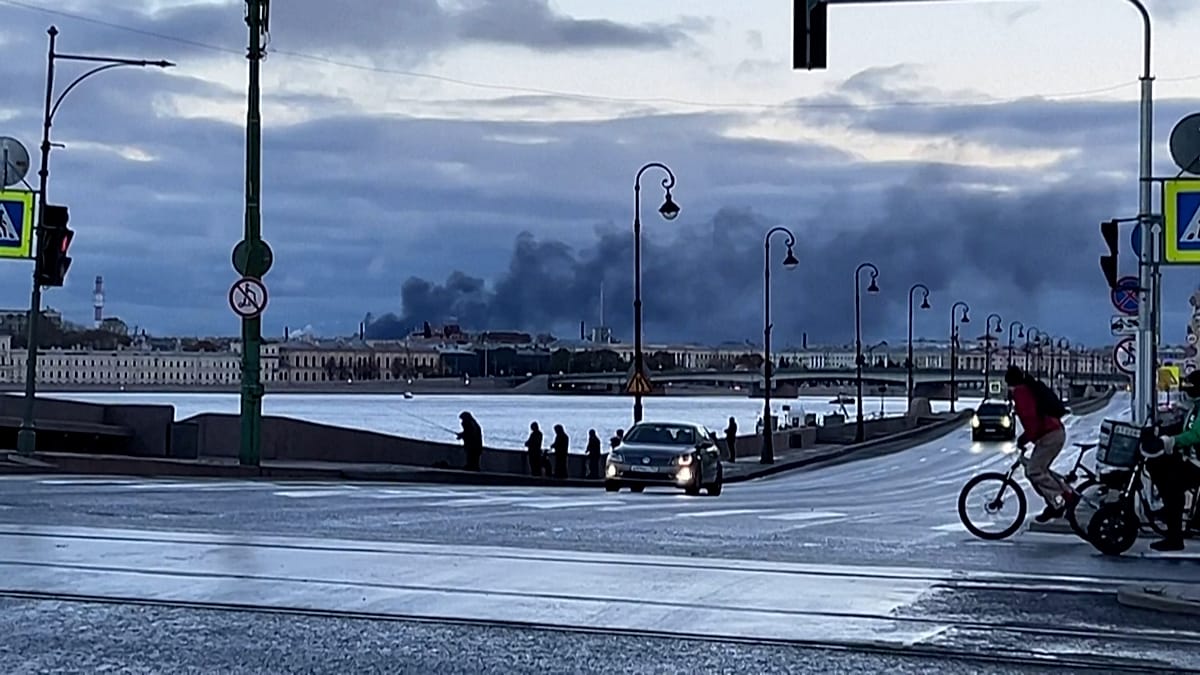
France takes stock after decades' worst violence: 2,000 arrested and a thousand businesses looted
France is assessing the aftermath of its most severe violence in decades, with 2,000 arrests, 600 police injured, and 1,500 businesses looted or destroyed across Paris and other cities following Saturday's protests.
Intelligence analysis by Gemini 2.5 Flash
Following a weekend of widespread unrest, French cities, particularly Paris, are grappling with an "apocalyptic landscape" of destruction and looting. The scale of the violence, which saw public buildings attacked and thousands arrested, has prompted national concern and criticism of the Interior Minister's response.
Imagine a huge street party that turned really, really messy, with people breaking things and taking stuff from shops. The police tried to stop it, but there were so many people causing trouble that they got overwhelmed. Now, France is looking at all the damage, like burned cars and broken windows, and trying to figure out why everyone was so angry and what to do next.
Analysis
The recent wave of civil unrest that swept across France has left a profound mark, prompting a national reckoning with the underlying causes and the efficacy of the state's response. The sheer scale of the destruction and the number of individuals involved underscore a deep-seated societal malaise that extends beyond typical protest movements. The events of the past weekend have not only caused immediate physical damage but have also ignited a fierce political debate regarding public order and governmental accountability.
2,000 Arrests
The immediate aftermath of the widespread violence saw an unprecedented number of detentions, with 2,000 individuals taken into custody across France, including 855 in the capital, Paris. This figure highlights the extensive nature of the disturbances, which overwhelmed police forces despite significant deployments. The arrests reflect a broad participation in the unrest, encompassing various demographics and motivations, from organized groups to opportunistic looters.
The high number of arrests also points to the challenges faced by law enforcement in containing the chaos, as officers were reportedly "overwhelmed" by the sheer volume and intensity of the confrontations. This situation has led to questions about police preparedness and strategy, particularly given the criticism leveled against Interior Minister Laurent Nuñez. The judicial system now faces the daunting task of processing these cases, which could further strain resources and potentially fuel public discontent depending on the outcomes.
Ayuntamiento de Limoges
Among the most symbolic acts of destruction was the burning of the Limoges City Hall, a 19th-century historical monument located southwest of Paris. The building, which had its spire collapse after being engulfed in flames, represents a direct assault on state authority and public heritage. This incident, alongside attempts to storm city halls in Marseille and Lille, and the burning of Lyon's main tourist office, signifies a deliberate targeting of public institutions.
The attack on such a significant historical landmark in Limoges underscores the extreme frustration and anger driving some elements of the unrest. It moves beyond mere property damage to an act of defiance against the symbols of governance. The destruction of these public spaces not only incurs substantial reconstruction costs but also leaves a lasting scar on the collective psyche of the affected communities, challenging their sense of security and civic pride.
Emmanuel Gregoire
The Mayor of Paris, Emmanuel Gregoire, offered a stark assessment of the situation in the capital, stating that the city had witnessed "a level of violence that we had not seen before in Paris." This declaration is particularly significant as it places the recent events in a historical context, surpassing even the intensity of the 2018 Yellow Vest protests. Gregoire's comments emphasize the unprecedented nature of the chaos and its profound impact on the urban fabric.
His remarks serve as a critical indicator of the severity of the crisis, coming from a direct witness and leader of the affected municipality. The comparison to previous periods of unrest highlights a qualitative shift in the nature of the protests, suggesting deeper underlying issues that are now manifesting with greater ferocity. This official acknowledgment of the exceptional violence underscores the urgent need for comprehensive solutions beyond immediate law enforcement responses.
Key points
- France experienced its worst violence in decades, leaving cities like Paris in an "apocalyptic landscape."
- The unrest resulted in 2,000 arrests nationwide, with 855 in Paris alone, and 600 police officers injured.
- Approximately 1,500 businesses were looted or destroyed, and public buildings, including Limoges City Hall, were attacked and set on fire.
- The Mayor of Paris, Emmanuel Gregoire, stated the violence surpassed that of the 2018 Yellow Vest protests.
- Criticism has been directed at Interior Minister Laurent Nuñez for allegedly inadequate police planning.
The current level of violence and destruction could escalate further, leading to prolonged social instability, deeper divisions within French society, and significant economic setbacks from widespread property damage and disrupted commerce. The government's perceived inability to control the situation might erode public trust and invite further unrest.